New counts show U.S. immigration detention reached a record 70,766 people as of Jan. 24, driven largely by detainees with no criminal convictions. January ICE arrests were slightly lower at 36,579, down from 37,842 in December and roughly unchanged from October. Independent analysis found 74.2% of detainees (52,504 people) had no criminal convictions, up from 70.4% in June, prompting debate over enforcement priorities.
U.S. Immigration Detention Hits Record 70,766 In January — Most Detainees Have No Criminal Convictions

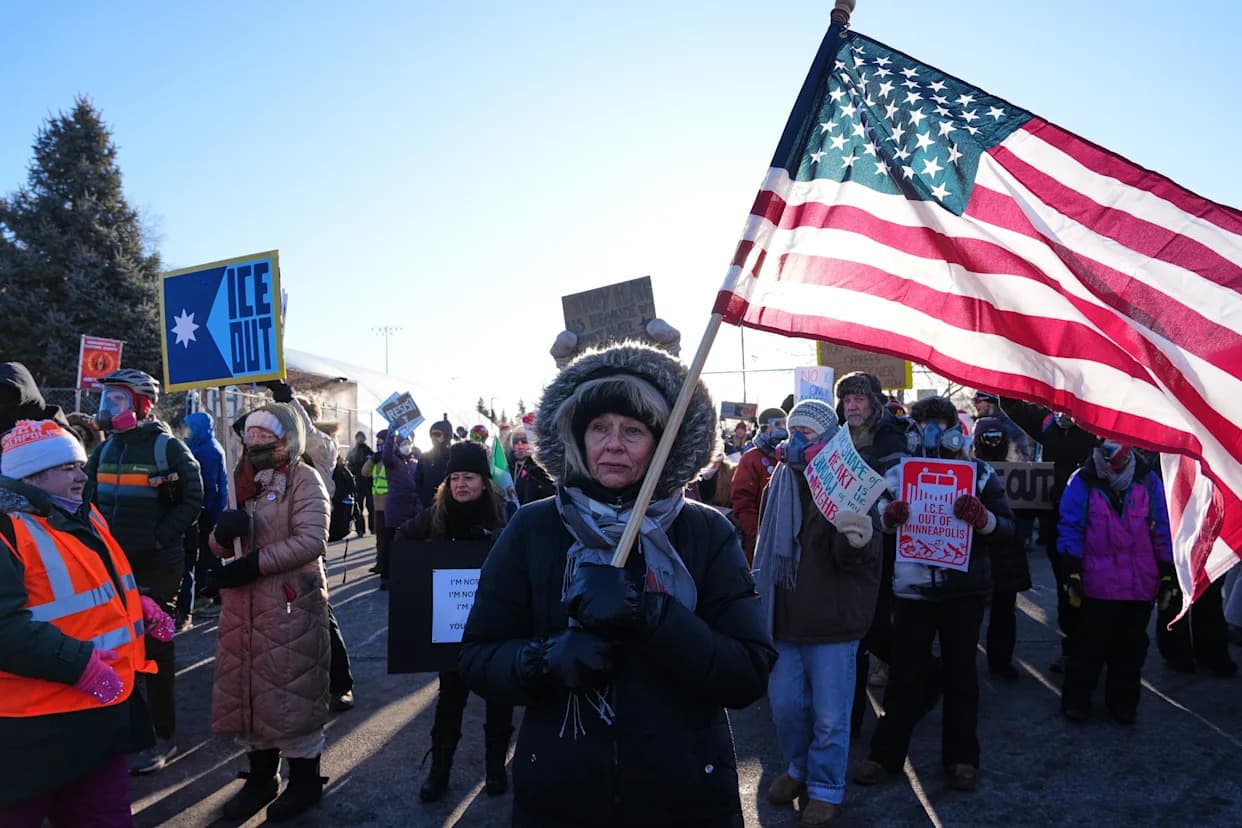
Photo caption: A demonstrator waves a red cloth as hundreds gathered after an ICE agent shot and killed Renee Good near Portland Avenue and 34th Street on Jan. 7, 2026. (Photo by Nicole Neri/Minnesota Reformer)
New federal enforcement data and independent counts show U.S. immigration detention reached a record high in January, even as reported ICE arrests edged down slightly from December. Analysts say the growth in detention is being driven largely by people who have no criminal convictions.
Detention Census and Arrests
According to the Transactional Records Access Clearinghouse (TRAC) at Syracuse University, the immigration detention census stood at 70,766 people as of Jan. 24 — the highest total TRAC has recorded since it began tracking detention in 2019. Separate monthly-arrest estimates compiled by a Syracuse University research assistant professor put ICE arrests at 36,579 in January, down from 37,842 in December and roughly flat compared with October’s 36,621.
Majority Of Detainees Have No Criminal Convictions
Of those in custody, 74.2% (52,504 people) had no criminal convictions, up from 70.4% in June. That means nearly three out of every four detainees do not have a criminal conviction on record, a shift analysts say is inconsistent with messaging that enforcement focuses primarily on serious criminal offenders.
"Since the summer, nearly all of the growth in ICE detention has come from people without criminal convictions or charges — an area of tremendous sustained growth that contradicts the Trump administration's narrative that they are focused on the worst of the worst," wrote Austin Kocher, a research assistant professor at Syracuse University who studies immigration enforcement.
Kocher, a former TRAC researcher who is no longer affiliated with the organization, produced the monthly arrest estimates based on detention check-ins.
Where Detainees Are Held
As of Jan. 24, the largest populations in detention were in Texas (18,684), followed by Louisiana (8,207), California (6,422), Florida (5,187) and Georgia (4,178).
Context
The detention total has risen steadily from roughly 40,000 at the start of the second Trump administration. The recent jump in people held without criminal convictions has raised questions for advocates and some analysts about enforcement priorities and the criteria being used to detain noncitizens.
Methodology note: TRAC compiles regular detention-census reports; the arrest estimates cited here were produced by a Syracuse University researcher using detention check-in data and other sources. Numbers are current as of Jan. 24 and reflect the sources cited.
Reporting contact: Tim Henderson, Stateline (thenderson@stateline.org).
Help us improve.