Supporters and critics of Venezuela's interim government marched separately to demand higher wages and pensions as the country grapples with an economic collapse. The monthly minimum wage and state pension both stand at just $0.35, while GDP has fallen about 80% over the last decade and millions have emigrated. Lawmakers reopened the hydrocarbons sector to private firms and the interim administration used $300 million from a U.S. crude sale to shore up the bolivar. Pro-regime demonstrators also pressed for Maduro's release and presented a 10-point plan to improve workers' pay.
After Maduro’s Fall, Pro- and Anti-Government Workers March Separately to Demand Higher Wages
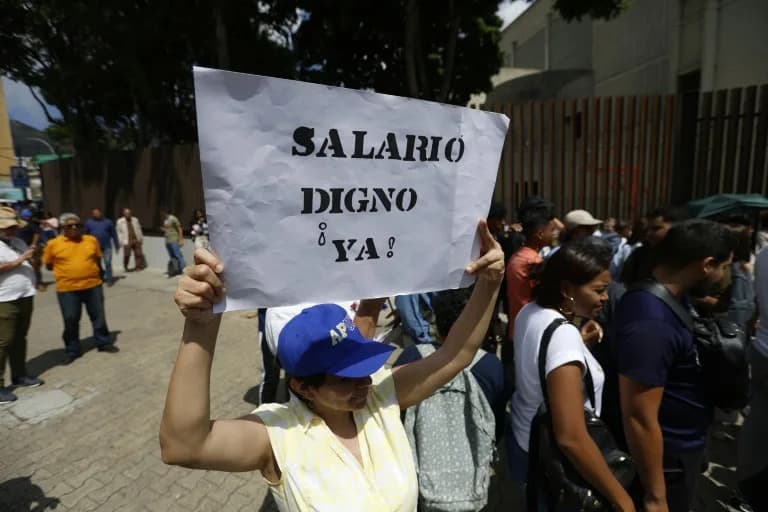
A banner reads 'decent wages now' at a protest by teachers and students in Caracas (Pedro MATTEY)(Pedro MATTEY/AFP/AFP)
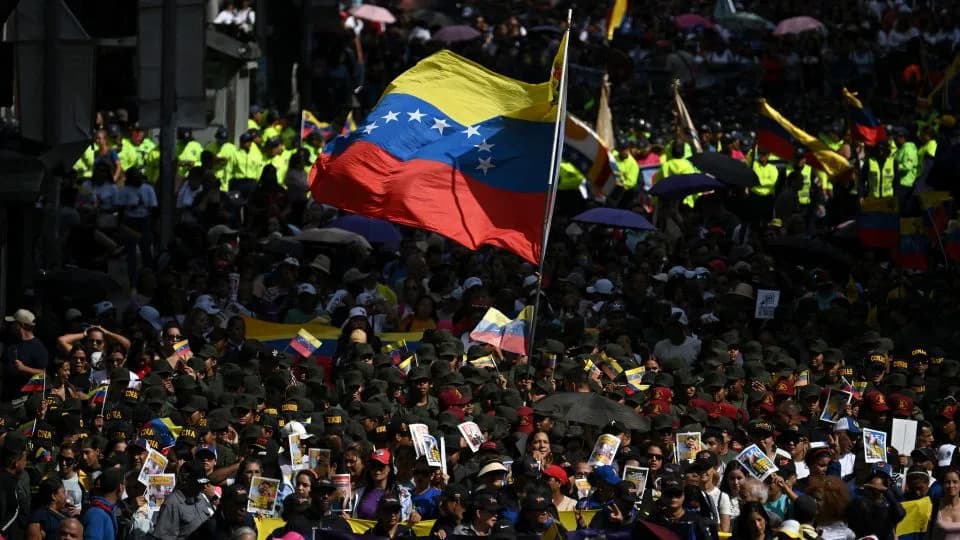
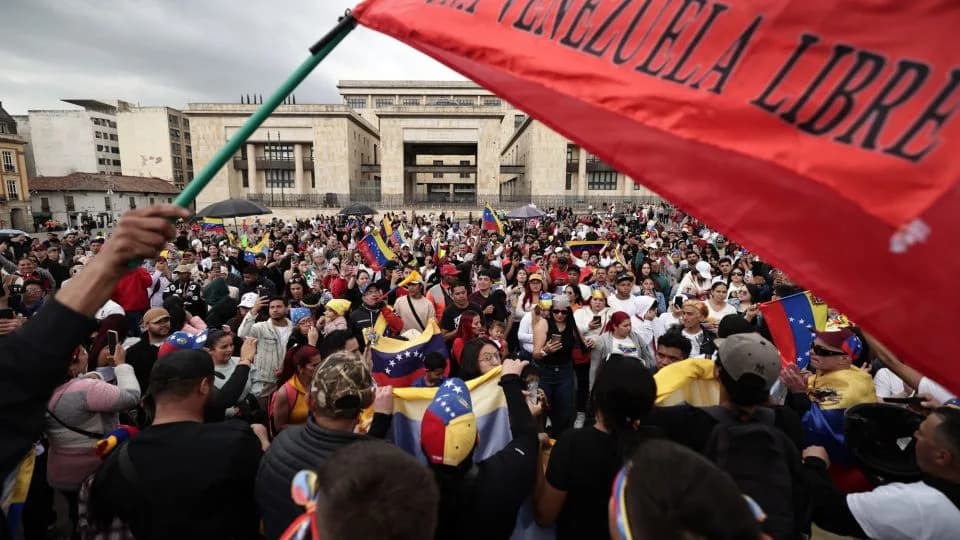
Supporters and opponents of Venezuela's new interim government staged separate demonstrations on Monday, each demanding higher wages and better pensions amid a deep economic collapse.
Marches and Messages
Outside the Supreme Court, university professors rallied while the court considers a lawsuit from Central University of Venezuela (UCV) staff claiming wages are insufficient. Protesters chanted 'We fight for wages, democracy, and freedom!' and urged authorities to invest any new oil revenue in workers across the country.
"If oil revenues increase, they should be invested in all workers," Gregorio Alfonzo, president of the UCV professors' association, said at the march.
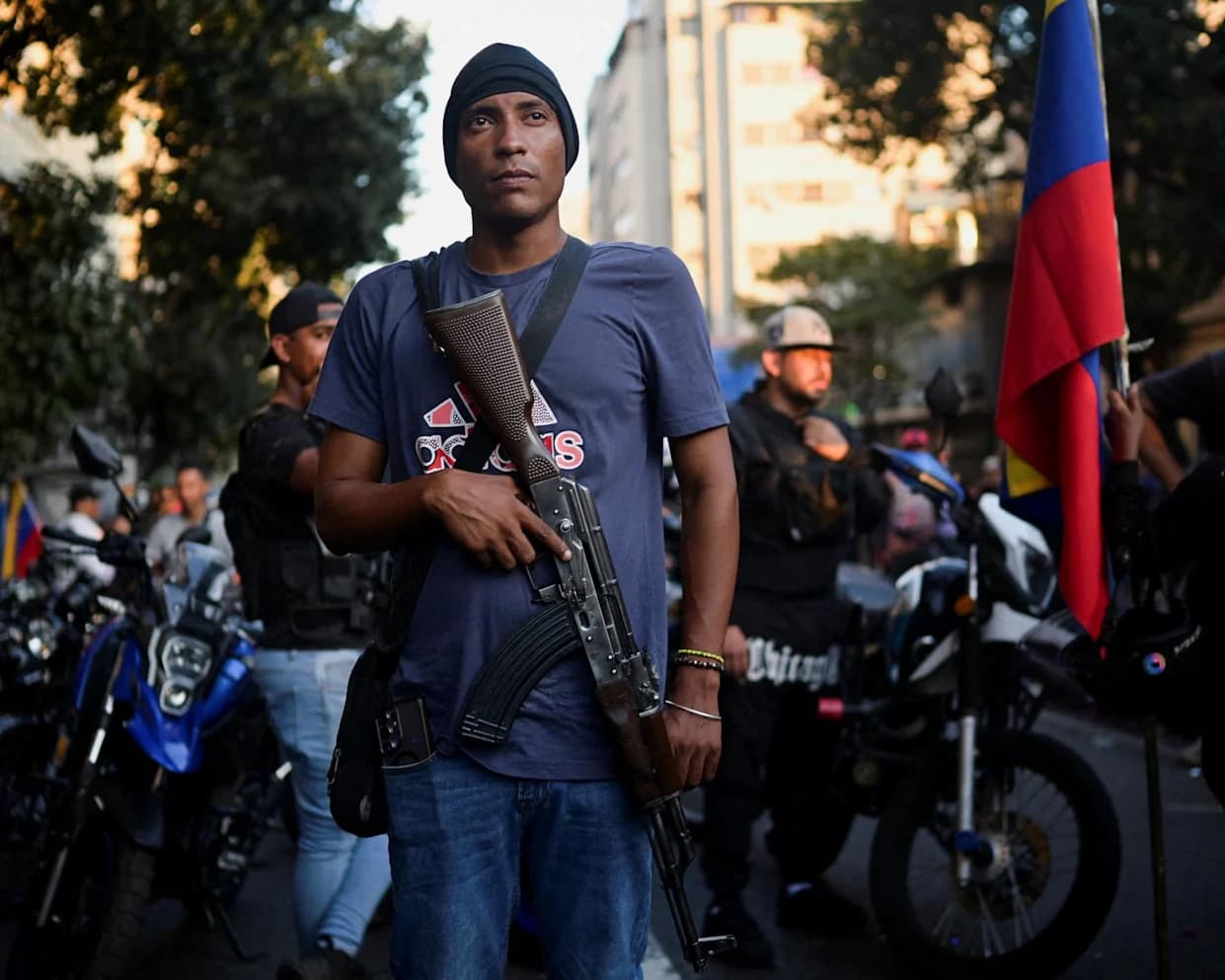
At a separate demonstration also held near the Supreme Court, pro-government workers both called for the release of former leader Nicolás Maduro from a New York jail cell — where he is said to be awaiting trial on drug-trafficking charges — and presented a 10-point plan to urgently improve workers' pay and conditions.
Economic Context
Venezuela's monthly minimum wage and the state pension are both reported at just 35 US cents. The country's gross domestic product has contracted roughly 80% over the past decade, and millions of Venezuelans have emigrated in search of better opportunities. The government supplements incomes with discretionary bonuses, but demonstrators say these payments do not cover basic living costs.
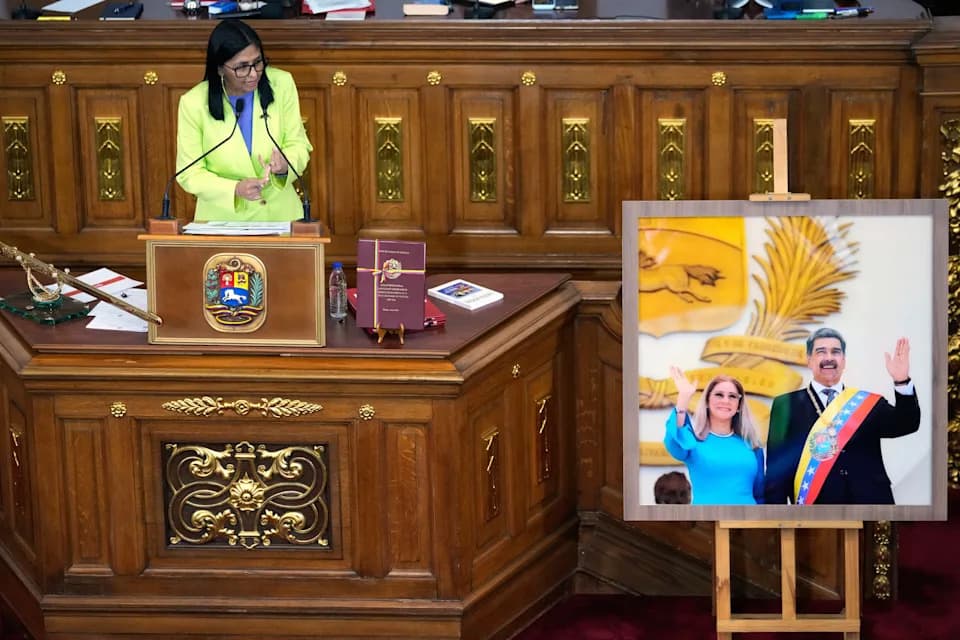
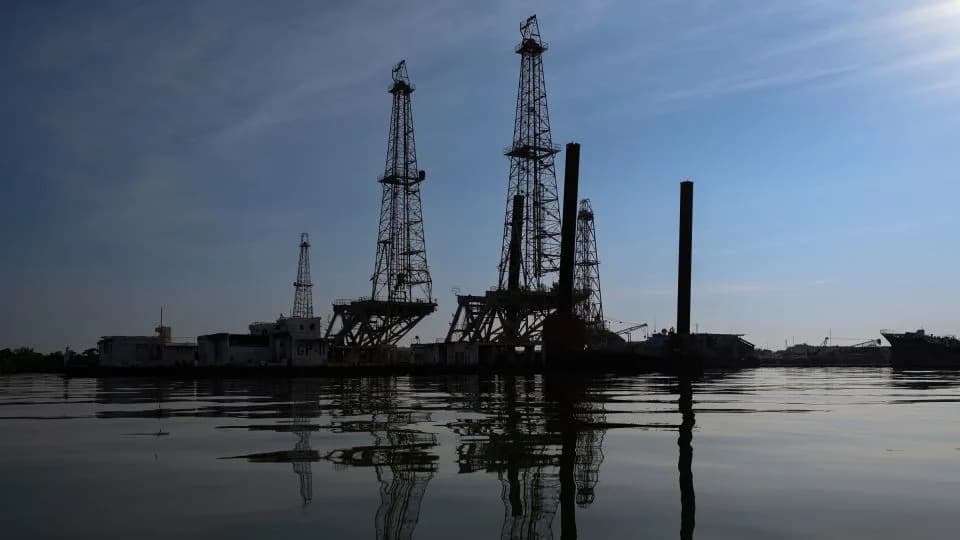
The interim administration, led by Delcy Rodriguez after President Maduro's ouster, has announced oil-focused economic plans and struck deals with the United States. Lawmakers recently approved reforms to reopen the nationalized hydrocarbons industry to private operators — a step that was followed by a loosening of U.S. sanctions.
Rodriguez directed $300 million from the first U.S. sale of Venezuelan crude under the new arrangements toward stabilizing the bolivar, the country's struggling currency. Both supporters and critics say more comprehensive measures are needed to restore living standards.
Security And Aftermath
Police kept the two groups apart to prevent clashes; interactions were limited to shouted slogans. Organizers on both sides emphasized the central demand: immediate, meaningful wage and pension increases to stem poverty and halt the ongoing migration of Venezuelans seeking work abroad.
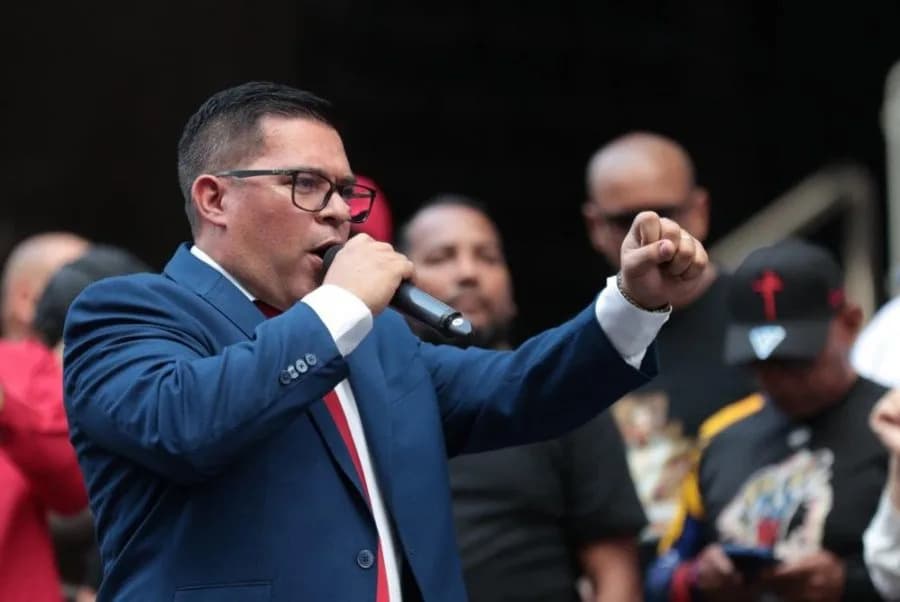
Key voices: Oliver Rivas, representing the pro-regime demonstrators, said the combination of hydrocarbon reform, negotiations with oil companies, and national dialogue creates an opportunity to pursue economic recovery and wage growth. University staff pursuing legal action say courts must force the state to provide a living wage.
Reporting by afc/jt/mlr/iv
Help us improve.