Laura Fernández, 39, has been elected president of Costa Rica and vows to continue Rodrigo Chaves' populist agenda, proposing constitutional reforms and states of emergency to tackle rising drug-related violence. A former minister and Chaves' chief of staff, Fernández is seen as a close ally of the outgoing president but insists she will govern in her own right. She has praised El Salvador's Nayib Bukele and plans tougher security measures, including a high-security prison, prompting critics to warn of threats to civil liberties and democratic norms.
Laura Fernández Elected Costa Rica President, Pledges Hard-Line Crime Measures and Constitutional Change
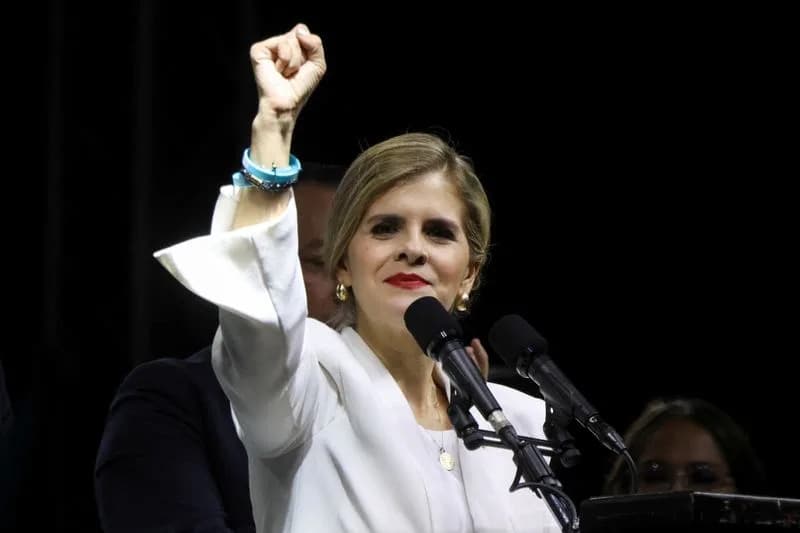
Presidential candidate Laura Fernandez of the Sovereign People's Party (PPSO) gestures as she leads the general election, in San Jose, Costa Rica, February 1, 2026. REUTERS/Mayela Lopez
Laura Fernández, 39, has been confirmed as Costa Rica's president-elect and says she will continue the populist agenda of outgoing leader Rodrigo Chaves — including proposed constitutional reforms and emergency powers aimed at curbing a surge in drug-related violence.
Fernández built her public-sector career as an adviser and civil servant in the Ministry of National Planning and Economic Policy and was appointed minister there in 2022 by President Rodrigo Chaves. She later served as Chaves' chief of staff before launching her own presidential bid.
A close ally of Chaves, Fernández is widely viewed as part of the same political movement. Pilar Cisneros, who leads the government's bloc in Congress and is seen as influential in Chaves' rise, said a circle of roughly 10 people close to the president helped select Fernández as the candidate.
"Few people know the state like she does — she knows where the knots are," Cisneros said.
Known for a theatrical speaking style and for dancing at campaign events, Fernández was born in Esparza in the coastal Puntarenas province and raised in the capital, San José. She is married with a young daughter and emphasizes conservative, family-oriented values that have helped her win backing from growing evangelical constituencies.
Fernández has expressed admiration for El Salvador President Nayib Bukele, whose tough-on-crime approach has involved emergency measures and stricter security policies. Fernández has pledged to declare states of emergency in high-crime areas that would limit certain civil liberties and to complete construction of a high-security prison modeled after El Salvador's CECOT mega-prison.
Critics and political opponents warned during the campaign that Fernández may lack full independence from Chaves and called her a "puppet" of the outgoing president. Supporters counter that she is a seasoned public servant and will govern in her own right.
"The one who is going to govern is her — she will be the president — but she would be foolish not to show she has Don Rodrigo's backing. She is loyal to our political project," Cisneros said.
After declaring victory in San José, Fernández pledged to usher in a new political era. "Change will be deep and irreversible," she said, adding that Costa Rica's second republic, in place since the 1948 civil war, is "a thing of the past" and that it is time to build what she calls a "third republic."
Fernández will be Costa Rica's second female president after Laura Chinchilla, who served from 2010 to 2014 and has since become a vocal critic of governments she views as authoritarian in the region. Chinchilla has described the current movement as following a "predictable script" of other authoritarian leaders and called Fernández "rude and populist" and "a bad copy of the president."
As Fernández prepares to take office, observers say her administration's emphasis on emergency powers and prison construction will be closely watched for their impacts on public security, civil liberties and democratic institutions in Costa Rica.
Help us improve.