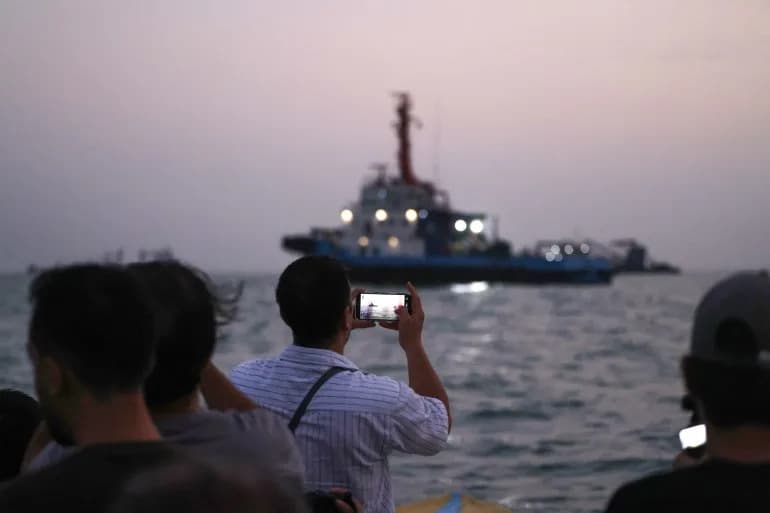
The Strait of Hormuz—a narrow chokepoint through which roughly one-fifth of traded oil passes—faces renewed strain after Iran announced a live-fire naval exercise that may extend into major shipping lanes. U.S. Central Command warned Tehran against unsafe or threatening actions near U.S. forces and commercial vessels. The exercise is expected to involve the IRGC and comes amid heightened regional tensions tied to domestic unrest, nuclear concerns and the presence of a U.S. carrier group. Even limited disruptions in the strait could affect global energy markets.
Tensions Flare in the Strait of Hormuz as Iran Announces Live-Fire Drill Near Key Shipping Lanes
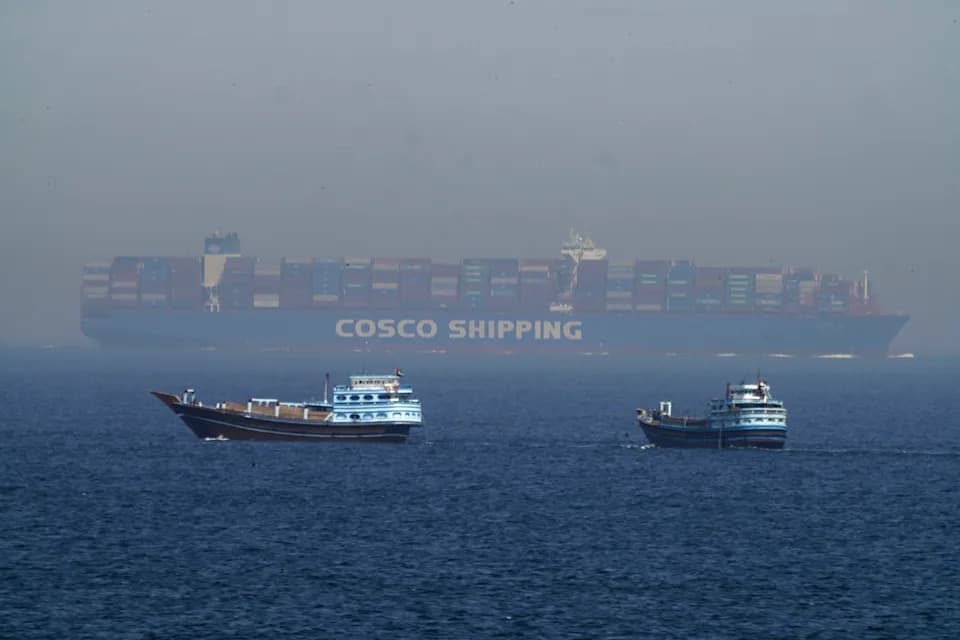
FILE - Two traditional dhows sail by a large container ship in the Strait of Hormuz, May 19, 2023. (AP Photo/Jon Gambrell, File)(ASSOCIATED PRESS)
DUBAI, United Arab Emirates (AP) — The Strait of Hormuz, a narrow choke point linking the Persian Gulf to the Gulf of Oman, has again become a focal point of regional tension after Iran announced a live-fire naval exercise that could extend into major commercial shipping lanes.
Why the Strait Matters
The Strait of Hormuz is one of the world’s most critical maritime corridors. At its narrowest point it measures about 33 kilometers (21 miles) across, and roughly one-fifth of the world’s traded oil moves through the passage as tankers pass between Iran and Oman. Although Iran and Oman both have territorial waters in the strait, it is generally treated as an international waterway used by commercial traffic bound for markets worldwide. Limited pipeline alternatives mean any disruption in the strait can quickly affect global energy prices.
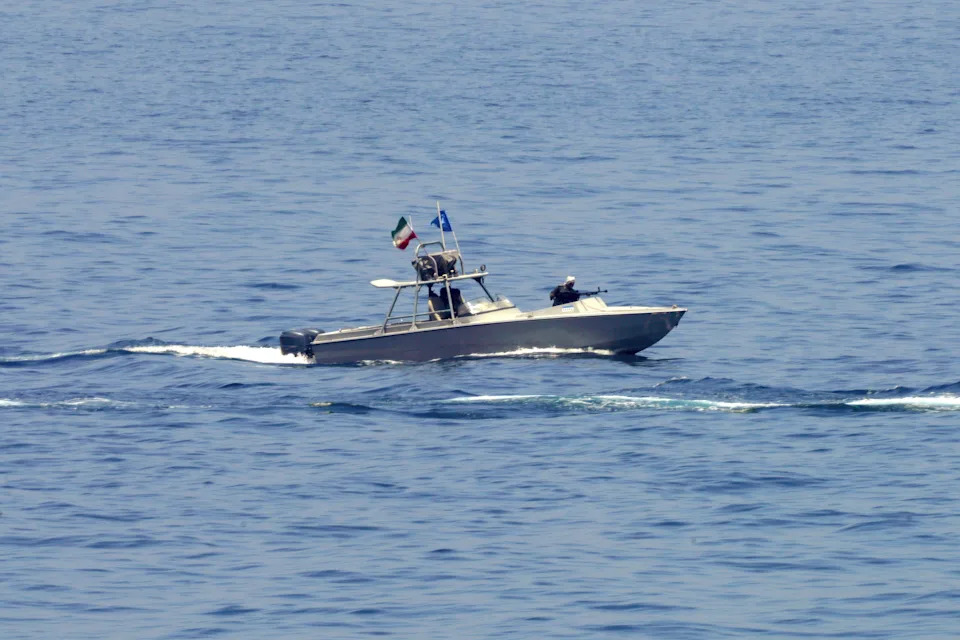
FILE - An Iranian Revolutionary Guard vessel watches an American warship in the Strait of Hormuz, May 19, 2023. (AP Photo/Jon Gambrell, File)(ASSOCIATED PRESS)
What Iran Has Announced
Iran broadcast a notice to mariners warning of "naval shooting" exercises scheduled for Sunday and Monday. The coordinates included in the notice place the drills potentially inside the Traffic Separation Scheme (TSS), a two-lane shipping corridor about 3.2 kilometers (2 miles) wide that separates inbound and outbound traffic. The northern lane of the TSS, used by vessels entering the Persian Gulf, falls within those coordinates.
Who Is Likely Involved
Tehran has not disclosed full details, but the exercise is expected to involve the Islamic Revolutionary Guard Corps (IRGC), which routinely operates fast-attack craft in the strait and has had tense encounters with foreign navies in the past. Iran's use of small, agile vessels and missile-equipped boats has previously created close quarters and high-risk interactions with other maritime forces.
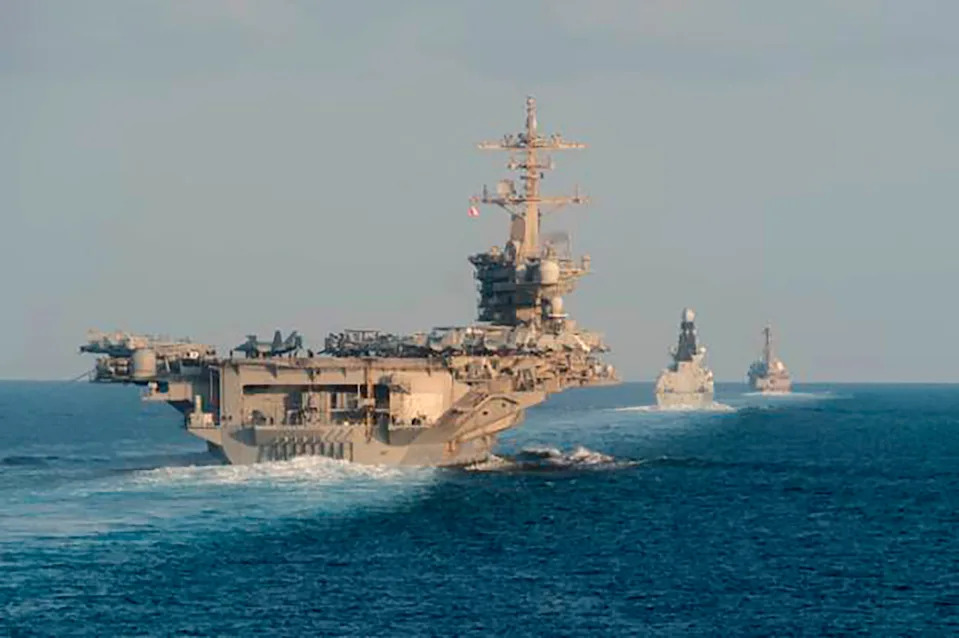
FILE - In this Nov. 19, 2019, photo made available by U.S. Navy, the aircraft carrier USS Abraham Lincoln, left, the air-defense destroyer HMS Defender and the guided-missile destroyer USS Farragut transit the Strait of Hormuz with the guided-missile cruiser USS Leyte Gulf. (Mass Communication Specialist 3rd Class Zachary Pearson/U.S. Navy via AP, File)(ASSOCIATED PRESS)
U.S. Response
U.S. Central Command issued a strongly worded warning, acknowledging Iran’s right to operate in international waters but cautioning that any "unsafe and unprofessional behavior near U.S. forces, regional partners or commercial vessels increases risks of collision, escalation and destabilization." The command, which oversees naval forces in the region, said it will not tolerate actions that threaten or endanger U.S. ships, aircraft, or commercial traffic.
Context: Drivers of Rising Friction
The drill comes amid broader regional tensions tied to Iran’s domestic unrest, international concerns over its nuclear program, and heightened military activity in the region. A U.S. carrier strike group operating in the nearby Arabian Sea and other foreign deployments add to the complexity and risk of miscalculation.
What Could Happen Next
Possible outcomes range from the exercise proceeding without incident to localized confrontations if vessels or aircraft approach too closely. Even limited disruptions or close encounters could prompt precautionary route changes by commercial shippers and upward pressure on energy markets. Diplomacy and careful rules-of-engagement by naval forces will be crucial to preventing escalation.
Bottom line: The announced live-fire drill raises the risk of dangerous interactions in an already sensitive maritime corridor. Given the strait’s outsized role in energy transport, even short-term instability can have wider economic and strategic consequences.
Help us improve.