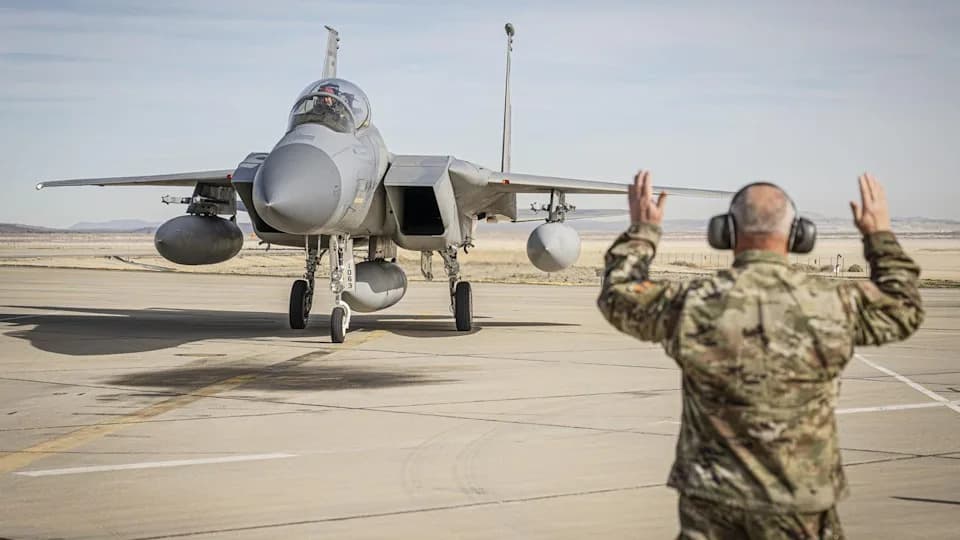
NASA has acquired two F-15C/D fighters from the Oregon Air National Guard to serve as chase planes for the X-59 QueSST experimental jet. The aircraft will be outfitted with sensors and modified for operations up to about 60,000 feet to collect acoustic and aerodynamic data. The X-59 is testing techniques to reduce a sonic boom to a mild "thump," which could enable overland supersonic passenger flights. One F-15 may be used for spare parts to sustain the other for long-term testing.
Veteran F-15s Get a Second Life With NASA — They'll Chase the X-59 to Help Unlock Civilian Supersonic Flight
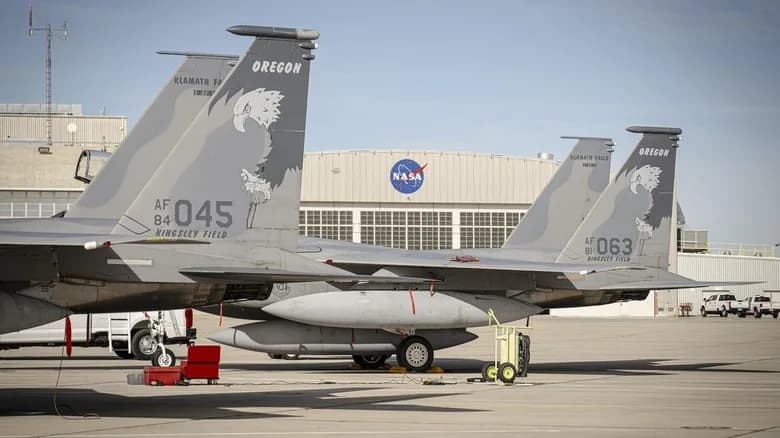
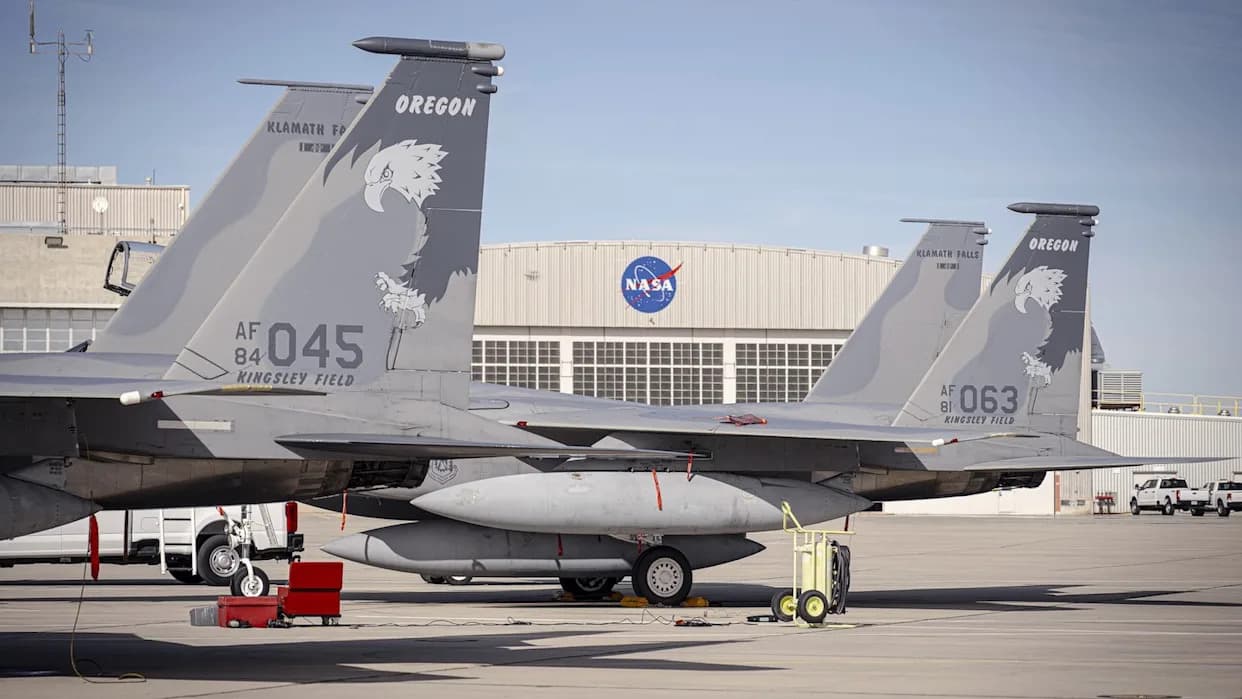
NASA's recently acquired F-15s parked at Armstrong Flight Research Center in Edwards, CA - NASA
Two Boeing F-15C/D Eagles that were scheduled to retire from the Oregon Air National Guard have been acquired by NASA to support flight testing of the X-59 QueSST experimental aircraft. Rather than heading straight to storage, the twin jets will be upgraded with sensors and modifications for operations up to about 60,000 feet, a combination of speed and altitude that makes them ideal chase planes for the X-59.
Why the F-15?
The F-15’s high-speed, high-altitude performance is one of the few operational envelopes that can reliably keep pace with the X-59 during its test flights. NASA will outfit the aircraft with data-collection suites and other instrumentation to gather measurements from behind and above the X-59 as it evaluates novel shaping intended to reduce a conventional sonic boom to a much quieter “thump.”
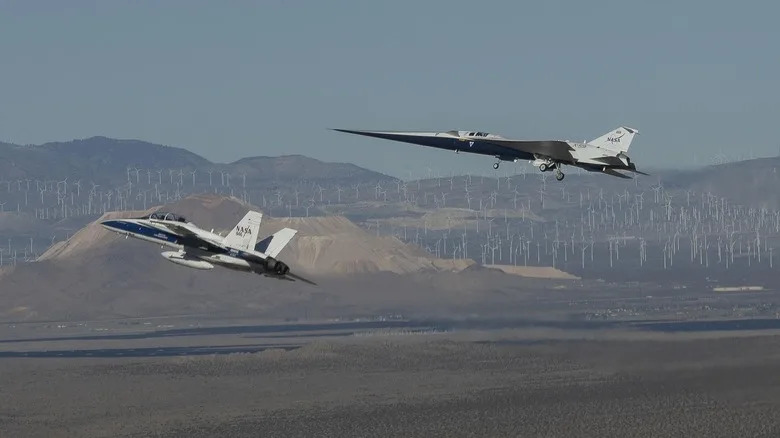
An F-15 chasing the X-59 prototype for NASA's Quesst mission - NASA
Role in the QueSST Program
The X-59 completed its first flight in November and is entering a phase of comprehensive flight testing. During that campaign, chase aircraft will fly predetermined positions to measure acoustic signatures, aerodynamic interactions and atmospheric effects. The two F-15s will play that chase role — collecting crucial data that could inform regulators and the aviation industry about whether overland supersonic travel can be permitted without the disruptive booms that led to past bans.
Legacy, Practicalities and One Caveat
NASA has a long history of using F-15s for research; the agency still operates older F-15 variants for experimental work. While newer F-15EX models will extend the fighter family’s combat life, many C/D airframes are being retired. Reports note a pragmatic detail: one of the two Oregon jets may be cannibalized for spare parts to keep the other mission-ready — a common practice when preserving a single airframe for extended research use.
Ultimately, these veteran Eagles offer a cost-effective, timely way to support a test program with potentially wide-ranging implications. If the X-59’s design successfully quiets sonic booms, regulators could revisit overland supersonic restrictions, opening the door to much faster point-to-point civilian flights.
Quick fact: The X-59 program — QueSST (Quiet SuperSonic Technology) — aims to demonstrate that careful shaping can reduce the loud, disruptive sonic boom to a much gentler sound that communities could accept.
Help us improve.