NASA has taken delivery of two retired F-15 fighters to support X-59 quiet supersonic testing. One jet will be refurbished and outfitted for chase-plane research while the other will provide spare parts; both arrived in December 2025. The F-15s will carry pressure sensors and Schlieren cameras to collect data as they follow the X-59 at altitudes up to about 60,000 ft, helping validate low-boom supersonic design and inform potential commercial use.
NASA Adds Two Retired F-15s To Chase X-59 and Accelerate ‘Quiet’ Supersonic Research
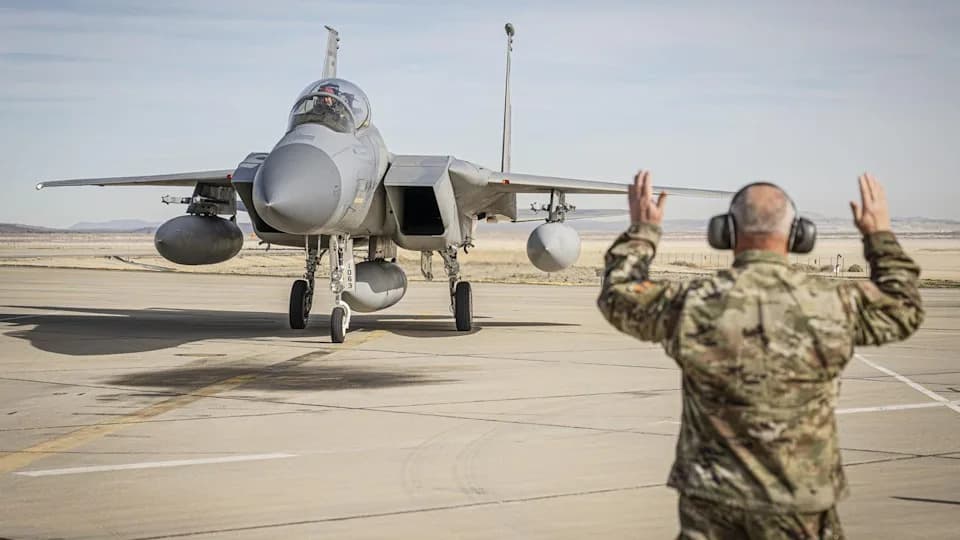
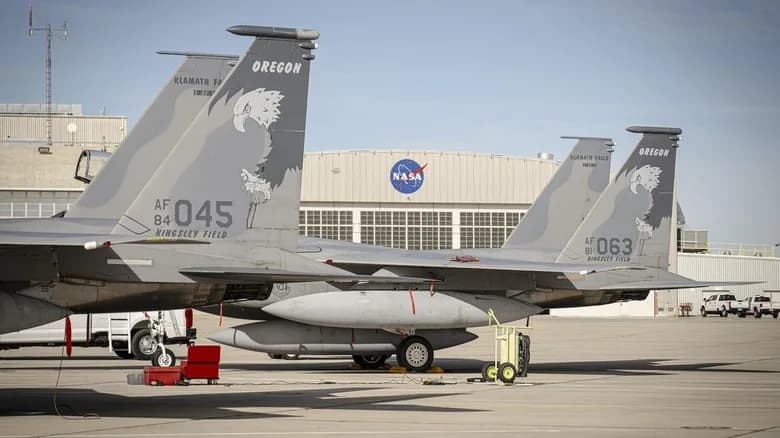
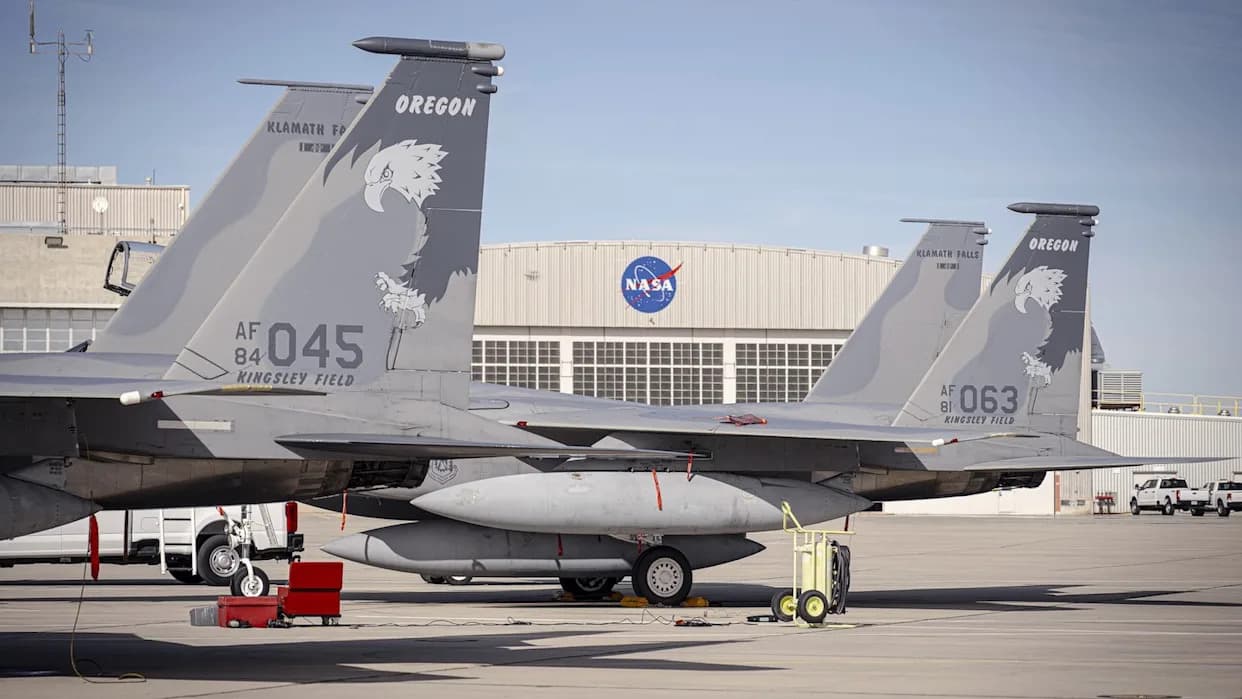
Oregon Air National Guard ground crew guides one of NASA’s newest F-15 aircraft onto the ramp at the agency’s Armstrong Flight Research Center in Edwards, California, on Monday, Dec. 22, 2025. | Credit: NASA/Christopher LC Clark
NASA has expanded its flight-research fleet with two retired F-15 fighters acquired from the U.S. Air Force to support the agency’s X-59 quiet supersonic demonstrator. The jets joined NASA’s Armstrong Flight Research Center in California’s Mojave Desert and will provide chase-plane capability and in-flight data collection for the Low Boom Flight Demonstrator program.
Chase-Plane Role And Modifications
One F-15 will be returned to flying status and specially modified with updated instrumentation and software for research missions. The second aircraft will be cannibalized for parts to sustain the research fleet. Both aircraft were delivered to NASA in December 2025.
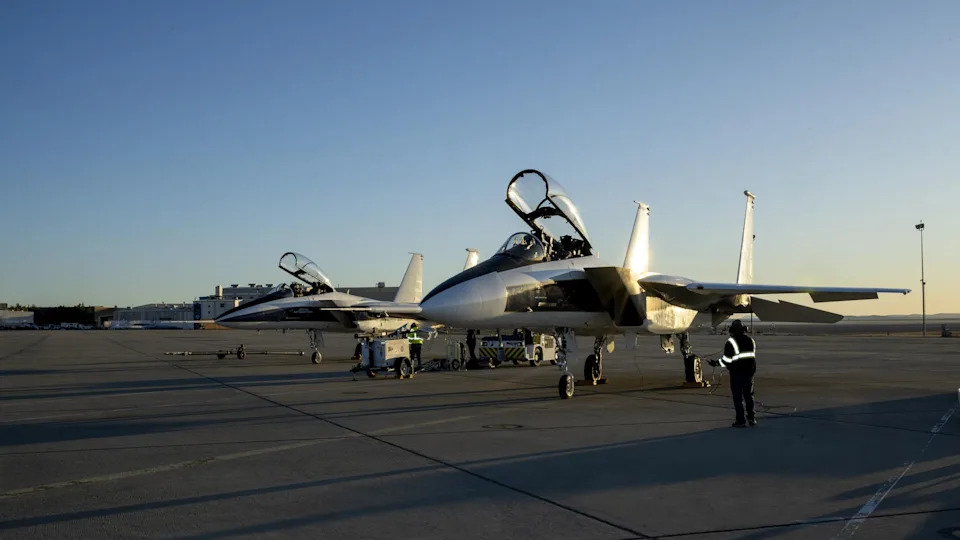
Two NASA F-15 aircraft sit on the ramp at NASA's Armstrong Flight Research Center, in Edwards, California. | Credit: NASA/Genaro Vavuris
Why F-15s?
The F-15’s high-altitude performance makes it well suited to follow the X-59 during test flights. The X-59 cruises at roughly 55,000 feet (17 km) and a properly outfitted F-15 can shadow it up to about 60,000 feet (18 km) to gather critical measurements that typical airliners—cruising near 30,000–40,000 feet (9–12 km)—cannot capture.
Measurements And Imaging
NASA will use the F-15s to carry pressure sensors and Schlieren photography systems. Schlieren imaging is a specialized optical technique that visualizes air-density changes and shock waves, allowing scientists to see airflow and the pressure gradients produced as the X-59 approaches and passes supersonic speeds.
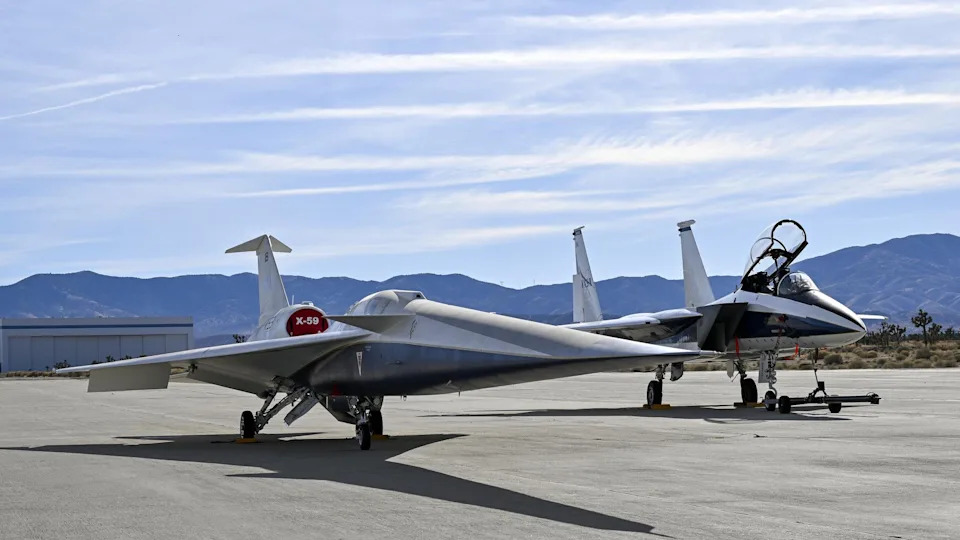
A NASA F-15 aircraft sits 20 feet off the left side of the X-59 aircraft, with a white hangar and hills in the background, during electromagnetic interference testing. | Credit: NASA/Carla Thomas
“These two aircraft will enable successful data collection and chase plane capabilities for the X-59 through the life of the Low Boom Flight Demonstrator project,” said Troy Asher, director for flight operations at NASA Armstrong.
Program Context
NASA has used F-15s in aeronautics research since the early 1970s, flying dozens of experiments that advanced high-speed flight science. The X-59 is designed to demonstrate a low-boom supersonic signature so regulators can assess community response and pave the way for potential commercial supersonic operations. If commercialized, the technology could dramatically reduce cross-country flight times and transform time-sensitive industries.
The X-59 completed its first flight in October of last year; Lockheed Martin, the aircraft’s manufacturer, reported that the flight "performed exactly as planned." With the newly acquired F-15s, NASA expects to enhance its in-flight measurement capabilities and continue validating the demonstrator’s low-boom performance.
Help us improve.