NASA added two twin-seat F-15Ds to its test fleet, keeping one for active flight and the other for parts. The operational F-15D will serve as a chase and data-collection aircraft for the X-59 QueSST program, which aims to demonstrate a low-noise supersonic signature to enable overland supersonic flight. NASA has upgraded F-15 life-support systems for high-altitude operations and continues to use older F-15s for experiments such as CATNLF wing tests that may cut drag and improve fuel efficiency.
Legacy F-15Ds Join NASA Fleet to Support X-59 QueSST and New Aeronautics Tests
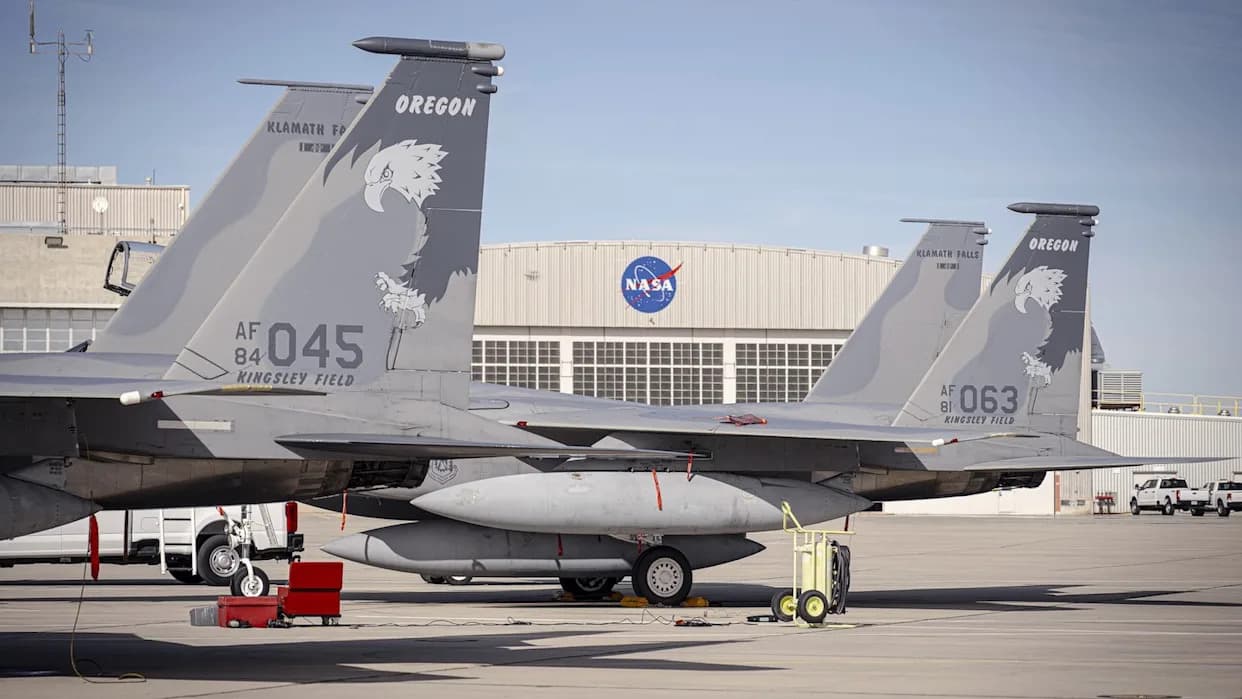
NASA’s newest F-15Ds arrived at the Armstrong Flight Research Center late last month.
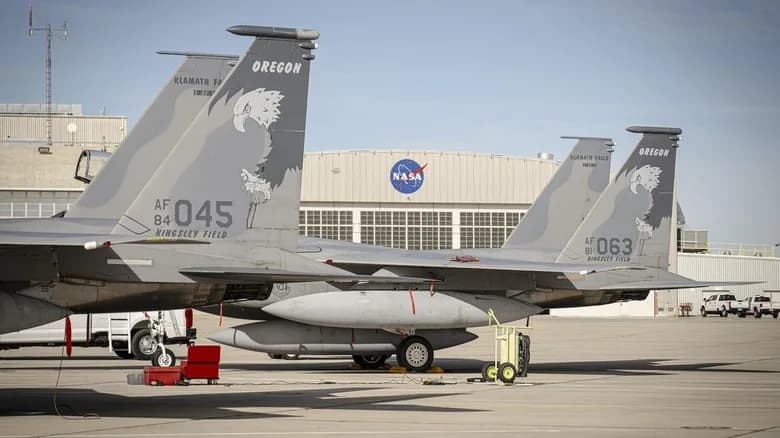
NASA has expanded its flight-research fleet with two twin-seat F-15D Eagles transferred from the Oregon Air National Guard’s 173rd Fighter Wing, reinforcing the agency’s chase-plane and experimental capabilities at Edwards Air Force Base.
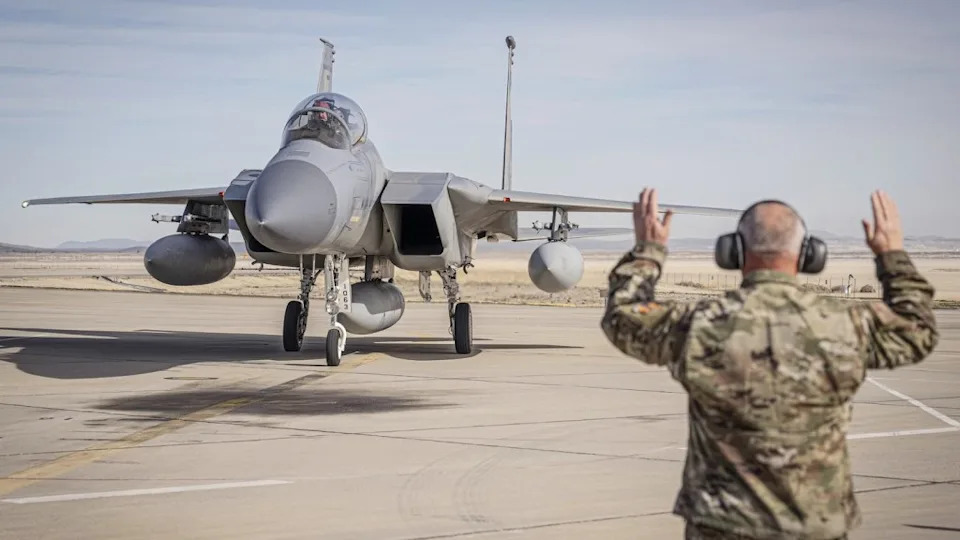
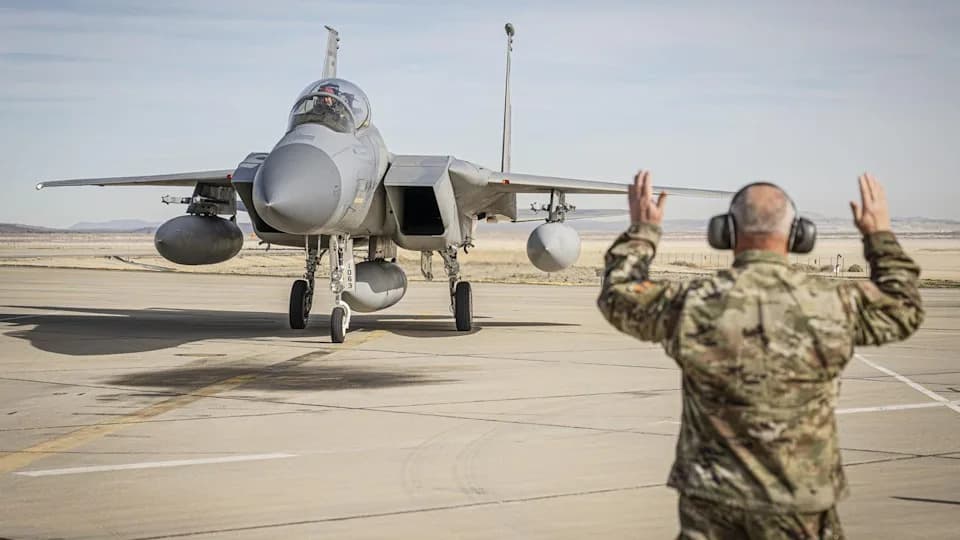
One of NASA’s newest F-15Ds is seen arriving at the Armstrong Flight Research Center late last month.NASA/Christopher LC ClarkNASA/Christopher LC Clark
The jets—serial numbers 81-0063 and 84-0045—arrived at NASA’s Armstrong Flight Research Center this month. NASA will place one F-15D into active flight status while retaining the second aircraft as a parts source to support the maintenance-intensive Eagles already in its inventory.
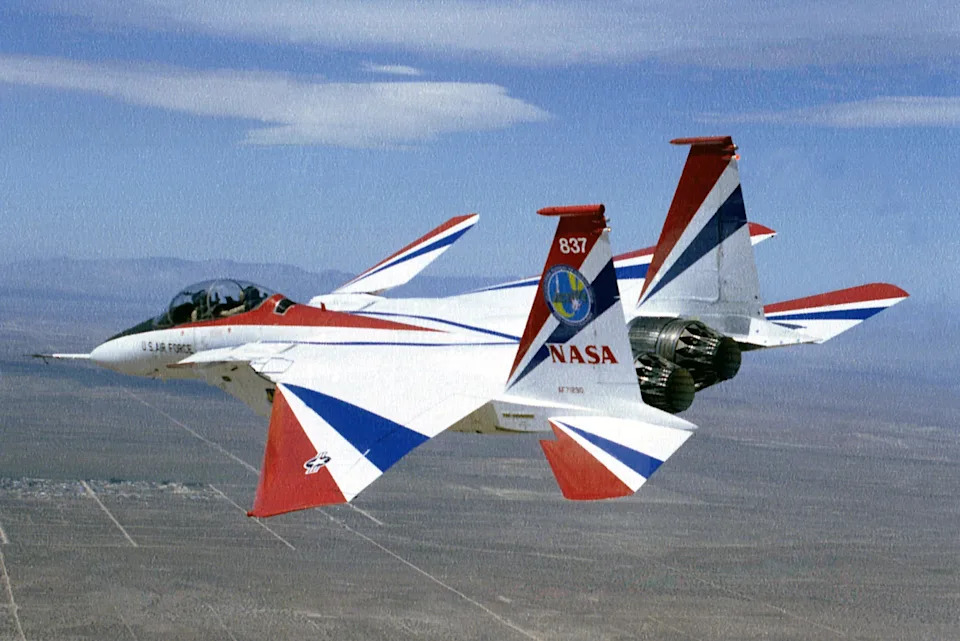
The F-15 Advanced Control Technology for Integrated Vehicles (ACTIVE) aircraft, seen in March 1996. ACTIVE was a joint NASA, U.S. Air Force, McDonnell Douglas Aerospace (MDA), and Pratt & Whitney program. The F-15 featured canard foreplanes and multi-directional thrust-vectoring nozzles.NASACourtesy Photo
Supporting the X-59 Quiet Supersonic Technology (QueSST)
The active F-15D will provide chase and data-collection support for NASA’s X-59 QueSST Low Boom Flight Demonstrator. The X-59 aims to demonstrate technologies that reduce the loud sonic boom produced by supersonic flight to a much quieter "sonic thump," a result that could help change regulations that today prohibit routine supersonic travel over land.
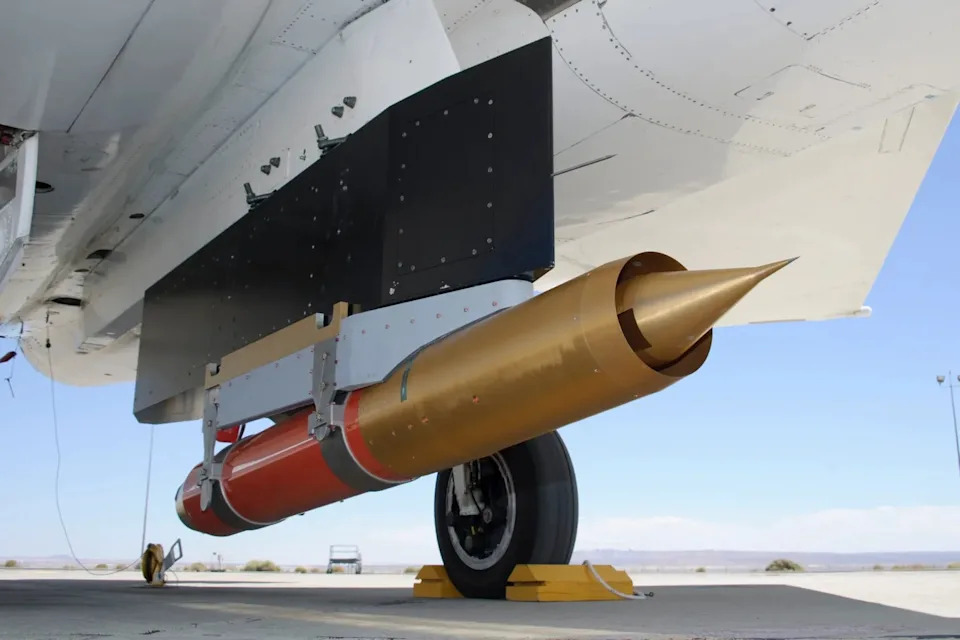
A channeled center-body inlet design, shown here in a subscale test version mounted underneath NASA’s F-15B in 2011. The inlet design was intended to improve the airflow and fuel efficiency of jet engines at a wide variety of speeds.NASA / Tony Landis
“These two F-15Ds will enable successful data collection and chase plane capabilities for the X-59 through the life of the Low Boom Flight Demonstrator project,” said Troy Asher, director for flight operations at NASA Armstrong. “They will also enable us to resume operations with various external partners, including the Department of Defense and commercial aviation companies.”
Life-Support and High-Altitude Modifications
NASA has previously modified some of its F-15s for high-altitude chase missions. In 2022, two F-15s were upgraded with a positive-pressure breathing system—originally developed for the F-22—to reduce the risk of hypoxia for both the front- and back-seat crew. The modification increases safe operating capability to altitudes up to 60,000 feet, aligning with X-59 flight profiles that target cruise altitudes around 55,000 feet.
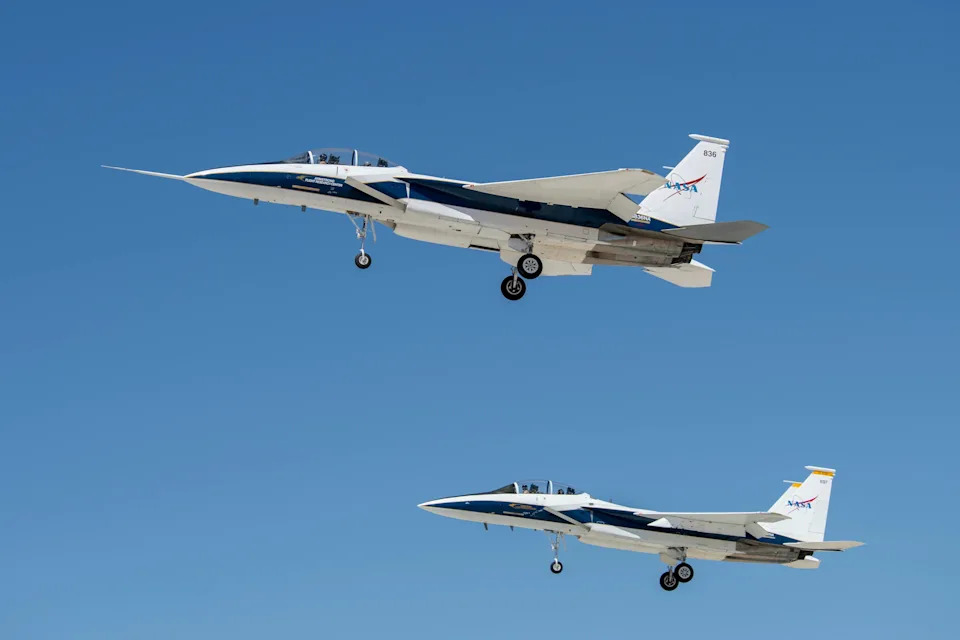
Two of NASA’s F-15 research aircraft take off in support of the agency’s Shock-Sensing Probe (SSP) research flight series at the Armstrong Flight Research Center at Edwards, California. For SSP, NASA mounted a state-of-the-art data probe on the nose of an F-15, with the goal of testing its ability to measure the shock waves of another aircraft flying at supersonic speeds.NASA/Carla Thomas
Many components of the revised life-support systems are common across the X-59 and the NASA F-15 chase jets, including panel-mounted regulators and oxygen-flow control devices. NASA is applying the same modification to one of the newly acquired F-15Ds.
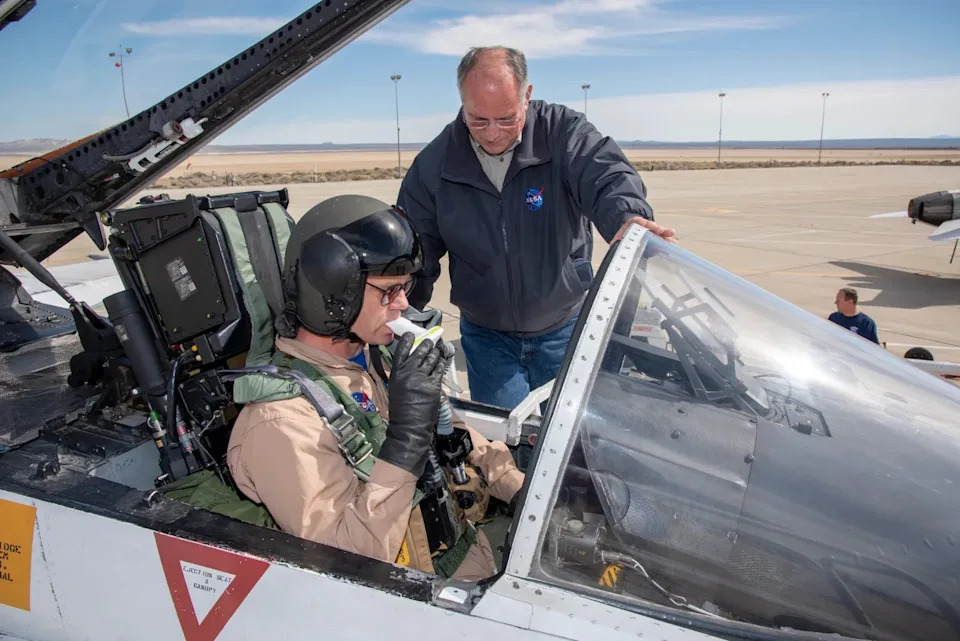
Phillip Wellner from NASA Life Support conducts a spirometry test on NASA test pilot Nils Larson before a Pilot Breathing Assessment flight at NASA’s Armstrong Flight Research Center in California.NASA/Carla Thomas
Other Research: CATNLF Wing Tests
Beyond QueSST support, NASA continues to reuse earlier F-15 airframes for aerodynamic research. NASA tail number 836—a 1974-vintage F-15B acquired from the Hawaii Air National Guard in 1993—recently completed a high-speed taxi test at 144 mph with a three-foot scale model of a Crossflow Attenuated Natural Laminar Flow (CATNLF) wing mounted beneath the fuselage.
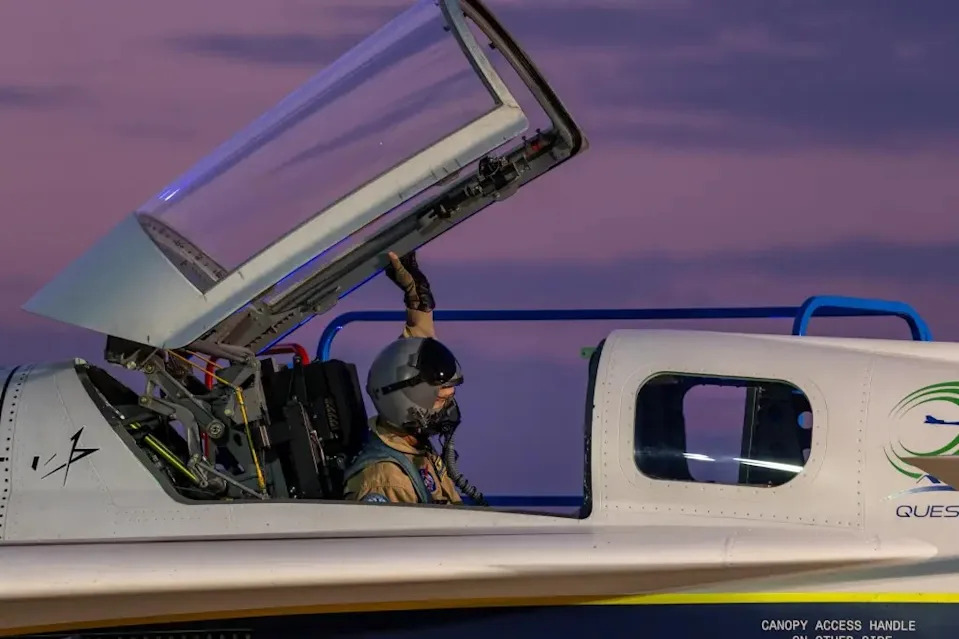
NASA test pilot Nils Larson lowers the canopy of the X-59 during ground tests at Palmdale, California, in July 2025.Lockheed Martin
The CATNLF concept is designed to improve and extend laminar flow on swept wing surfaces by mitigating crossflow instabilities, which can otherwise trip laminar flow to turbulent flow and increase drag. NASA studies suggest that applying CATNLF technology to a large airliner could yield significant fuel savings—up to about 10 percent in certain modeled scenarios for long-range aircraft.
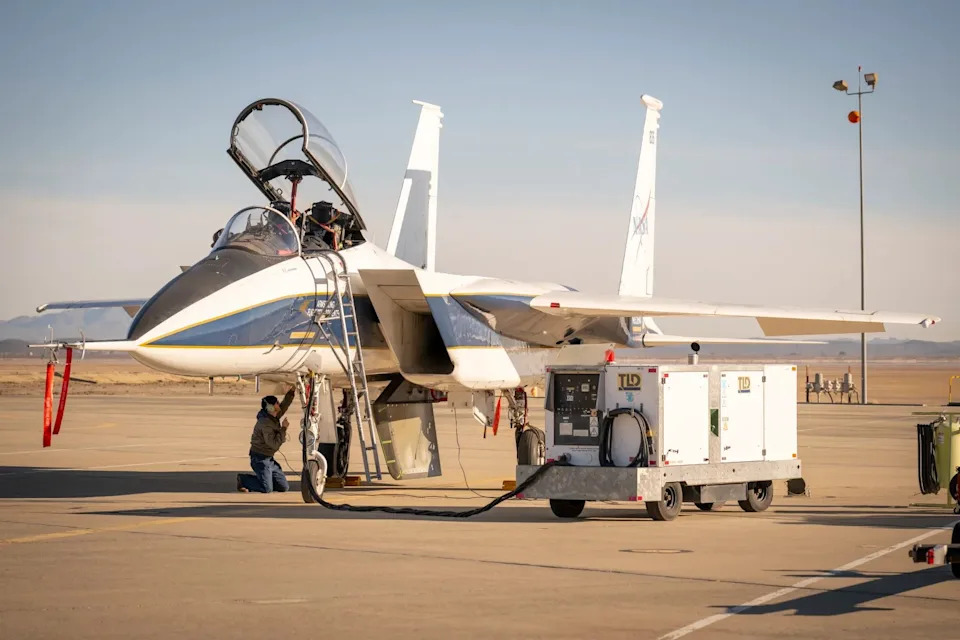
NASA ground crew prepares the agency’s F-15 research aircraft and Cross Flow Attenuated Natural Laminar Flow (CATNLF) test article ahead of its first high-speed taxi test on Tuesday, January 12, 2026, at NASA’s Armstrong Flight Research Center in Edwards, California.NASA/Christopher LC Clark
Why the F-15 Remains Useful to NASA
F-15s offer several practical advantages for flight research: high speed and altitude capability, substantial external-payload capacity, and straightforward, 1970s-era avionics and systems architecture that are comparatively easy to modify for experimental needs. Those traits make legacy Eagles an effective and economical choice for chase-plane duties, systems integration, and flight-test campaigns.
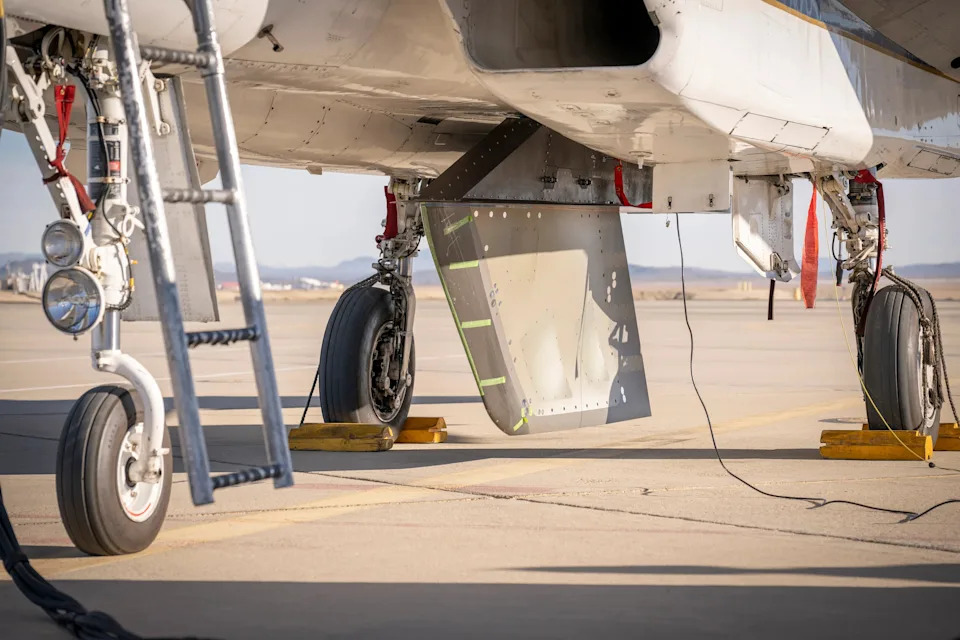
NASA’s F-15B research aircraft, with the 3-foot-tall test article mounted on its underside.NASA/Christopher LC Clark
Air Force Retirement Plans and Fleet Outlook
The U.S. Air Force has been adjusting plans to retire the F-15C/D fleet. Active-duty F-15C/D squadrons have largely been stood down, with most remaining airframes reassigned to Air National Guard units. Earlier proposals called for divesting the entire F-15C/D inventory by 2026, but revised planning now envisions retaining a reduced number of F-15C/Ds through 2028 and a smaller contingent into about 2030 for homeland defense missions. Over time, legacy Eagles are expected to be replaced by newer F-15EX and F-35 aircraft.
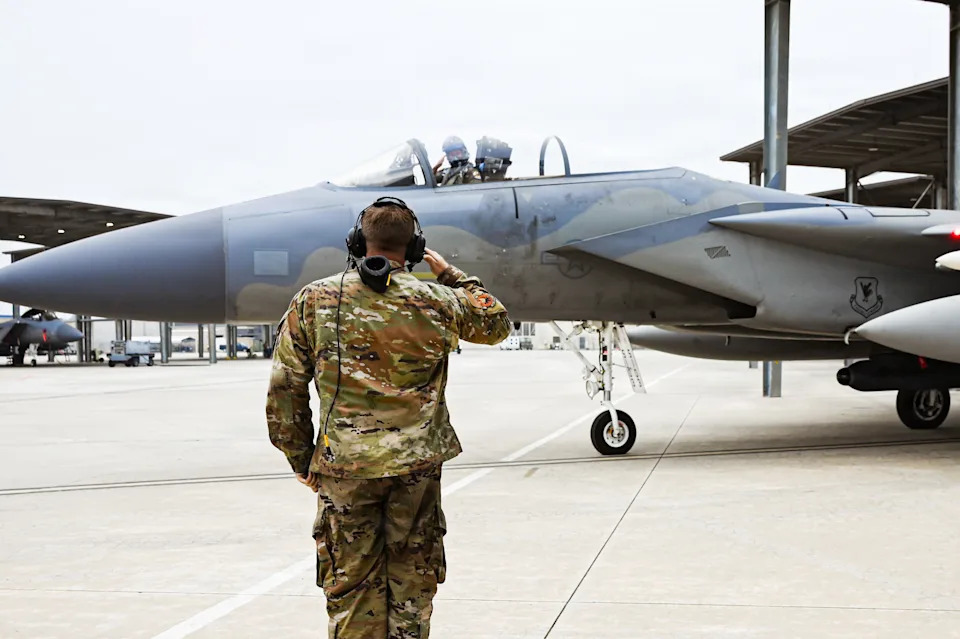
U.S. Air Force Senior Airman Michael Schiefer renders a salute as an F-15C Eagle taxies off the flightline in preparation for a morning launch from Fresno Air National Guard Base, California, December 2, 2025.U.S. Air National Guard Photo by TSgt Julian CastanedaTech. Sgt. Julian Castaneda
Whatever the long-term disposition of the Air Force’s F-15C/Ds, the recent acquisitions at Armstrong Flight Research Center underline the continued value of the Eagle platform for demanding and specialized NASA flight-test missions.
Contact the author: thomas@thewarzone.com
Help us improve.