MIT researchers delivered mRNA encoding thymus-like signaling proteins to the livers of aged mice, prompting hepatocytes to produce factors that boost T-cell development. After about a month, treated mice had more activation-ready T-cells, stronger vaccine responses, and improved anti-tumor immunity, with nearly half clearing tumors completely. Effects were reversible and required repeated injections; human trials have not yet begun and further safety testing is needed.
MIT Scientists Use mRNA To Reboot Aging Immune Systems In Mice
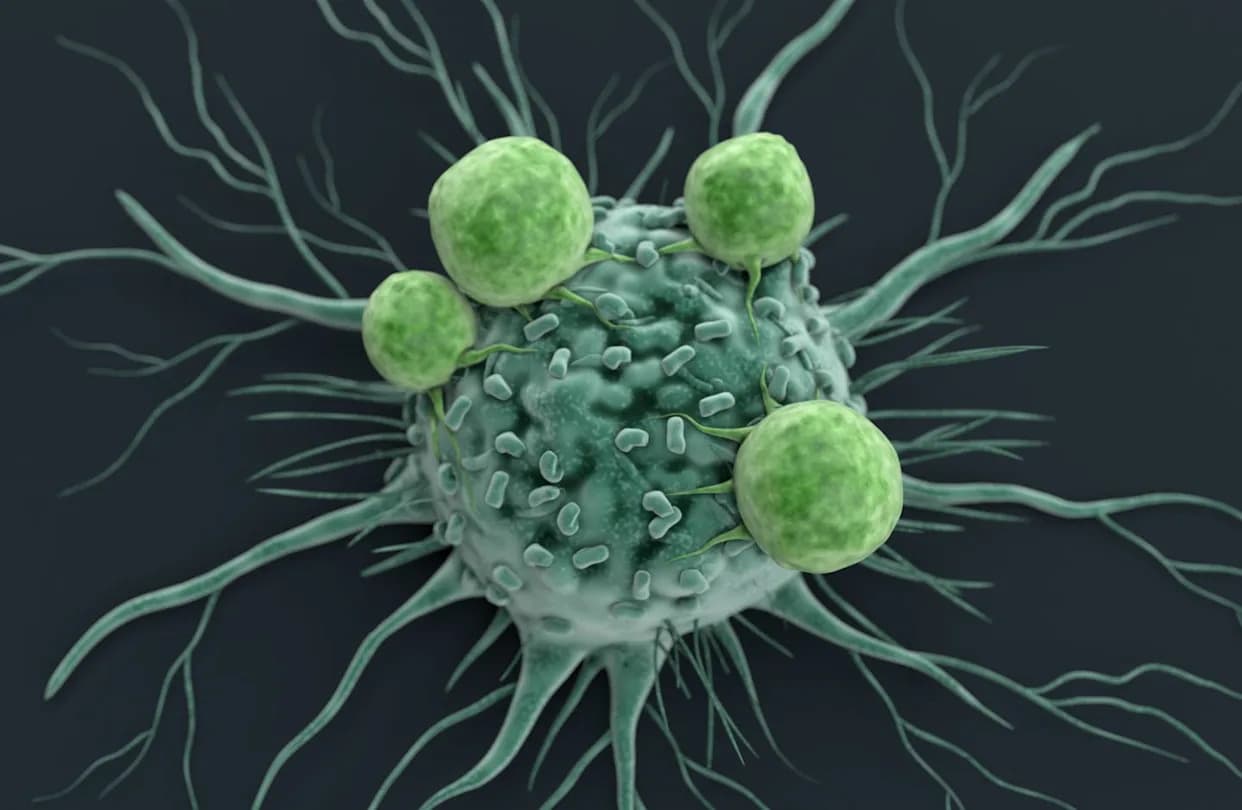
Rejuvenating Your Immune System Could Slow Agingluismmolina - Getty Images
Researchers at the Massachusetts Institute of Technology report a promising method to rejuvenate aging immune systems in mice by restoring the protein signals that drive T-cell production.
What the Team Did
As people and animals age, the thymus gland — which produces T-cells that orchestrate adaptive immune responses — progressively shrinks and loses function. That decline reduces the production of new, effective T-cells and leaves older individuals more vulnerable to infections, weaker vaccine responses, and reduced anti-tumor immunity.
Led by neuroscientist Feng Zhang, the MIT team identified a set of thymus-associated signaling proteins that promote T-cell maturation and differentiation. They encoded those signals as messenger RNA (mRNA), packaged the mRNA into lipid nanoparticles (LNPs), and injected the particles into older mice. The LNPs targeted the liver, where hepatocytes translated the mRNA and temporarily secreted the thymus-like signaling proteins.
Key Results
By using the liver as a transient “factory” for these factors, the researchers substantially increased both the quantity and turnover of newly generated, activation-ready T-cells after about a month of treatment. Treated mice showed stronger responses to vaccines and markedly improved anti-tumor immunity: tumors in many treated animals grew more slowly, and nearly half of treated mice completely cleared their tumors. The study reported minimal side effects and found no clear evidence of increased autoimmunity in the treated animals.
“We found that [our] approach significantly improved immune response in aging mice in both vaccination and cancer immunotherapy models with no adverse side effects or evidence of increased autoimmunity,” Zhang and colleagues wrote in Nature.
Limitations And Next Steps
The benefits were transient: ongoing injections were required to maintain elevated T-cell production, and immune function reverted toward baseline when dosing stopped. The approach has not yet been tested in humans; important questions remain about safety, optimal dosing schedules, long-term effects, and whether the same benefits will translate to people. Additional preclinical work and carefully designed clinical trials will be needed before this strategy could be considered for human use.
While preliminary, these results illustrate a novel approach — temporarily reprogramming the liver to secrete therapeutic proteins — that could be generalized to address other age-related declines if proven safe and effective in humans.
Help us improve.