Japan is reintroducing international sumo events as part of a renewed soft-power push, with organisers already planning a Paris tour in June after last year's London stop. The practice has deep roots — from displays for Commodore Perry in 1854 to Cold War-era cultural exchanges with China, which once sent pandas in return. The Japan Sumo Association stresses that overseas shows must present sumo as a respectful tradition rather than mere entertainment. Rising international tourism and renewed promoter interest have helped accelerate plans for global exhibitions.
Sumo Diplomacy: Japan's Heavyweight Ambassadors Return to the World Stage
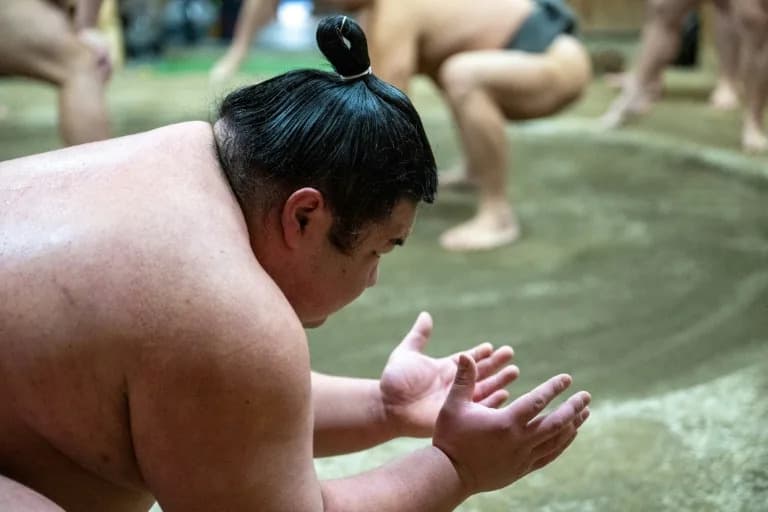
Overseas trips became rare over the past two decades as Japan's sumo association refocused on its domestic audiences while the sport's popularity waned (Mathias CENA)(Mathias CENA/AFP/AFP)
Two enormous rikishi size each other up and then crash together with a dull thud — a visceral spectacle that is being repurposed as cultural diplomacy. After years away from the international spotlight, sumo is once again part of Japan's soft-power toolkit, with organisers planning a Paris tour in June following last year's stop in London.
From Tokyo To Paris
Behind the scenes at the New Year Grand Sumo Tournament, which concluded on Sunday in Tokyo, the Japan Sumo Association (JSA) and promoters were already finalising plans for the Paris event. Overseas tours were once common — the last time wrestlers performed in France was in 1995 — but in recent decades such trips became rare. Before the London appearance last year, the JSA had not staged an overseas tournament since Las Vegas in 2005.
Sumo's Long Diplomatic History
Deploying hulking wrestlers as cultural emissaries is a long-established practice. As far back as 1854, sumo wrestlers demonstrated their power before Commodore Matthew Perry when he arrived to press for Japan's diplomatic and commercial reopening after two centuries of isolation.
In his journal, Perry described the performance as “barbaric” and said the wrestlers were “more like bulls than humans.”
“Perry observed everything about Japan from a position of almost total ignorance of the country,” says Jessamyn R. Abel, professor of Asian studies at Penn State University. Today, Abel adds, sumo tends to reinforce already positive perceptions of Japan among international audiences who find the country “cool.”
Cold War Echoes And Panda Diplomacy
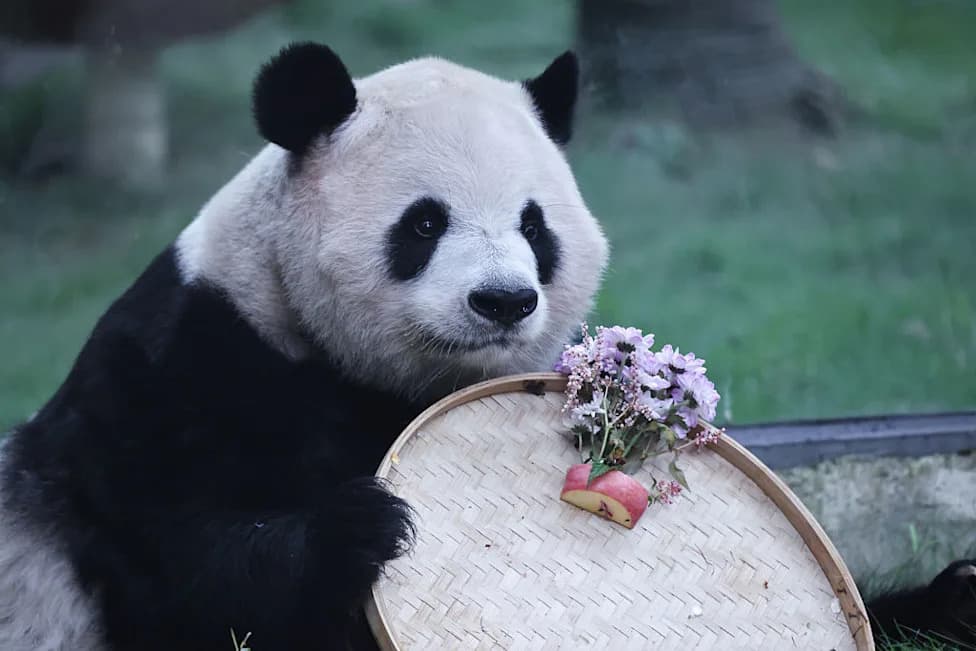
Sumo tours in the 20th century complemented Japan’s broader diplomatic outreach — from the United States and Europe to the Soviet Union and China. In 1973 wrestlers visited Beijing to mark the normalization of ties between Japan and Mao Zedong’s China; China reciprocated that year by sending two giant pandas to Tokyo as a symbol of goodwill.
Erik Esselstrom, professor of history at the University of Vermont, notes the historical context: China was economically weaker and Japan stronger at the time, so cultural exchanges carried particular weight. With bilateral ties cooler today — and Japan’s last two pandas recently returned to China — a contemporary sumo visit would carry different symbolism.
Why Tours Dwindled And Why They're Back
Overseas trips became uncommon over the past two decades as the JSA refocused on domestic audiences and the sport endured a string of scandals. The Covid-19 pandemic then halted international travel altogether. Organisers also say interest from foreign promoters was limited for some time.
Now the environment has changed: Japan is expecting record tourism in 2025, and foreign visitors are keen to experience sumo in person. Many domestic tournaments sell out regularly, and renewed promoter interest has accelerated plans for overseas shows.
The JSA's Conditions And Cultural Sensitivities
David Rothschild, promoter of the Paris event, says he first approached the JSA about a decade ago but received no response until 2023. After detailed discussions, preparations moved quickly. The JSA made one requirement clear: sumo must be presented and understood as tradition, not merely as sport or entertainment. “In every discussion they wanted to make sure I wouldn't do anything inappropriate, that I would be respectful,” Rothschild said.
Yasutoshi Nakadachi, a former wrestler and organiser of the Paris tour, describes the JSA’s situation as “complicated,” noting both internal sensitivities and previously limited foreign interest. Still, memories of past visits are fond: wrestlers who toured Paris in 1986 and 1995 recall both serious competition and the chance to enjoy the city.
Faces And Moments To Watch
Sumo official Sehei Kise remembers meeting France’s then-president Jacques Chirac, who was an ardent sumo admirer. Current top-division wrestler Wakamotoharu, a cinema enthusiast, hopes to visit Place de la Concorde — and on Paris’s cobbles the giant athletes could well become the main spectacle themselves.
mac/amk/abs/mjw
Help us improve.