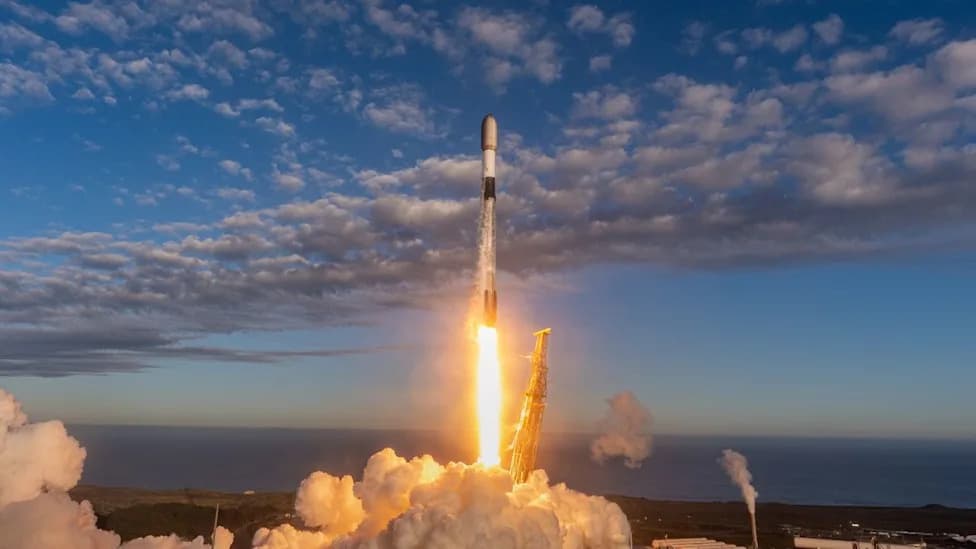
SpaceX is slated to launch the Space Coast’s first 2026 mission at midnight Sunday, sending 29 Starlink satellites from SLC-40. Weather is a concern early in the window but improves by the close, and a 24-hour delay would raise the odds for a good launch. Three more Starlink flights are planned from Cape Canaveral over the next two weeks, and the region’s busy schedule also includes upcoming ULA Vulcan missions, Blue Origin’s New Glenn work, and NASA’s Artemis II.
SpaceX Set For Space Coast’s First Launch Of 2026 — Midnight Starlink Liftoff Kicks Off Busy Florida Run
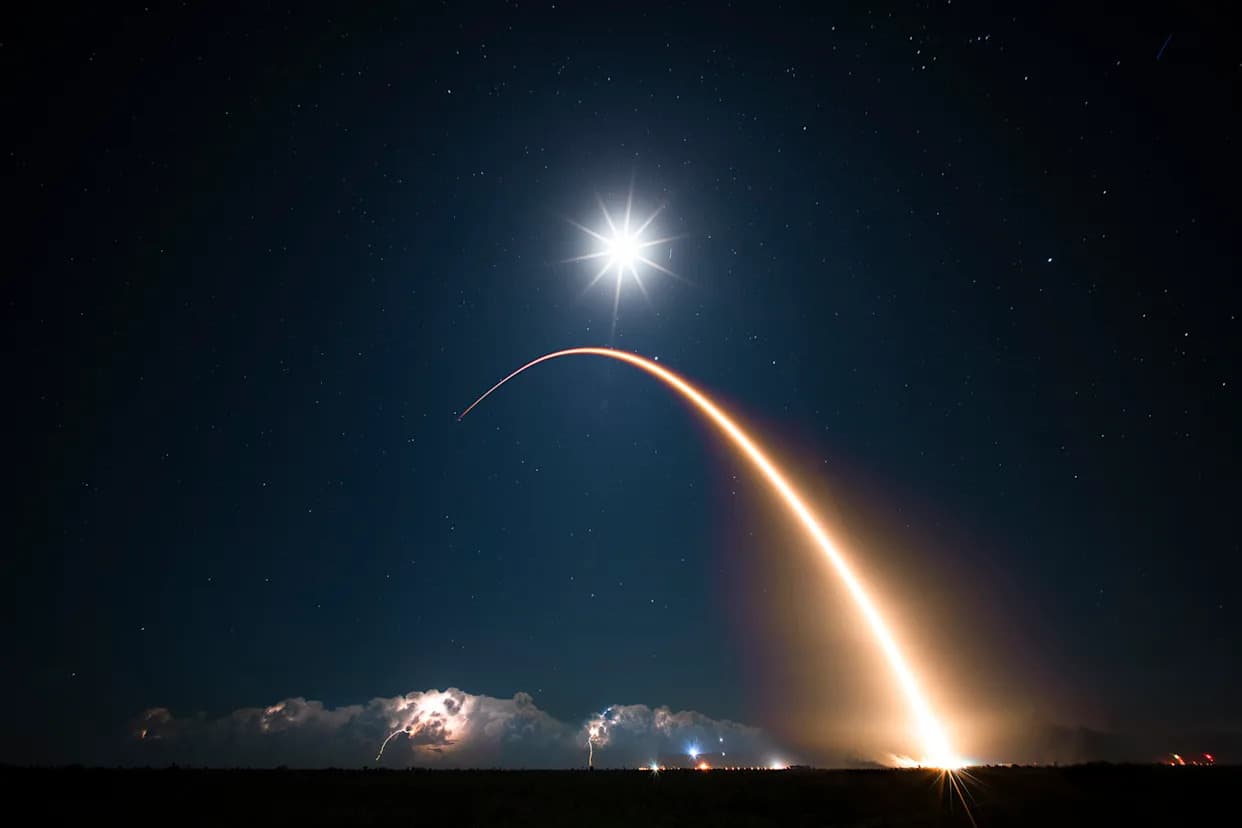
ORLANDO, Fla. — SpaceX is poised to deliver the Space Coast’s first orbital launch of 2026 as a Falcon 9 is scheduled to lift off at midnight Sunday on the Starlink 6-88 mission, carrying 29 satellites from Space Launch Complex 40 (SLC-40) at Cape Canaveral Space Force Station.
Mission Profile: The flight will use a first-stage booster on its maiden flight. SpaceX plans a downrange recovery attempt aboard the droneship A Shortfall of Gravitas stationed in the Atlantic Ocean.
Weather Outlook: A cold front moving across Central Florida beginning Saturday night could influence conditions. Space Launch Delta 45’s weather squadron currently gives a 30% chance of favorable conditions at the opening of the window (12:00 a.m.) rising to about 70% by the 3:17 a.m. close. Forecasters note a low-to-moderate risk of upper-level wind shear. A 24-hour slip would improve the odds to roughly 75%.
Upcoming Starlink Cadence: SpaceX plans three additional Starlink flights from SLC-40 over the next two weeks, each carrying 29 satellites and aiming for downrange landings on one of the company’s Port Canaveral-based droneships. The schedule includes:
- Starlink 6-96 — Targeting Wednesday, 1:55–5:55 p.m.; booster making its 29th flight.
- Starlink 6-97 — Targeting Jan. 10, 1:34–5:34 p.m.; booster on its 25th flight.
- Starlink 6-98 — Targeting Jan. 14; booster on its 13th flight.
Context And Launch Tempo: In 2025 SpaceX flew 165 Falcon 9 missions across all its U.S. sites, 101 of them from Kennedy Space Center and Cape Canaveral. The company’s first mission of 2026 flew Jan. 2 from Vandenberg, delivering Italy’s COSMO-SkyMed Second Generation satellite.
Other Players On The Florida Manifest: The Cape Canaveral launch slate remains crowded. United Launch Alliance (ULA) and Blue Origin both expect flights early in the year, though exact dates are not finalized.
ULA has announced its next mission will fly on the new Vulcan rocket for USSF-87, which would be Vulcan’s fourth flight and its second national security mission. That launch will carry a Geosynchronous Space Situational Awareness Program (GSSAP) spacecraft. Vulcan development delays have produced a backlog of more than 20 national security missions.
ULA plans to use Vulcan for commercial rides as well — the flight following USSF-87 is expected to be Vulcan’s first mission for Amazon’s LEO constellation. Vulcan can host up to 44 small satellites per launch, compared with Atlas V’s capacity of about 27.
Blue Origin continues preparations for New Glenn’s third mission, NG-3, which is planned to deliver the Blue Moon Mark 1 lunar lander on an uncrewed mission targeting the moon’s South Pole.
What’s Next At Cape Canaveral: New entrants and vehicles may join the manifest later in the year, including Relativity Space’s Terran R from LC-16 and Stoke Space’s Nova from LC-14. Meanwhile, NASA is readying the Space Launch System and Orion for Artemis II, the first crewed Orion flight, targeting launch from Pad 39-B no later than April with an earliest opportunity possibly in early February. Artemis II will carry three NASA astronauts and one Canadian Space Agency astronaut on a lunar flyby to validate Orion systems ahead of Artemis III.
Bottom line: A midnight Starlink liftoff could kick off a busy stretch at Florida ranges, with multiple Starlink missions, national security launches on Vulcan, an upcoming New Glenn lunar cargo flight, and NASA’s high-profile Artemis II test all contributing to a full 2026 manifest.
Help us improve.