Santería priests and priestesses in Havana conducted public ceremonies asking deities for peace amid rising U.S.–Cuba tensions and growing economic strain. The rites featured Yoruba chants, traditional divination warnings of potential violence, and offerings that included food and animal sacrifices. According to the report, the ceremonies followed a Jan. 3 U.S. strike on Caracas that led to the arrest of Nicolás Maduro and the deaths of 32 Cuban soldiers, an event that heightened anxiety on the island. Worshippers said the rituals aim to protect society, prevent conflict and restore harmony.
Havana Santería Priests Hold Rituals for Peace as U.S.–Cuba Tensions Rise
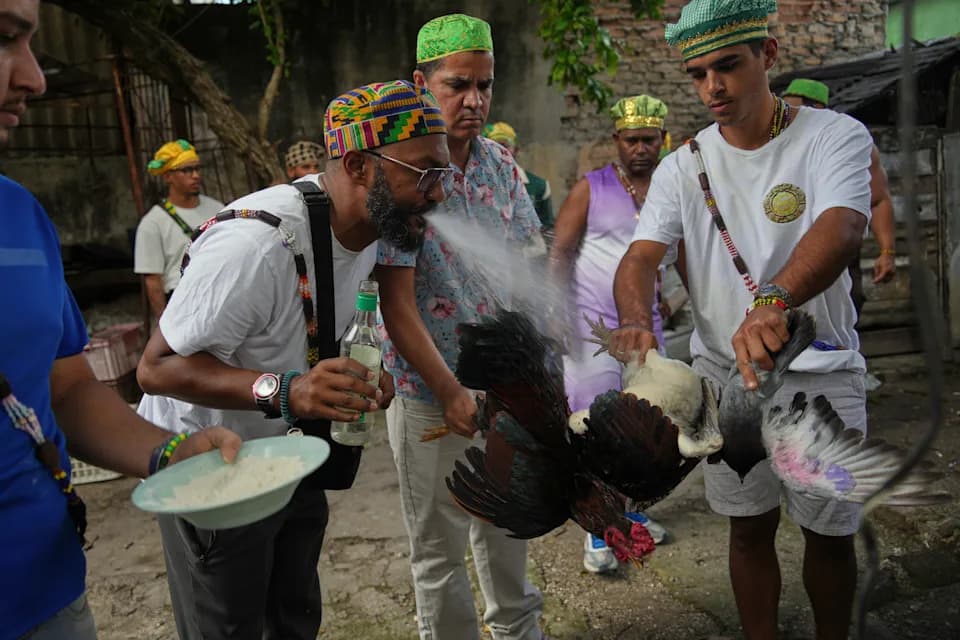
Santeria priests, also known as Babalawos, perform a cleansing ritual with roosters during a ceremony calling for peace and health in Havana, Sunday, Jan. 25, 2026. (AP Photo/Ramon Espinosa)(ASSOCIATED PRESS)
Havana — As diplomatic and economic tensions between the United States and Cuba intensify, priests and priestesses of the Afro‑Cuban religion Santería held a series of public ceremonies on Sunday, offering gifts to the deities and praying for peace and spiritual healing across the island.
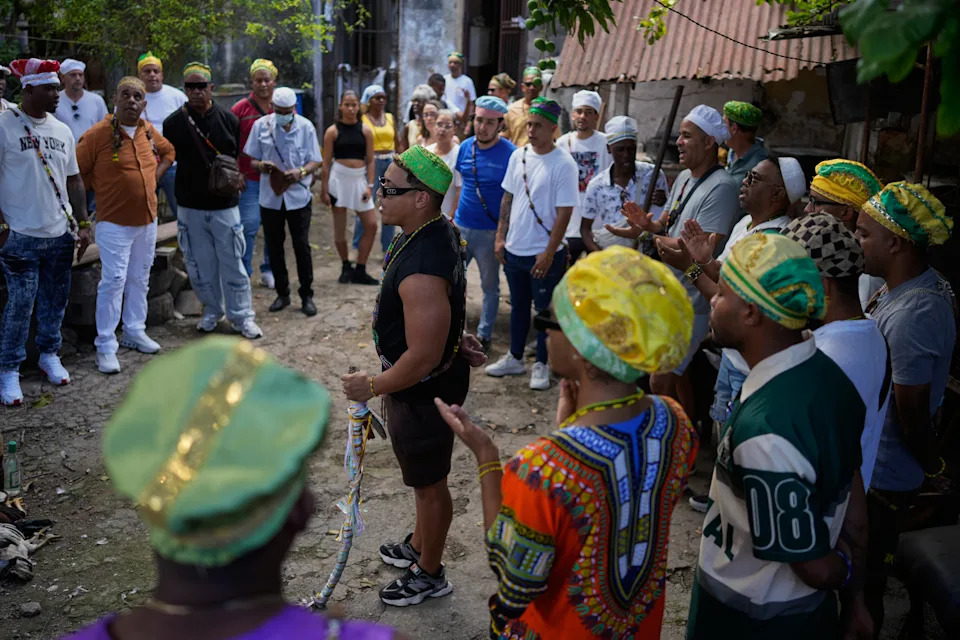
Santeria priests, also known as Babalawos, perform a cleansing ritual with roosters during a ceremony calling for peace and health in Havana, Sunday, Jan. 25, 2026. (AP Photo/Ramon Espinosa)(ASSOCIATED PRESS)
Rituals, Chants and Offerings
Prominent Santería leaders gathered in the courtyard of an old Havana house to lead the rites, chanting in ancient Yoruba — a language carried to Cuba by enslaved Africans and preserved through oral tradition. The ceremonies blended African and Spanish religious customs, reflecting Cuba’s distinct Afro‑Cuban cultural identity.
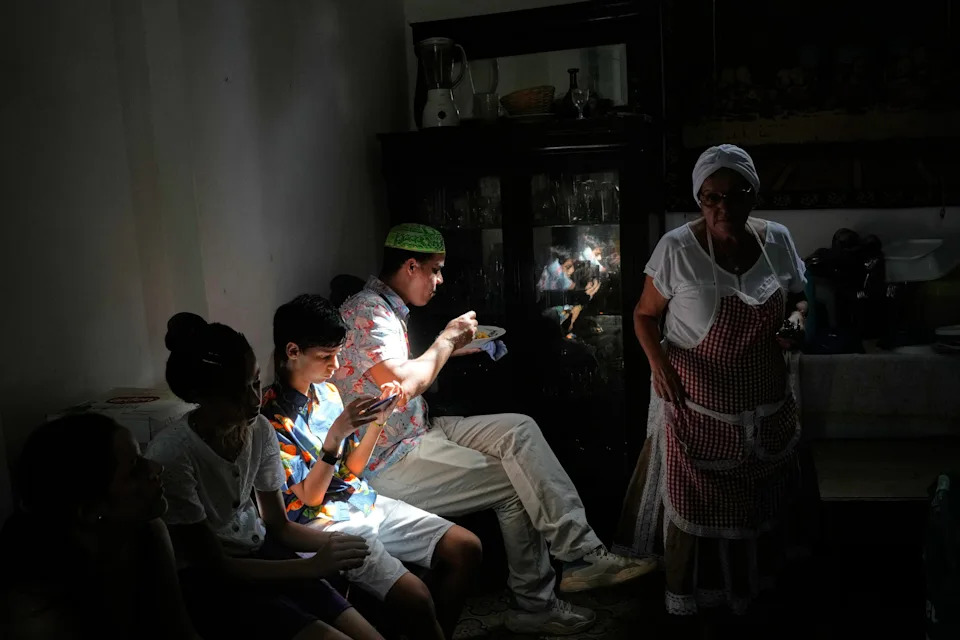
Santeria priests, also known as Babalawo, eat after a cleansing ritual with roosters during a ceremony calling for peace and health in Havana, Sunday, Jan. 25, 2026. (AP Photo/Ramon Espinosa)(ASSOCIATED PRESS)
“We believe that through sacrifices and prayers we can alleviate the impact of harmful issues,”
— Lázaro Cuesta, ceremony organizer
The rites included prayers to Eggun, the deity of the ancestors, and an offering to Azowano, a manifestation associated with Saint Lazarus in their belief system. Worshippers presented foodstuffs — including beans, corn and two eggs — and performed ritual animal offerings: a hen, a rooster and a dove. Many participants stressed the expense of some offerings, such as eggs, underscoring the congregation’s commitment.
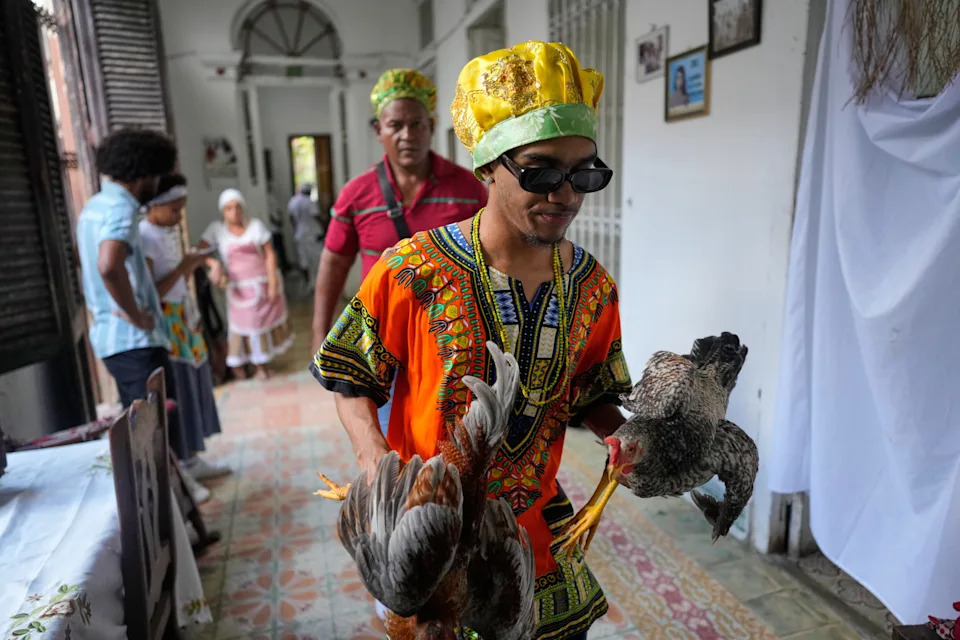
Santeria priests, also known as Babalawos, perform a cleansing ritual with roosters during a ceremony calling for peace and health in Havana, Sunday, Jan. 25, 2026. (AP Photo/Ramon Espinosa)(ASSOCIATED PRESS)
Divination Warnings and Regional Context
Santería priests known as babalawos had used traditional divination on Jan. 2 to predict a period in which war and violence could affect Cuba and other countries. According to the report, the following day — Jan. 3 — saw a U.S. strike on Caracas that resulted in the arrest of then‑President Nicolás Maduro and the deaths of 32 Cuban soldiers assigned to his security detail. The report says that sequence of events deeply shocked people across the island and heightened fears of regional instability.
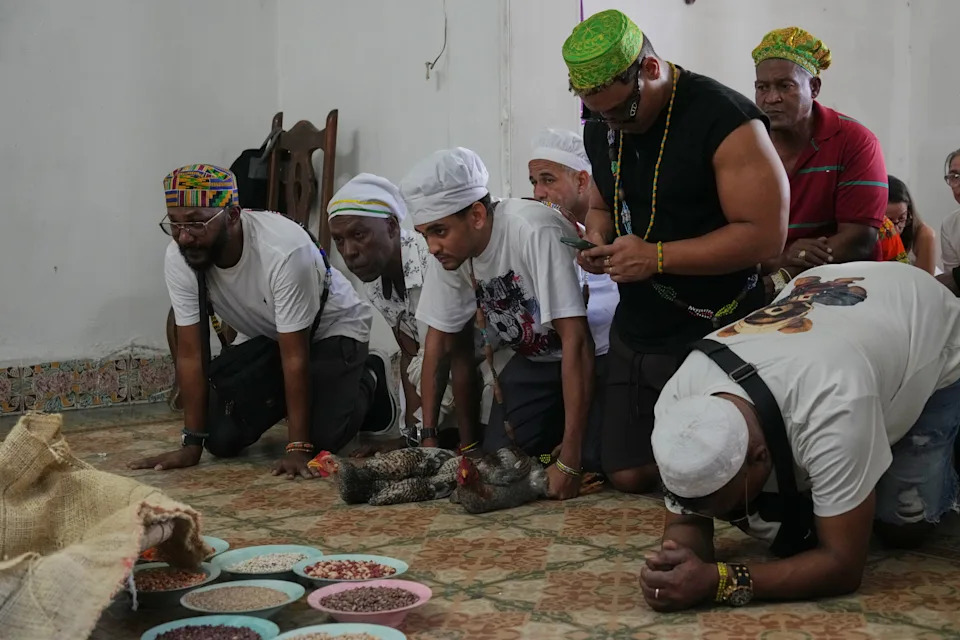
Santeria priests, also known as Babalawos, perform a cleansing ritual with roosters during a ceremony calling for peace and health in Havana, Sunday, Jan. 25, 2026. (AP Photo/Ramon Espinosa)(ASSOCIATED PRESS)
Cuba is also contending with a sharp tightening of U.S. sanctions that has strained parts of its economy. Many worshippers said the rituals aimed to deflect negative forces, promote social harmony and protect communities from violence and hardship.
In the ceremony’s closing moments, several hundred participants formed a single file around a central basket of offerings and underwent a ritual cleansing: attendants swept them with live chickens while the congregation chanted in Yoruba.
“This is being done for the good of society, so that there is no conflict or violence, so that there is harmony and health,”
— Eraimy León, babalawo
Help us improve.