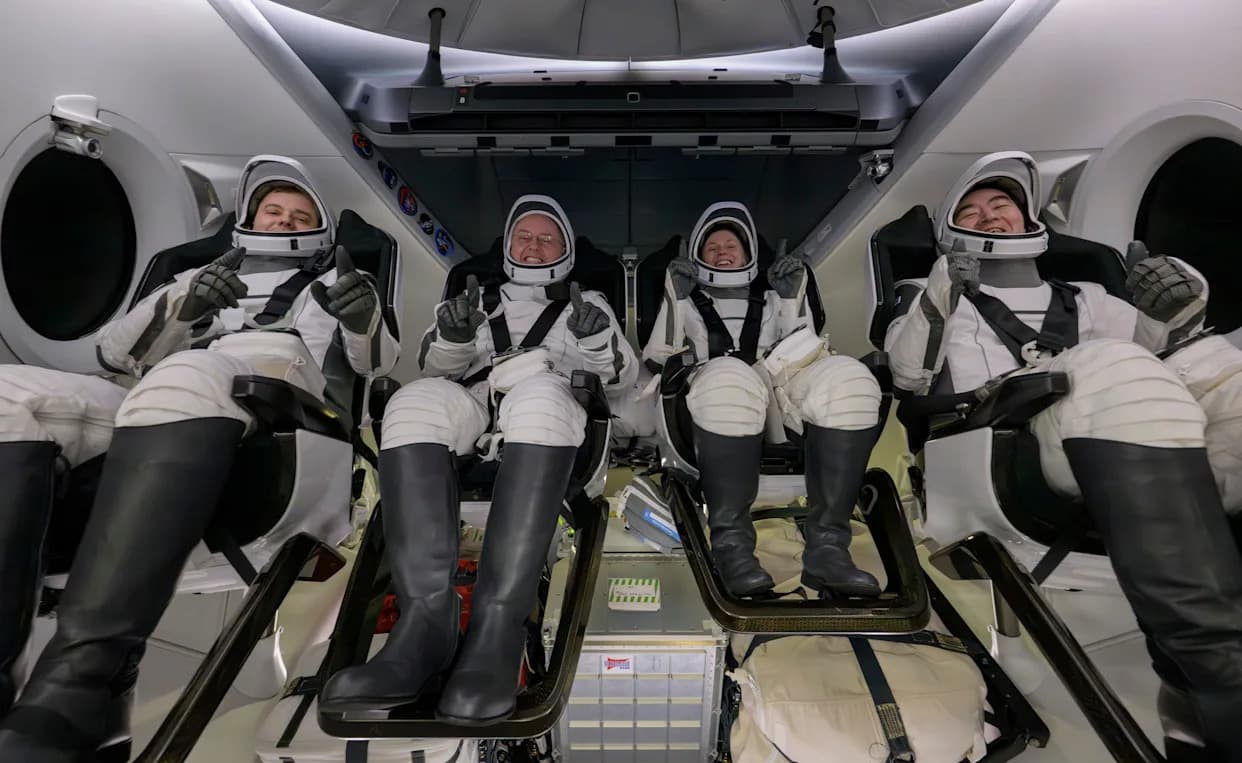
NASA evacuated Crew-11 from the International Space Station after an unspecified medical emergency that required use of the station's onboard ultrasound, the crew said following a Jan. 15 splashdown. The ultrasound helped diagnose the problem and shaped the decision to return the crew to Earth, though NASA has not identified the specific condition or affected astronaut. Crew members urged that future missions carry similar portable diagnostic equipment, while officials said the response validated established safety procedures.
Crew-11 Evacuated From ISS After Medical Emergency; Onboard Ultrasound Played Key Role

ISS astronauts discuss their recent ordeal, and first-ever orbital evacuation. (Credit: NASA TV)
Last week, NASA evacuated the Crew-11 team from the International Space Station following a medical emergency that occurred on orbit. NASA initially declined to identify the specific condition or the crew member involved. After a Jan. 15 splashdown and postflight debriefings, the astronauts revealed that the station's portable ultrasound unit was used to assess the problem—an early step that helped determine the seriousness of the situation and led to the decision to return crew members to Earth.
What Astronauts and NASA Said
In their first press conference after splashdown, the Crew-11 members said the onboard ultrasound was essential to diagnosing the issue and guiding mission-control decisions. The crew argued that future missions would benefit from carrying similar portable diagnostic equipment for crew health and safety.
Mike Fincke: We didn't have other big machines that we have here on planet Earth... We do try to make sure that everybody, before we fly, is really, really not prone to surprises. But sometimes things happen, and surprises happen, and the team was ready…preparation was super important.
NASA described the outcome as a validation of established safety procedures—an echo of the agency's public messaging after past in-flight incidents such as Apollo 13 and Gemini 8. The agency emphasized that, despite thorough preflight screening, biological problems can still arise in space and require in-the-moment diagnosis and contingency planning.
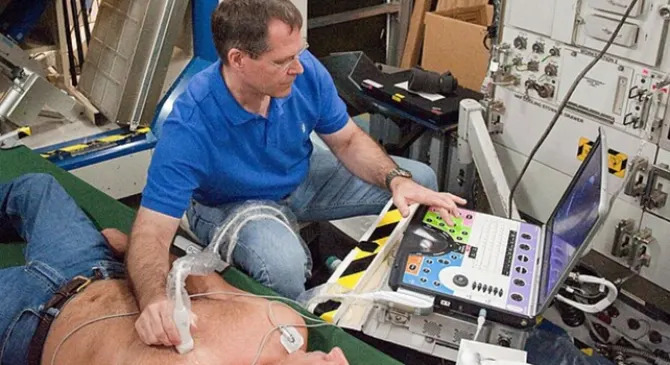
ultrasound astronaut test
Possible Diagnoses And Limits Of Public Information
Officials and astronauts declined to confirm a specific diagnosis. While cardiac events are among the more serious medical problems that have occurred for astronauts, the crew's reliance on ultrasound also leaves other possibilities open. For example, an inflamed appendix or other abdominal issues could escape prelaunch detection and be identified with ultrasound on orbit—though that remains speculative.
Medical conditions can evolve differently in microgravity, complicating diagnosis and treatment. Because of privacy rules, operational sensitivity, and the complexity of medical follow-up, a definitive public account of the incident may not emerge for years—often appearing later in memoirs, medical case reports, or agency retrospectives.
Context: NASA training images show astronaut Kevin Ford practicing with a portable ultrasound device on Earth, underscoring the agency's emphasis on equipping crews with diagnostic tools. Credit: NASA.
Ultimately, Crew-11's experience highlights both the limitations of current on-orbit medical resources and the value of portable, crew-operated diagnostic systems for future missions—especially as human spaceflight extends further from quick-return options.
Help us improve.