The Nara court convicted Tetsuya Yamagami, 45, of murdering former prime minister Shinzo Abe and sentenced him to life imprisonment, with the judge calling the daylight attack "despicable and extremely malicious." The trial highlighted Yamagami's motive linked to his family's financial ruin after large donations to the Unification Church and evidence of premeditation, including crafting a homemade gun beginning in 2020. The assassination prompted political fallout, investigations into ties between the church and conservative lawmakers, and debate about public‑figure security in Japan.
Ex-PM Shinzo Abe’s Killer Sentenced To Life As Judge Condemns ‘Despicable’ Daylight Assassination
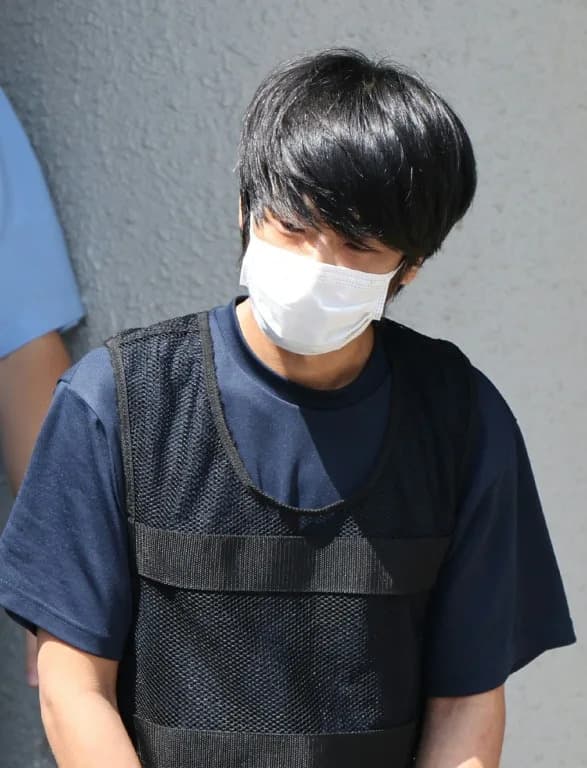
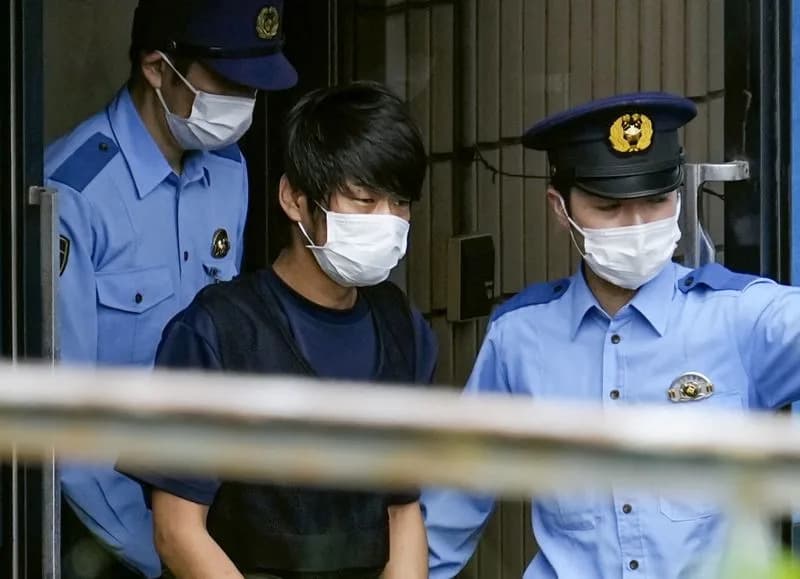
Tetsuya Yamagami, the man accused of murdering former Japanese Prime Minister Shinzo Abe (STR)(STR/JIJI PRESS/AFP)
A Nara district court on Wednesday sentenced 45-year-old Tetsuya Yamagami to life imprisonment after finding him guilty of murdering former Japanese prime minister Shinzo Abe. Judge Shinichi Tanaka described the broad‑daylight killing as "despicable and extremely malicious," noting Abe was shot from behind when he was least expecting it.
Yamagami, who used a homemade firearm to shoot Abe during a campaign speech in July 2022, showed little emotion as the sentence was read. He was convicted of murder and violations of firearms control laws. The defendant had admitted to murder when the trial opened in October; his defence team said they had not yet decided whether to appeal. Under Japanese law, an appeal must be filed within two weeks.
Motive and Background
Prosecutors argued Yamagami’s motive was aimed at drawing attention to and undermining the Unification Church after his family was financially devastated by his mother’s large donations to the group. Court testimony said those donations eventually totalled roughly 100 million yen (about $1 million at the time), leaving the family bankrupt and derailing Yamagami’s education and prospects.
The defence described Yamagami’s upbringing as marked by "religious abuse," suicide in the family and deep personal distress. Judge Tanaka acknowledged that aspects of Yamagami’s upbringing "influenced the formation of his personality and his mindset" and may have played a distant role in his actions. However, the judge stressed that each criminal act reflected Yamagami’s own decision‑making and warranted strong condemnation.
Premeditation and Investigation
Prosecutors presented evidence of careful planning: Yamagami began handcrafting a firearm in 2020 and conducted repeated test‑firing sessions in a remote mountainous area. They said these facts demonstrated the attack was highly premeditated.
The assassination prompted large‑scale investigations that exposed ties between the Unification Church and some conservative politicians, triggering the resignations of four ministers and renewed scrutiny of the group's influence in Japanese politics.
Security And Wider Impact
The shooting shocked a country with some of the world’s strictest gun controls. A police report after the attack said security officers did not immediately recognize the first shot and were unable to prevent Abe’s killing. The case has prompted debate about public‑figure security, the limits of religious influence and how to prevent similar tragedies.
Akie Abe: "Face up to what you have done and pay for the crime of taking the life of my precious husband."
Japan’s version of life imprisonment technically allows for the possibility of parole, but experts note that many people sentenced to life in Japan die in custody without release.
Help us improve.