The UK government will decide this week whether to approve plans for a large Chinese embassy at the former Royal Mint site in central London, a proposal delayed since China bought the property in 2018. Critics and rights groups warn the complex could be used to surveil and intimidate dissidents, concerns intensified by reports of 208 underground rooms and proximity to sensitive internet cables. The timing is delicate: the decision comes ahead of a likely visit by Prime Minister Keir Starmer to China and amid other bilateral tensions. Protesters and opposition politicians oppose the plan, and local residents say they may mount legal challenges if approval is granted.
Long-Delayed Ruling Looms Over Controversial Chinese 'Mega-Embassy' at Former Royal Mint Site
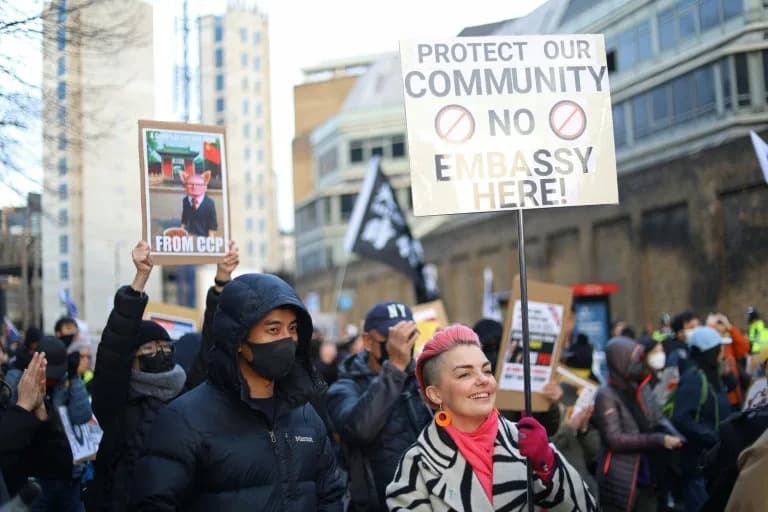
People protested at the site of the former Royal Mint in London against China's proposal for a mega-embassy just a stone's throw from The Tower of London (Toby Shepheard)(Toby Shepheard/AFP/AFP)
The UK government is set to decide this week whether to approve plans for a sprawling Chinese embassy complex on the historic site of the former Royal Mint in central London, a move that has been repeatedly delayed since China bought the property in 2018. The proposed relocation from the mission's current Marylebone site would, if approved, create the largest embassy complex in the UK by area and one of the biggest embassy compounds in a Western capital.
Background
Beijing purchased the Royal Mint site, a short distance from the Tower of London, in 2018. Since then the proposal to move the embassy has attracted sustained public scrutiny, political debate and a series of planning delays. British media report the government's decision comes ahead of a likely visit by Prime Minister Keir Starmer to China later this month, although Downing Street has not officially confirmed the trip.
Security and Surveillance Concerns
Critics, rights groups and local residents warn the site could be used to monitor and intimidate dissidents. Concerns intensified after The Daily Telegraph published unredacted plans that reportedly show 208 underground rooms — including what the paper described as a "hidden chamber" — and indicate the development would run alongside sensitive high-speed internet cables that link to the City of London financial district. The plans allegedly include proposals to demolish and rebuild a wall separating the cables from the embassy, raising fears about potential underground tapping or other risks.
Political Reactions
"We cannot allow the Chinese to build this spy embassy in an area so crucial to our national security,"
said Conservative Party leader Kemi Badenoch at a weekend rally. When the decision was postponed in December, Chinese foreign ministry spokesman Lin Jian said Beijing was "deeply concerned" and "strongly dissatisfied".
Public Response and Legal Options
Hundreds of protesters gathered at the proposed site at the weekend, citing fears of transnational repression and surveillance. Some demonstrators who moved to the UK from Hong Kong said they worried the embassy could be used to intimidate critics abroad. Local residents have also signalled they may launch legal challenges if the government approves the plan — a step that could further delay or complicate the development.
Wider Diplomatic Context
The embassy controversy arrives amid other bilateral tensions, including a collapsed UK prosecution of two men accused of spying for China and the conviction of media mogul Jimmy Lai in Hong Kong on national security charges. Reports also suggest the UK's own plans to redevelop its embassy in China have been affected, making the decision a potentially sensitive issue for both capitals.
As the government prepares its ruling, it faces a balancing act between national security concerns, local opposition and the diplomatic consequences of either approving or refusing the high-profile proposal.
Help us improve.