The Supreme Court in Conakry has upheld Gen. Mamadi Doumbouya’s victory in Guinea’s Dec. 28 vote, confirming him as president after he won 86.7% of the ballots. The election — the country’s first since the 2021 coup — was held under a new constitution that allows military figures to run and extends the presidential term to seven years. Critics say Doumbouya has suppressed opposition and dissent, raising concerns about political pluralism and stability. Despite Guinea’s mineral wealth, widespread poverty and food insecurity remain urgent challenges.
Supreme Court Confirms Gen. Mamadi Doumbouya as Guinea’s President After 86.7% Post‑Coup Vote
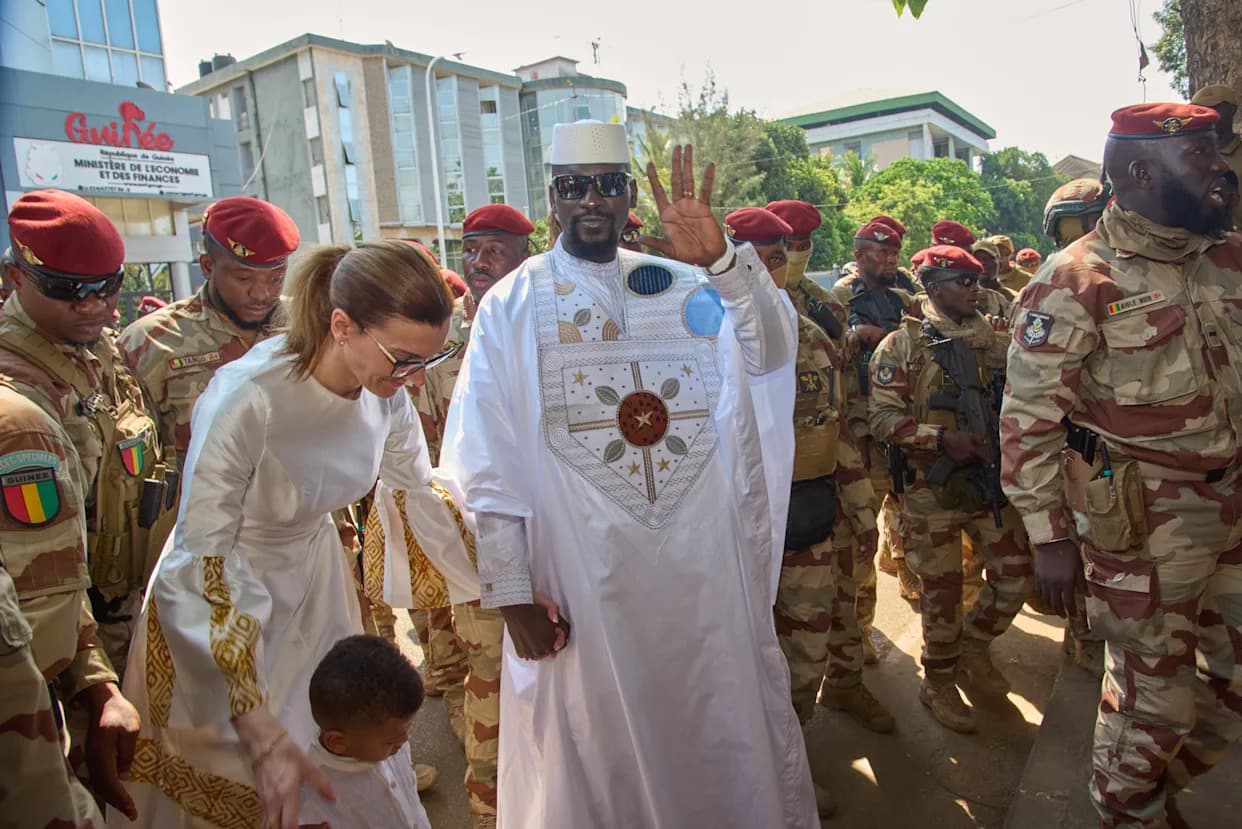
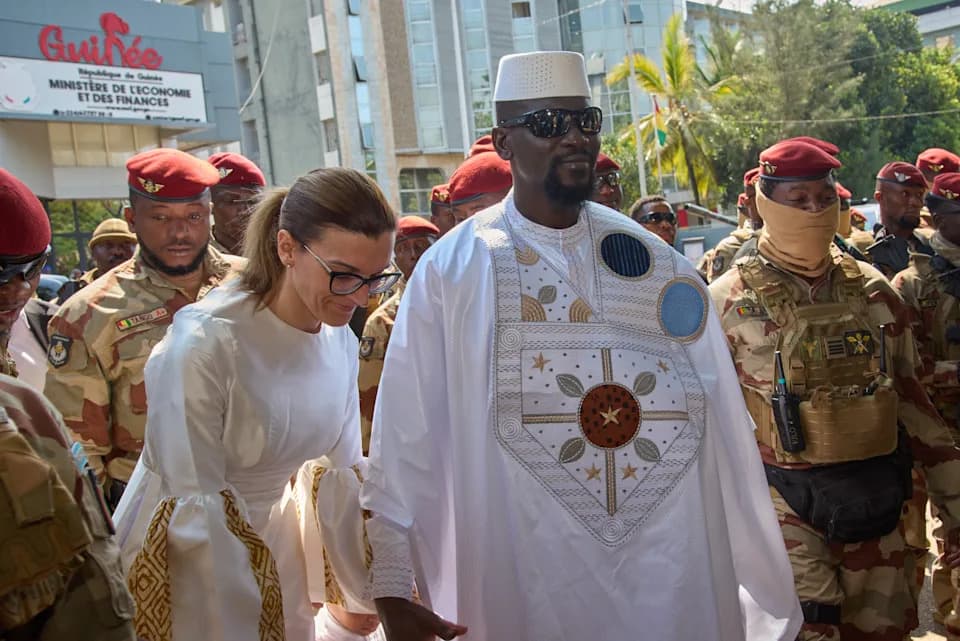
Guinea's President, Gen. Mamadi Doumbouya, arrives with his wife, Lauriane Doumbouya, to cast their votes in the presidential election in Conakry, Guinea, Sunday, Dec. 28, 2025. (AP Photo/Fode Toure)
The Supreme Court in Conakry on Sunday validated the election victory of Gen. Mamadi Doumbouya, formalizing the transition from junta leader to democratically elected president four years after the 2021 coup.
Official Result and Court Ruling
According to the General Directorate of Elections, Doumbouya received 86.7% of the vote in the Dec. 28 election — Guinea’s first national ballot since the 2021 coup. The Supreme Court’s decision in the capital reaffirmed the official tally reported by election authorities.
Response and Legal Challenge
Doumbouya addressed the nation in a late Sunday broadcast, saying:
“Today, there are neither winners nor losers. There is only one Guinea, united and indivisible.”
He urged citizens to work toward “a new Guinea — a Guinea of peace, justice, shared prosperity, and fully assumed political and economic sovereignty.”
Runner-up Yero Baldé, who received 6.59% of ballots, had lodged a complaint alleging manipulation by the electoral authority but reportedly withdrew the petition a day before the Supreme Court issued its ruling.
Constitutional Changes and Political Context
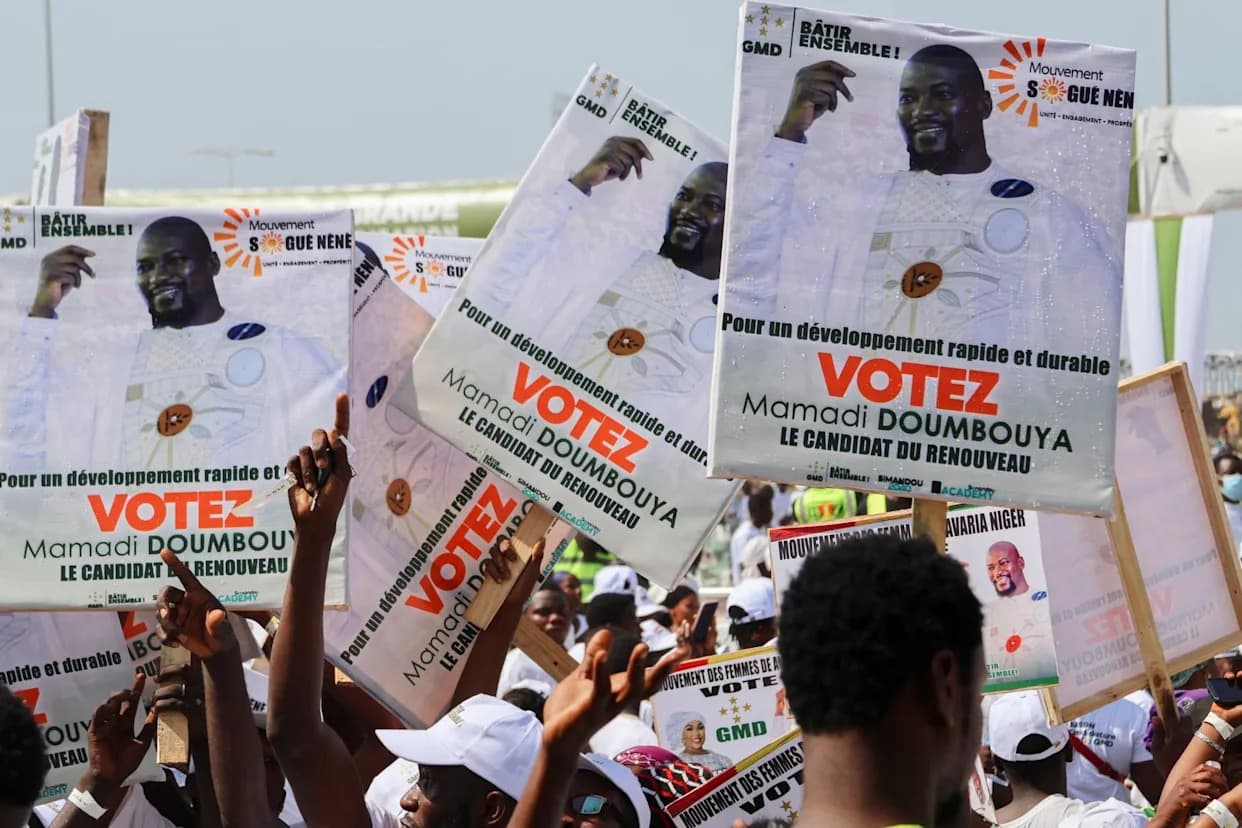
The vote took place under a new constitution that removed a ban on military figures running for office and extended the presidential term from five to seven years. Critics say that since the 2021 coup Doumbouya has moved to suppress political opponents and dissent, leaving him effectively unchallenged among the other eight candidates.
Guinean political analyst N'Faly Guilavogui said the weakened opposition concentrated attention on Doumbouya as “the only key figure capable of ensuring the continuity of the state,” and noted that many Guineans are watching to see what steps the new president will take toward political stability and reconciliation.
Economic Challenges and Major Projects
Despite vast mineral wealth — Guinea is the world’s largest exporter of bauxite — the World Food Program reports that more than half of the country’s roughly 15 million people face record levels of poverty and food insecurity.
The junta’s flagship economic initiative has been the Simandou iron-ore project, the world’s largest iron deposit. The project, which is 75% Chinese-owned, began production in December after decades of delays and is central to the government’s development plans.
What Comes Next
With the Supreme Court’s confirmation, Doumbouya’s presidency is now formalized. Observers and international partners will be watching whether his administration eases restrictions on dissent, pursues national reconciliation, and translates mineral revenues into measurable improvements in living standards.
Help us improve.