
The Central African Republic will hold presidential and legislative elections on Dec. 28 amid ongoing insecurity and growing dependence on foreign security partners. Incumbent President Faustin-Archange Touadéra is the frontrunner after a 2023 referendum removed term limits, while a main opposition coalition has announced a boycott. Human Rights Watch and other observers warn of incomplete voter lists, poorly trained polling staff and administrative barriers that may disadvantage challengers; late clearance for two prominent candidates further compresses their campaign time.
What to Know About the Central African Republic Ahead of Dec. 28 Elections

FILE - In this image from video, President of the Central African Republic Faustin-Archange Touadera casts his ballot at a polling station in Bangui, Central African Republic, Sunday, July 30, 2023. (AP Photo/File)(ASSOCIATED PRESS)
The Central African Republic (CAR) will hold presidential and legislative elections on Dec. 28 amid lingering conflict, concerns about electoral fairness and an increased reliance on foreign security partners.
Background And Security Situation
The landlocked country of roughly 5.5 million people has endured years of violence between government forces and multiple armed groups. In 2013, predominantly Muslim rebel coalitions briefly seized power and toppled the government. A 2019 peace agreement helped but several armed factions later withdrew, and fighting has continued in parts of the country.
Human Rights Watch and other observers say recent peace accords, United Nations peacekeeping and outside security assistance have produced levels of stability not seen since the 2020 electoral cycle. As of late 2023–2024, the U.N. mission MINUSCA fields roughly 14,000 military personnel and 3,000 police officers; the Security Council has extended the mandate but signaled a planned drawdown for budgetary reasons.
"Because of the peace deals, United Nations peacekeeping efforts and security support from Wagner and from the Rwandans, the country is in a more secure place than it was during the last electoral cycle in 2020," said Lewis Mudge, HRW's Central Africa director.
Politics And The Incumbent
President Faustin-Archange Touadéra, in office since 2016, is widely viewed as the frontrunner to win a third term after a 2023 constitutional referendum removed presidential term limits. His decision to seek another term prompted street protests earlier in the year. Observers say a combination of a main opposition boycott and late legal clearance for two prominent challengers is likely to tilt the contest in the incumbent's favor.
Russian Involvement And Tensions
Russia has become a central security partner for CAR. The private Wagner group was among the first to operate there, providing protection for senior officials and assisting in stabilization efforts in return for access to mineral resources such as gold. However, Moscow has pushed to replace Wagner with a Russian military formation called the Africa Corps and has sought cash payments for continued services—demands that have generated friction with Bangui. Local officials say the government prefers to compensate partners with mineral concessions rather than cash and views Wagner as more effective, which has complicated negotiations with Moscow.
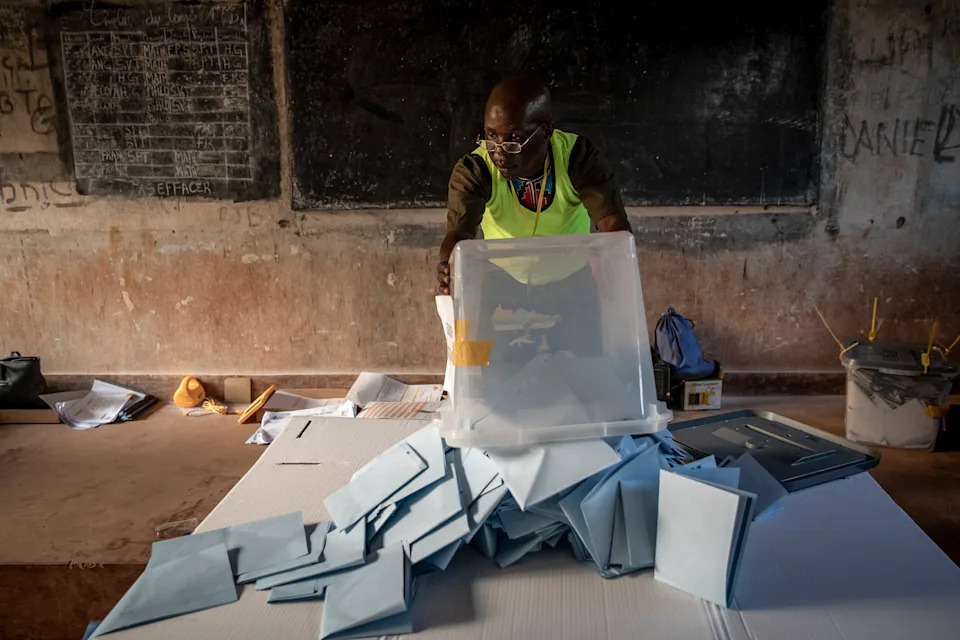
FILE - Electoral workers start to count votes at the Lycée Boganda polling station in the capital Bangui, Central African Republic Sunday, Dec. 27, 2020. (AP Photo/File)(ASSOCIATED PRESS)
Rwanda's Role
Rwanda is another important security actor. In addition to contributing troops to MINUSCA, Kigali deployed about 1,000 special forces to CAR after a rebel attack on Bangui in 2021. Analysts describe these deployments as part of Rwanda's "military diplomacy," and bilateral agreements signed in 2021 granted Rwanda access to farmland and mining concessions in exchange for security assistance.
Electoral Integrity Concerns
Rights groups and election monitors have raised red flags about the vote's credibility. Human Rights Watch warned of incomplete voter registers, inadequately trained polling staff—particularly outside Bangui—and administrative measures that it says disproportionately hinder opposition candidates. Two well-known politicians, former prime ministers Anicet Georges Dologuélé and Henri-Marie Dondra, were initially barred from running but were cleared by the Constitutional Council on Nov. 14, leaving a compressed window for their campaigns.
The main opposition coalition, the Republican Bloc for the Defense of the Constitution, announced an October boycott, calling the political environment unequal. Analysts say the boycott, plus limited campaigning time for late-approved challengers, increases the likelihood of a Touadéra victory and a parliament dominated by the governing party.
What To Watch On Election Day
Key indicators to follow include voter turnout, the performance of polling staff outside the capital, the presence and reporting of international observers, how security forces and foreign partners handle any incidents, and the opposition's response to results. Any significant disruptions or credible allegations of irregularities could affect the post-election political landscape and international reactions.
Reporting note: This summary synthesizes recent reporting from Human Rights Watch, the U.N. mission MINUSCA and international media coverage of CAR's evolving security and political dynamics.


