
Incumbent President Faustin-Archange Touadéra is widely viewed as the favorite to win a disputed third term amid his close security ties with Russia. About 2.4 million voters were registered for simultaneous presidential, legislative, regional and municipal ballots, though some polling stations opened late and voters reported roll problems. The main opposition coalition has boycotted the vote, while MINUSCA and other partners provide security amid ongoing conflict and logistical challenges. Provisional results are expected within a week, with a runoff if no candidate tops 50%.
Central African Republic Vote Sees Touadéra Seek Third Term as Russian Ties Shape Campaign

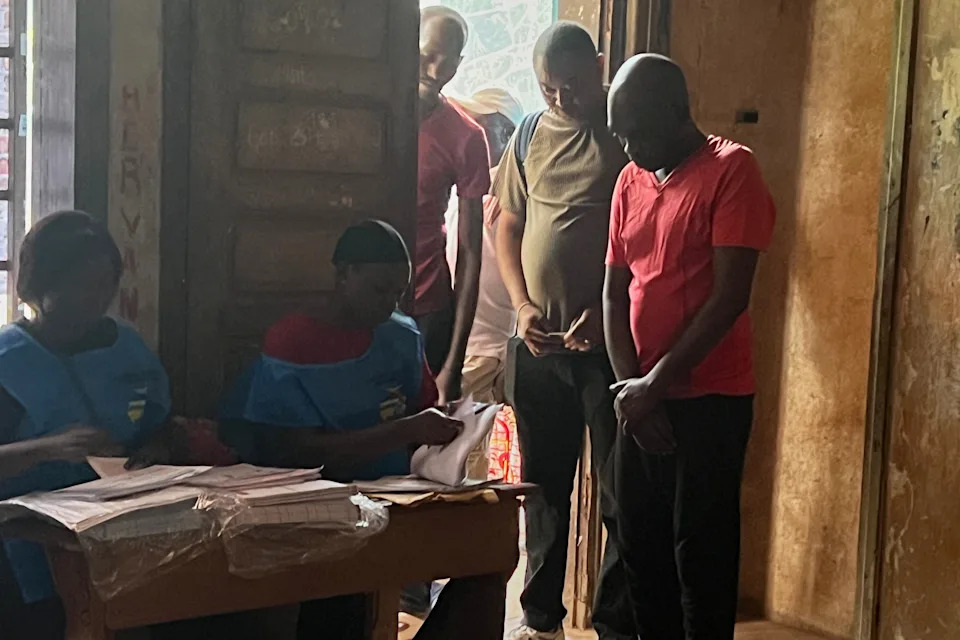
Voters look for their names on a registration list at a polling station during the presidential election in Bangui, Central African Republic, Sunday, Dec. 28, 2025. (AP Photo/Jean-Fernand Koena)(ASSOCIATED PRESS)
Voters across the Central African Republic went to the polls Sunday to elect a president and national lawmakers, with incumbent Faustin-Archange Touadéra widely regarded as the front-runner to win a third term. Touadéra's reliance on Russian-backed security forces to help stabilise the country has become a central issue of the campaign and drawn international attention.
Security, Russia And The Campaign
Touadéra is considered one of Moscow's closest partners in Africa; analysts warn another victory would further cement Russia's security and economic foothold in the country amid increasing scrutiny of private Russian military actors. The government initially worked with the Wagner private military company, and this year tensions rose as Moscow sought to replace Wagner with a formal unit called the Africa Corps.
Voters queue at a polling station to cast their ballot in the presidential election in Bangui, Central African Republic, Sunday, Dec. 28, 2025. (AP Photo/Jean-Fernand Koena)(ASSOCIATED PRESS)
Election Day And Voter Logistics
About 2.4 million voters were registered for this unusually broad election, which combines presidential, legislative, regional and municipal ballots. Voting opened late at some locations — in parts of the capital Bangui polling began nearly an hour behind schedule — and some voters reported missing names on electoral rolls or uncertainty about assigned polling stations.
"When we arrived, no one was ready. With these delays, we risk voting until 8 p.m.," said Barthélemy Wadenguende, a voter in Bangui.
Candidates And Opposition
Touadéra faces six challengers, including prominent former prime ministers Anicet-Georges Dologuélé and Henri-Marie Dondra. The main opposition coalition, the Republican Bloc for the Defense of the Constitution, announced in October it would boycott the vote, accusing authorities of creating an uneven playing field; neither Dologuélé nor Dondra belongs to that coalition.
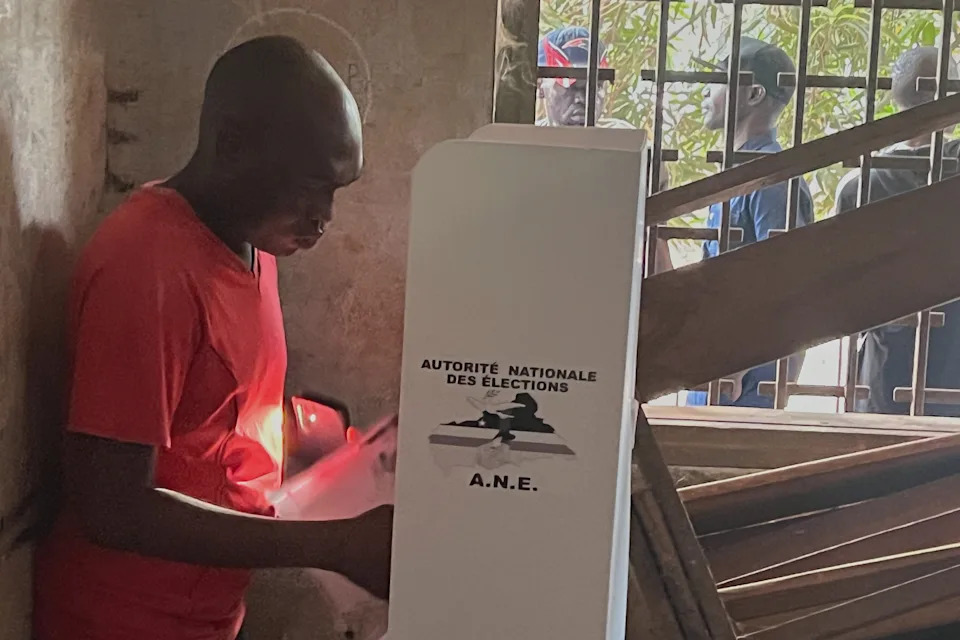
A man casts his ballot during the presidential election in Bangui, Central African Republic, Sunday, Dec. 28, 2025. (AP Photo/Jean-Fernand Koena)(ASSOCIATED PRESS)
Dologuélé, Touadéra's closest rival, has campaigned on economic revival and sustained peace, criticising the incumbent's record and promising to restore the country's productive capacity.
"President Touadéra destroyed everything. Our programme is a solid summary to get the country out of poverty… We must revive the economy," Dologuélé said in a recent interview.
Security Landscape And International Role
The security situation remains the primary concern for most voters. The United Nations peacekeeping mission (MINUSCA), present since 2014, has supported election logistics in previous cycles and is expected to help secure polling sites. MINUSCA currently fields roughly 14,000 military personnel and 3,000 police officers.
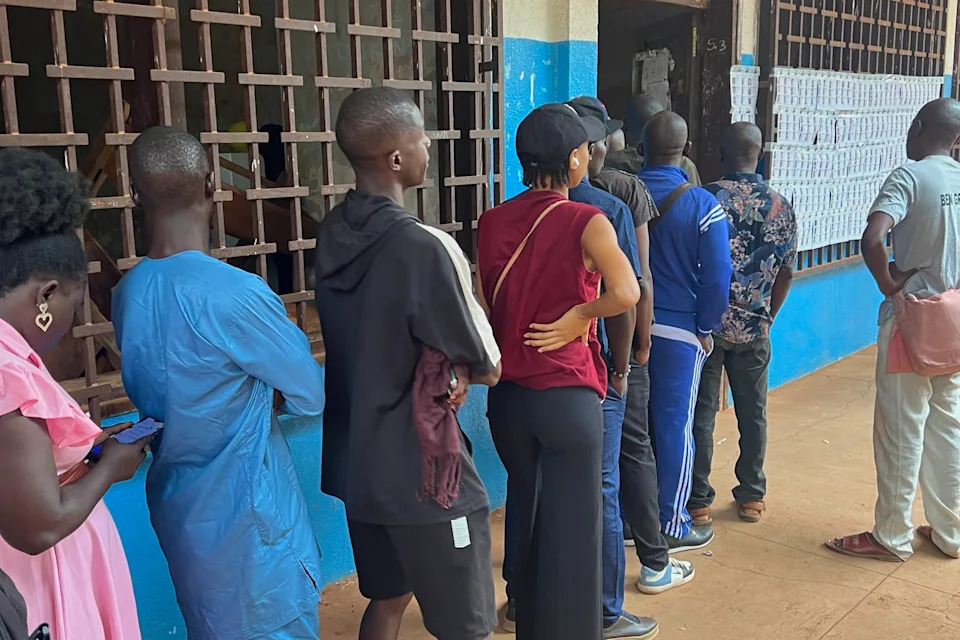
Voters queue at a polling station to cast their ballot in the presidential election in Bangui, Central African Republic, Sunday, Dec. 28, 2025. (AP Photo/Jean-Fernand Koena)(ASSOCIATED PRESS)
The landlocked country of about 5.5 million people has been plagued by cycles of violence since 2013, when mainly Muslim rebels seized the capital and ousted then-President François Bozizé. A 2019 peace agreement reduced some violence but several of the 14 signatory armed groups later abandoned the accord and resumed fighting.
Provisional results are expected within about a week. A presidential runoff will be required if no candidate wins an outright majority (more than 50% of votes cast).
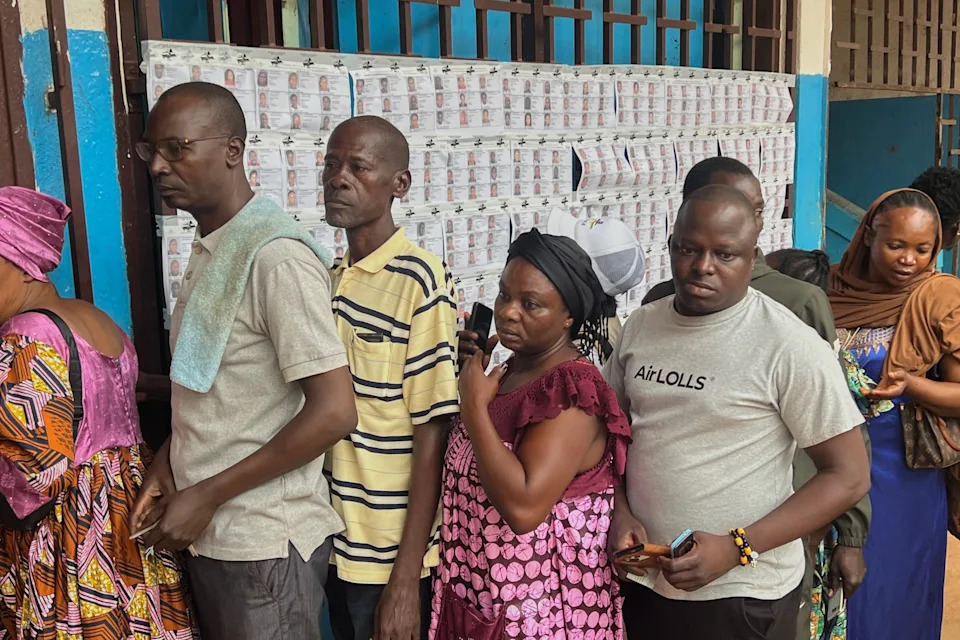
Voters queue at a polling station to cast their ballot in the presidential election in Bangui, Central African Republic, Sunday, Dec. 28, 2025. (AP Photo/Jean-Fernand Koena)(ASSOCIATED PRESS)
Logistical Challenges
Authorities face major logistical hurdles reaching remote communities across dense forests, rivers and poor roads. The U.N. Security Council extended MINUSCA's mandate in November but noted the mission's footprint would be scaled back due to budget constraints.
Analysts say that because of peace deals, international peacekeeping and security support from external partners, parts of the country are more secure than during the last electoral cycle in 2020 — though many areas remain contested and volatile.


