Journalists, editors and media owners in Dhaka have demanded protection after December mobs attacked the offices of the Daily Star and Prothom Alo, trapping staff and causing looting and fire damage. Media leaders blame the interim government led by Muhammad Yunus for failing to prevent or respond to the assaults. The Editors Council and Newspapers Owners Association urged guarantees for press freedom ahead of February elections, while UN expert Irene Khan warned the attacks could chill dissent and harm democracy.
Bangladeshi Journalists Demand Protection After Mob Attacks on Major Newspapers
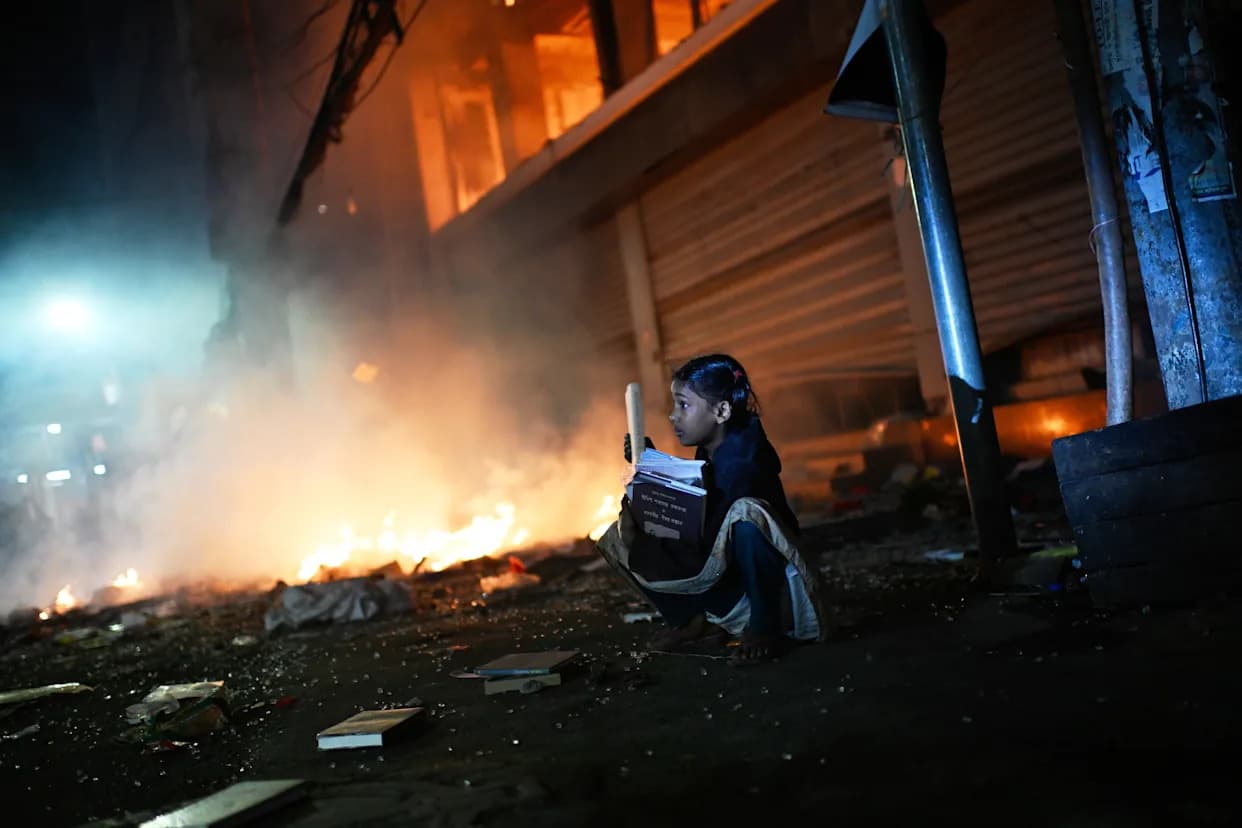
FILE - A girl rescues books from a shop near the Prothom Alo daily newspaper which was set on fire by protesters after news reached the country from Singapore of the death of a prominent activist Sharif Osman Hadi, in Dhaka, Bangladesh, Dec. 19, 2025. (AP Photo/Mahmud Hossain Opu, File)(ASSOCIATED PRESS)
Journalists, editors and newspaper owners in Dhaka convened on Saturday to demand urgent protection after December mob attacks on two of Bangladesh’s leading newspapers left staff trapped, offices looted and parts of the buildings set ablaze.
Media representatives said the assaults — against the Daily Star, the country’s leading English-language daily, and Prothom Alo, the largest Bengali-language newspaper — reflect a wider pattern of pressure on independent media during the interim administration led by Nobel laureate Muhammad Yunus. They accused the authorities of failing to respond adequately despite repeated pleas for help.
What Happened
In December, angry crowds stormed both newsrooms shortly after the death of a prominent Islamist activist. Journalists and staff sheltered on the roof of the Daily Star and were rescued hours later. Both buildings were looted and sustained fire damage. An Editors Council leader who arrived at the scene was reportedly manhandled. Liberal cultural centres in Dhaka were targeted on the same day.
Media Response
The Editors Council and the Newspapers Owners Association of Bangladesh held a joint conference that drew editors, journalists' union leaders and reporters from across the country. Attendees demanded clear guarantees for press freedom and protective measures ahead of nationwide elections scheduled for February.
“Those who want to suppress institutions that act as vehicles of democratic aspirations are doing so through laws, force and intimidation.”
— Nurul Kabir, President, Editors Council; Editor, New Age
International Reaction And Political Context
A United Nations expert, Irene Khan, called the mob violence "deeply alarming," urging swift and effective investigations and warning that the instrumentalization of public anger against journalists and artists could chill dissent, minority voices and media freedom at a critical moment before elections.
Yunus came to power after former Prime Minister Sheikh Hasina fled the country amid a mass uprising in August 2024. International rights groups including Human Rights Watch and Amnesty International have accused the interim government of failing to protect human and civil rights and of allowing a rise in radical and Islamist elements.
Separately, dozens of journalists face murder charges linked to the uprising on allegations they encouraged the Hasina government to use lethal force against protesters. Several journalists known for close ties to Hasina have been arrested and jailed under the Yunus administration.
Help us improve.