Chris Jones, an author and former University of Iowa research engineer, launched his campaign for Iowa secretary of agriculture on Jan. 15, 2026, outside Des Moines Water Works. He proposes diversifying Iowa agriculture, tightening pollution and CAFO regulations, and expanding local food access to address persistent nitrate contamination in rivers — prompting Central Iowa Water Works to operate a nitrate-removal system since Jan. 6. Jones faces criticism from incumbent Mike Naig and others who say his proposals are anti-farmer; Jones counters that his reforms are intended to improve farmer prosperity and rural resilience. He is running in the Democratic primary against farmer Wade Dooley and will hold a kickoff and a Clean Water Town Hall in the coming days.
Water-Quality Advocate Chris Jones Launches Bid for Iowa Secretary of Agriculture
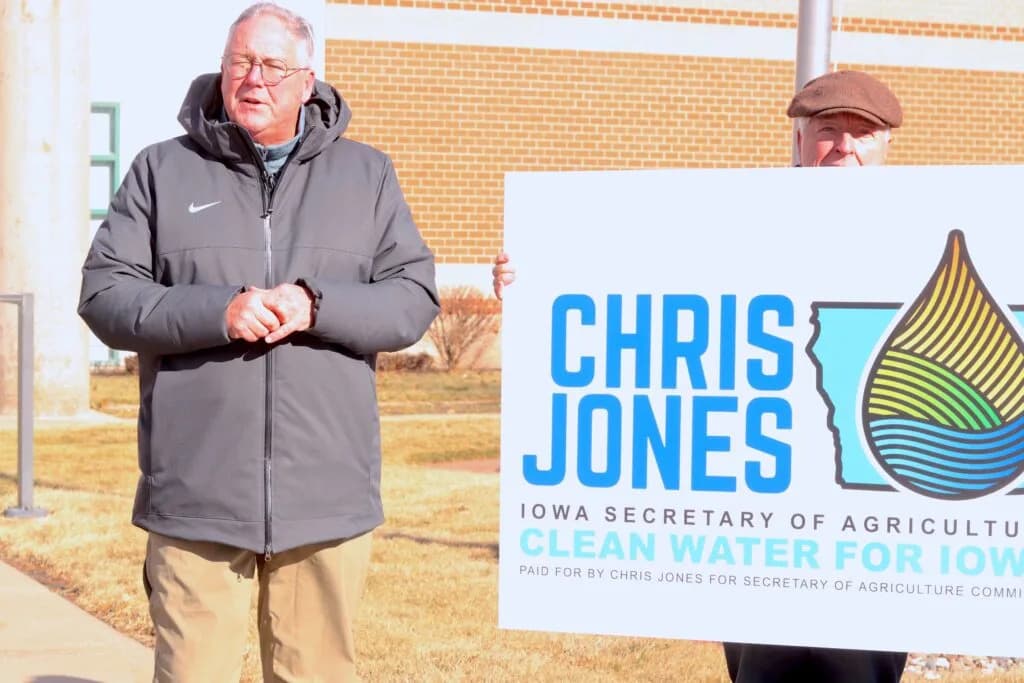
Chris Jones, an author, researcher and long-time Iowa water-quality advocate, officially launched his campaign for Iowa secretary of agriculture on Jan. 15, 2026, with an announcement outside Des Moines Water Works.
Platform and Priorities
Jones is campaigning on a platform that seeks to diversify Iowa's agricultural landscape, impose stronger limits on polluters and concentrated animal feeding operations (CAFOs), and expand access to locally grown food. He argues that these changes are necessary to address persistent water pollution and to make farming more sustainable and profitable for rural communities.
“We need a secretary of agriculture that is for the people … and not just for corporate agriculture,” Jones said. “That’s what I endeavor to do if I’m elected.”
Water Concerns Driving the Campaign
Jones, who previously worked as a research engineer studying Iowa water quality at the University of Iowa, delivered remarks in front of Des Moines Water Works to call attention to elevated nitrate readings in the Raccoon River — one of central Iowa’s drinking-water sources. Jones said nitrate concentrations have exceeded federal safe drinking water standards at times and remained high through fall and winter, linking those readings to upstream row-crop and animal agriculture systems.
Central Iowa Water Works has been operating a nitrate-removal system since Jan. 6 to keep treated water within federal limits; the utility also imposed a temporary lawn-watering ban last summer when nitrate levels surged after a wet spring.
Policy Proposals and Rationale
Jones proposes policy shifts including subsidies and incentives for diversified crops (such as oats) and a move away from confinement-based livestock systems toward more traditional production methods. He says diversifying cropping and livestock systems could help reduce nutrient runoff, improve farm incomes by reducing reliance on corn and soy, and reduce risks such as highly pathogenic avian influenza.
Criticism and Response
Incumbent Iowa Secretary of Agriculture Mike Naig and others have accused Jones of being "anti-farmer" because he advocates transitioning away from dominant corn-and-soybean production. Jones rejects that label, saying he wants what is best for farmers and that Iowa's long-term prosperity depends on farmers' success. He has said the secretary’s role should not be decided only by agricultural insiders and has urged broader public engagement in agricultural policy.
Campaign Plans
Jones is seeking the Democratic nomination and faces farmer Wade Dooley, who announced his campaign shortly before Jones. Jones plans a campaign kickoff at Confluence Brewing in Des Moines and will host a Clean Water Town Hall in Grinnell on Jan. 24.
Editor's note: Chris Jones is a member of Iowa Writers’ Collaborative, which has an informal association with Iowa Capital Dispatch. The article was updated to clarify that Central Iowa Water Works owns the nitrate-removal facility in Des Moines.
Help us improve.