United Nations Secretary‑General Antonio Guterres used his address to the U.N. General Assembly to condemn violations of international law and to call out the extreme concentration of wealth among the richest 1% as "morally indefensible." He warned that geopolitical divides, legal breaches and cuts to development aid are undermining global cooperation as his second term nears its Dec. 31 end. Guterres singled out Russia’s 2022 invasion of Ukraine and criticized reported U.S. military actions, and he reproached governments that fail to pay U.N. dues. He urged renewed commitment to the rules‑based order, multilateralism and fairer economic governance.
Guterres Rebukes States for Flouting International Law, Warns of Wealth Concentration's Threat to Global Order
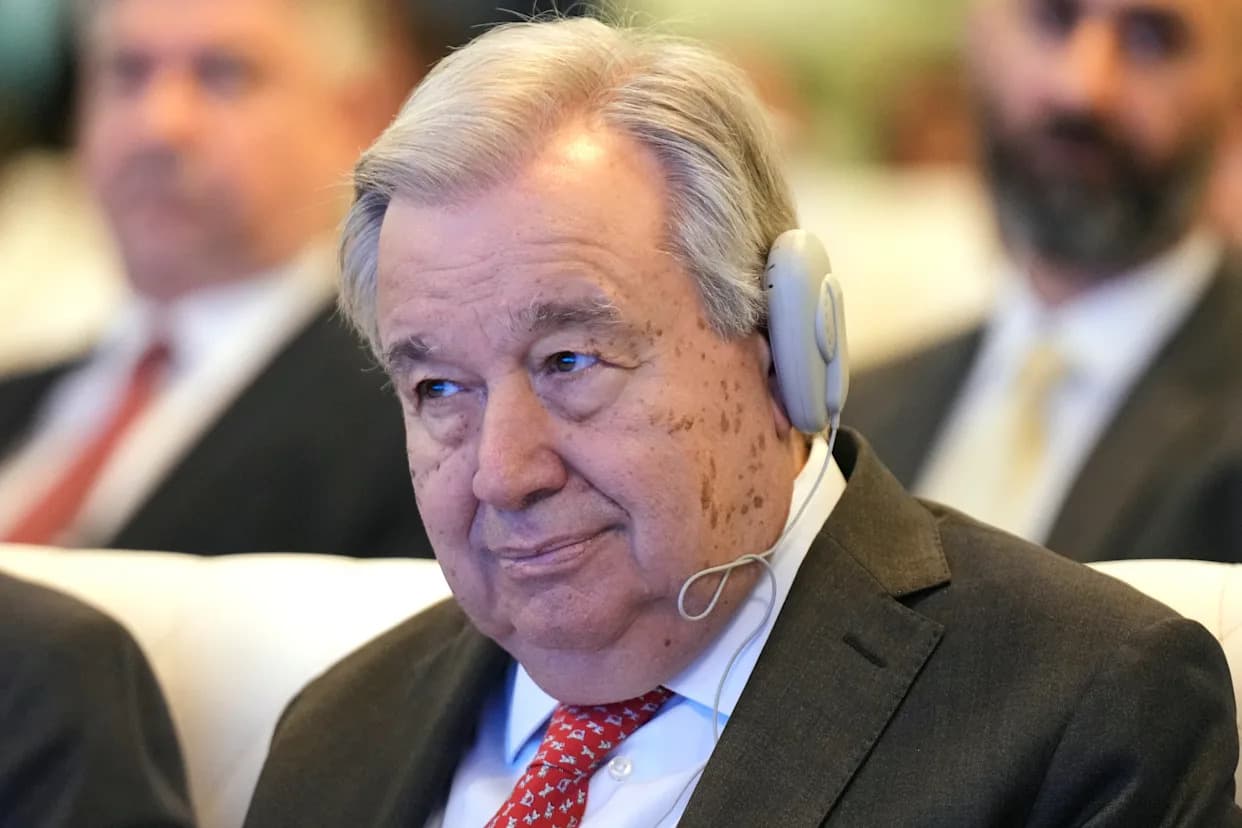
FILE - United National Secretary-General Antonio Guterres attends an event in Baghdad, Iraq, Dec. 13, 2025. (AP Photo/Hadi Mizban, file)
UNITED NATIONS — United Nations Secretary‑General Antonio Guterres on Thursday delivered a stark warning to the world’s governments, condemning repeated breaches of international law and denouncing the extreme concentration of wealth and power among the richest 1% as "morally indefensible."
Speaking at the opening of his final year in office, Guterres told the U.N. General Assembly that the organization’s 193 member states face "a world marked by self‑defeating geopolitical divides, brazen violations of international law, and wholesale cuts in development and humanitarian aid." He said those trends are eroding the foundations of global cooperation just when collective action is most needed. His second five‑year term ends on Dec. 31.
"Some seek to put international cooperation on deathwatch. I can assure you: We will not give up," Guterres said.
The secretary‑general singled out multiple examples of what he described as an erosion of the rules‑based order. He renewed his criticism of Russia for violating the U.N. Charter by invading Ukraine in February 2022 and also criticized reported U.S. operations — including an alleged mission linked to Venezuela’s President Nicolás Maduro and deadly strikes on boats in the Caribbean and Pacific the U.S. says were carrying drugs.
"When leaders run roughshod over international law — when they pick and choose which rules to follow — they are not only undermining global order, they are setting a perilous precedent," Guterres said. He warned that people around the world are witnessing growing impunity, citing "the illegal use and threat of force; attacks on civilians, humanitarian workers and U.N. personnel; unconstitutional changes of government; the trampling of human rights; the silencing of dissent; the plundering of resources."
Guterres also criticized governments that fail to meet their financial obligations to the United Nations, a pointed remark directed at the administration in Washington for not paying mandatory U.N. budget contributions in 2025.
On Wealth and Influence
The secretary‑general warned that economic inequality and concentrated corporate power are compounding political risks. He noted that the richest 1% now hold about 43% of global financial assets and said an "ultra‑wealthy" few and the companies they control increasingly shape economies, information flows and even the rules that govern societies.
"Increasingly, we see a world where the ultra‑wealthiest and the companies they control are calling the shots like never before — wielding outsized influence over economies, information and even the rules that govern us all," he said, urging renewed commitment to international law, multilateralism and financing for development and humanitarian needs.
Guterres concluded by appealing to member states to uphold their legal obligations, pay their dues, and revive cooperation to address the global crises of security, rights and inequality facing the world today.
Help us improve.