The Alaska Court of Appeals is reviewing a request to dismiss felony voter-misconduct charges against Tupe Smith, born in American Samoa, after she registered to vote and won a school board seat in 2023. Smith says she followed advice from local election officials when she marked herself a U.S. citizen on registration forms; prosecutors say she intentionally misrepresented her status. The case, which involves charges against 10 other Whittier residents, underscores confusion over American Samoans' status as U.S. nationals rather than automatic citizens.
Alaska Appeal Challenges Voter-Fraud Indictment, Spotlighting American Samoan Citizenship Status

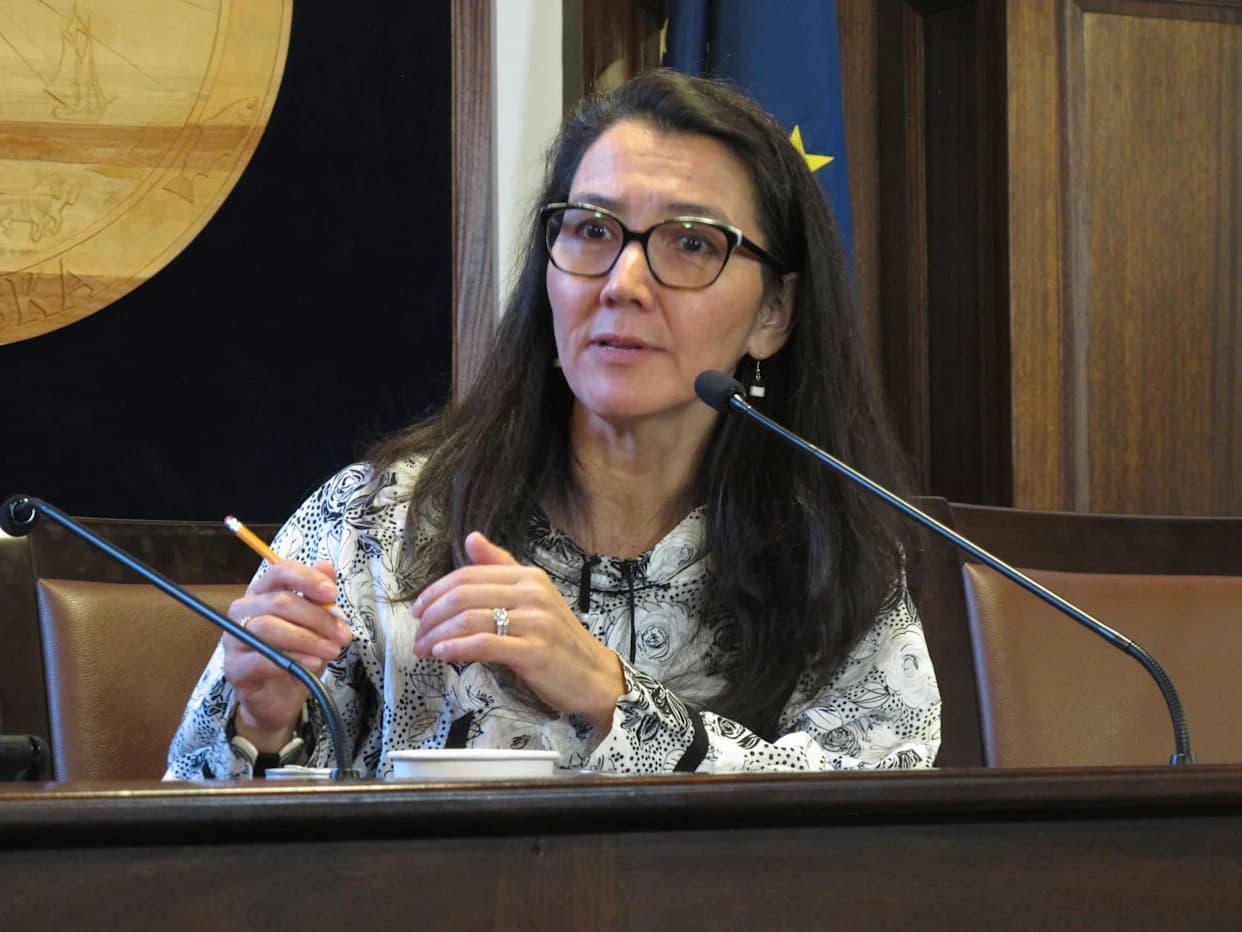
FILE - Tupe Smith poses for a photo outside the school in Whittier, Alaska, May 13, 2025. (AP Photo/Mark Thiessen, File)
An Alaska appeals court is being asked to dismiss felony voter-misconduct charges against Tupe Smith, an Alaska resident born in American Samoa, in a case that has drawn renewed attention to the unique citizenship status of people born in the U.S. territory.
Smith’s attorneys asked the Alaska Court of Appeals in Anchorage on Thursday to reverse a lower-court ruling that allowed an indictment against her to proceed. Supporters say Smith made an honest mistake after relying on local election officials’ guidance; prosecutors allege she knowingly and falsely claimed U.S. citizenship on voter-registration forms.
Background
Smith was arrested after winning a seat on a regional school board in 2023. Prosecutors have also filed charges against 10 other American Samoans who live in the small Alaska town of Whittier, including Smith’s husband and mother-in-law.
American Samoa is the only U.S. territory whose natives are not automatically U.S. citizens at birth; they are U.S. nationals. Nationals can serve in the U.S. military, obtain U.S. passports, and vote in local elections in American Samoa, but they cannot hold most U.S. public offices or vote in federal elections unless they complete the naturalization process, which can be time-consuming and costly.
Dispute Over Intent And Form Language
Smith says she lists herself as a U.S. national on official documents and that, when a "U.S. national" option was not present on local voter forms, city representatives advised her to mark "U.S. citizen." In a 2024 court filing by a previous attorney, Smith told an Alaska state trooper that she understood she could not vote in presidential elections but was "unaware of any other restrictions on her ability to vote."
“She exercised what she believed was her right to vote in a local election. She did so without any intent to mislead or deceive anyone,” Smith’s current attorneys wrote in a September filing, noting the advice she received from City of Whittier election officials.
State prosecutors point to voter-application forms Smith completed in 2020 and 2022 that explicitly state applicants who are not U.S. citizens are not eligible to vote. Assistant Attorney General Kayla Doyle argued in court filings that the indictment concerns whether Smith intentionally and falsely swore she was a United States citizen, not only her belief about eligibility for specific local contests.
Neil Weare, co-founder of the Washington-based Right To Democracy Project and one of Smith’s attorneys, said by email that if the appeals court allows the indictment to stand, Alaska would have "the only state to our knowledge with such a low bar for felony voter fraud."
Why This Matters
The case highlights legal gray areas that can arise when people from U.S. territories interact with state-level systems designed around a U.S. citizen/noncitizen model. It also raises questions about the clarity of election forms and the responsibilities of local officials to provide accurate guidance to registrants with complex immigration or nationality statuses.
The appeals court decision will be closely watched by rights groups, election officials and American Samoan communities nationwide for its potential implications on how nationality status is treated in voter registration and criminal prosecutions.
Help us improve.