The Minnesota practice allowing a registered voter to "vouch" for up to eight same‑day registrants is drawing renewed scrutiny amid state investigations into large social‑services fraud involving members of the Somali community and a 2023 expansion of driver’s‑license access. Supporters say vouching has been used for decades to help residents — for example in senior living — and point to identity‑verification rules and post‑election audits. Critics and some federal lawmakers argue the combination of policies could be abused and back legislation requiring proof of citizenship for federal‑election registration.
Minnesota's 'Vouching' Rule Allows One Voter To Certify Up To Eight Same‑Day Registrants — Renewed Scrutiny Amid Fraud Probes
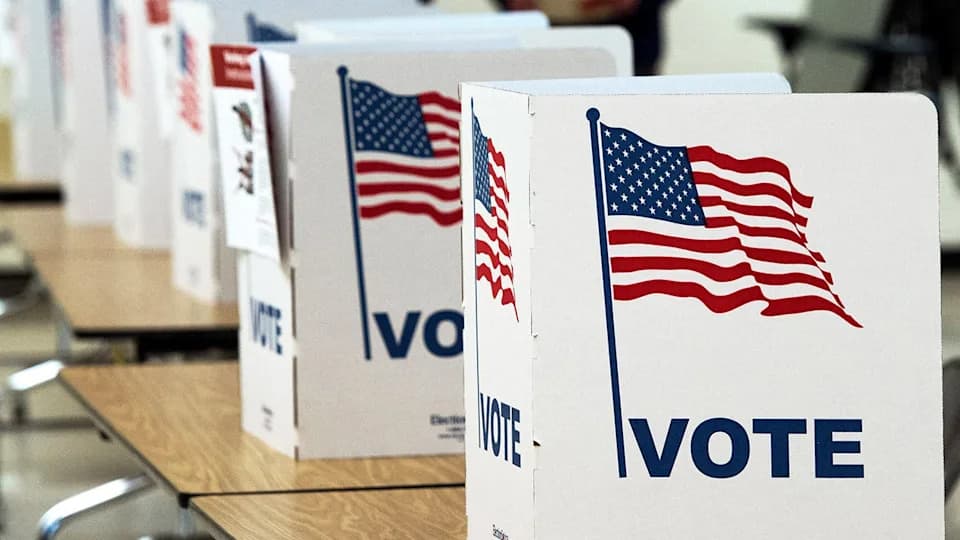
Voting booths are pictured here.
A longstanding Minnesota election practice that allows a registered voter to "vouch" for up to eight people seeking same‑day registration has returned to the spotlight as state officials investigate large‑scale social‑services fraud that has involved members of Minnesota's Somali community. The debate has intensified after a 2023 state policy expanding access to driver’s licenses regardless of immigration status — licenses that carry no citizenship designation — was highlighted by critics.
How Vouching Works
Under Minnesota law, a registered voter may vouch for up to eight prospective voters who lack photo ID when registering on Election Day. The voucher must accompany the applicant to the polling place and sign an oath attesting to the applicant’s residence in the precinct, according to guidance from the Office of the Minnesota Secretary of State.
Officials stress that vouching verifies residency only; the applicant must still provide identity information such as a Minnesota driver’s license or ID number, or the last four digits of their Social Security number, for identity verification.
Acceptable Forms Of ID And Verification
Acceptable proof of identity or residency — provided residency can be shown — includes a driver’s license or learner’s permit from any U.S. state, a passport, an expired ID, military ID, or a Minnesota high school or university ID. Tribal ID cards with photo and signature are also accepted. If a registered voter has moved within a precinct or changed their name, they may vote after notifying the precinct election judge of the prior address or name.
Safeguards, Recordkeeping And Enforcement
The Secretary of State’s office notes the vouching rule has existed for more than 50 years and described multiple safeguards: election judges at each polling place, roster checks comparing ballots cast with the number of voters recorded, a requirement that election judges document vouched voters on a form, and post‑election verification that can trigger criminal referrals when appropriate.
"Vouching can only be used to provide proof of a potential voter’s residence in the precinct," Deputy Communications Director Cassondra Knudson said, adding that vouching is commonly used in senior living facilities or when a voter recently moved and lacks updated ID.
Criticism And Federal Response
Critics argue the combination of same‑day registration, vouching, and driver’s licenses issued without citizenship markers could be exploited. Sen. Mike Lee (R‑Utah) and others have cited these concerns in support of the Safeguarding American Voter Eligibility (SAVE) Act, which would require documentary proof of citizenship for federal‑election registration and impose penalties for registering applicants who lack such documentation. The SAVE Act passed the House in April and is pending in the Senate.
Advocates for stricter rules point to examples and anecdotal reports alleging abuse. Supporters of existing state practice say those examples are rare, that vouching serves legitimate needs, and that recordkeeping and post‑election checks provide avenues to detect and investigate wrongdoing.
Political And Community Context
Some state lawmakers raised concerns at a House oversight hearing about how driver’s-license issuance and incomplete registrations are processed at the polls. Elections officials responded that presenting acceptable identification at the polling place can clear an "incomplete" registration and allow a qualified voter to cast a ballot. The issue has become part of a broader discussion about election security, immigrant access to state services, and federal versus state authority over voter eligibility rules.
Fox News Digital requested comment from Gov. Tim Walz’s office. The Secretary of State’s office reiterated that protections, recordkeeping, and enforcement mechanisms are in place to prevent and address unlawful behavior related to vouching.
Help us improve.