Medical sources and local hospitals report 114 people were killed in a week of fighting in western Darfur: 51 died in a drone strike on Al‑Zuruq and 63 in RSF offensives around Kernoi. Al‑Zuruq — under RSF control and home to relatives of RSF commander Mohamed Hamdan Daglo — suffered strikes that hit civilian areas including a market. The conflict, which began in April 2023, has displaced millions and intensified humanitarian needs across Darfur and the Kordofan region.
114 Killed In Weeklong Attacks In Darfur As Army And RSF Clash; Drone Strike Hits Market In Al‑Zuruq

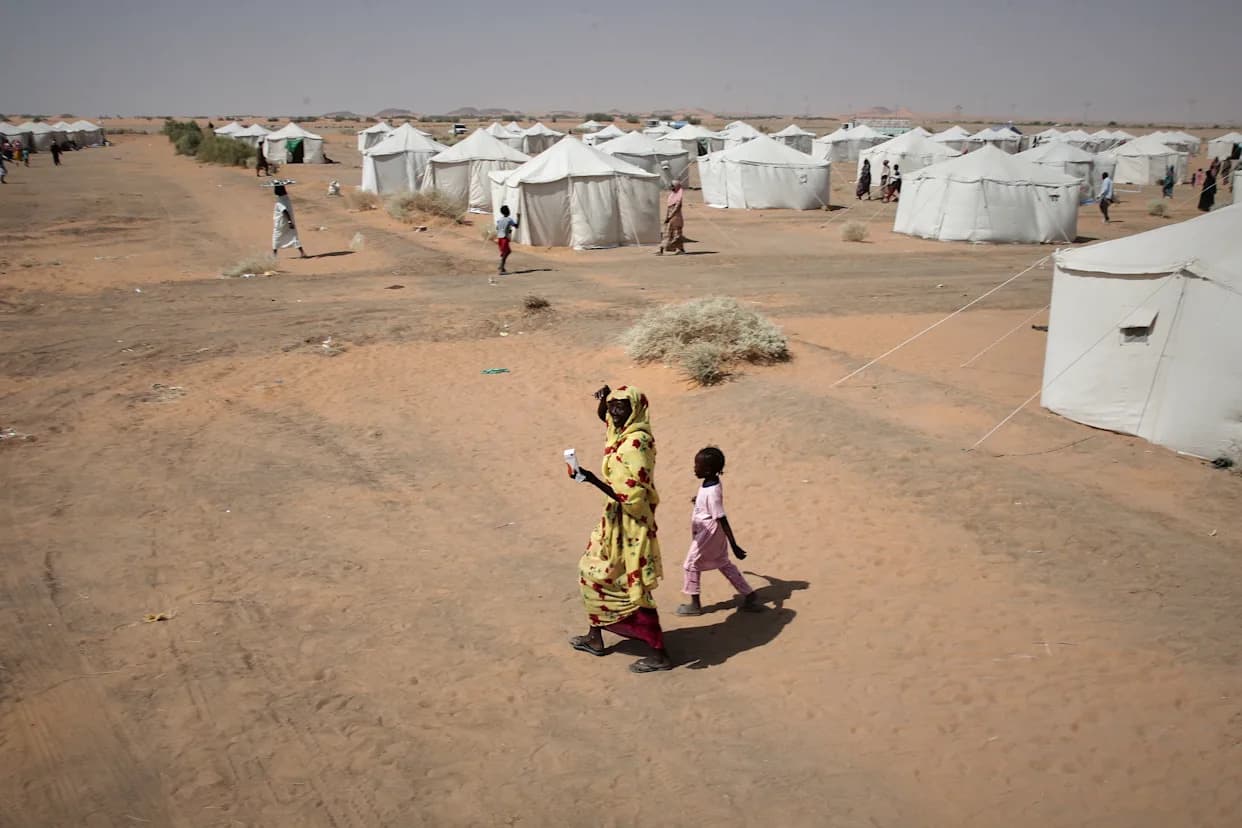
After more than two years of war 11 million Sudanese have been forced from their homes and many are reliant on humanitarian aid (Abdulrahman GUMAA)(Abdulrahman GUMAA/AFP/AFP)
Medical sources told AFP that attacks by Sudan's army and rival paramilitary forces over the past week have left 114 people dead in western Darfur, underscoring an intensification of violence in a conflict that began in April 2023.
Al‑Zuruq struck by drone attacks
A medical source reported that 51 people were killed in drone strikes on the North Darfur town of Al‑Zuruq, about 180 kilometres (112 miles) north of El‑Fashir. The strikes — attributed to the army by local medical sources — hit a market and civilian neighbourhoods in the town, which is under RSF control and is home to relatives of RSF commander Mohamed Hamdan Daglo.
"Two of the Daglo family were killed, Moussa Saleh Daglo and Awad Moussa Saleh Daglo," an eyewitness told AFP at a burial.
Deadly RSF offensives around Kernoi
Separately, RSF advances westward toward the Chadian border killed 63 people in and around the town of Kernoi, a hospital source said. That source, speaking anonymously for safety, added that 57 people were injured and that about 17 remain missing. Local and UN reports say more than 7,000 people were displaced from Kernoi and nearby Um Baru in just two days.
Wider conflict context and humanitarian crisis
Since April 2023, Sudan has been engulfed in fighting between the army and the Rapid Support Forces (RSF). The RSF seized the army's last major holdout in Darfur, El‑Fashir, in October and has since pushed west toward Chad and east across the Kordofan region. The RSF evolved from the Janjaweed militias implicated in mass atrocities in the 2000s; the UN has accused both sides of striking civilian areas in what it described as a "war of atrocities."
Drone strike in Kordofan disrupted power
A drone attack on El‑Obeid, the North Kordofan capital and a strategically important army-held city, caused a fire at the power station and a resulting blackout, the national electricity company said. The region of Kordofan — linking Darfur to Khartoum — has seen some of the fiercest recent fighting.
Access to Darfur is severely restricted by a long-running communications blackout and limited journalist access, forcing volunteers and medical teams to rely on satellite internet to relay information. The conflict has produced massive displacement: the UN and humanitarian agencies say more than 11 million people have fled within Sudan and across borders, and hundreds of thousands face acute food insecurity and shortages of medicine and clean water.
Reported figures and sources
The casualty and displacement figures cited in this report come from local medical sources, hospital staff, eyewitnesses and United Nations agencies, as reported to AFP. Due to restricted access and communications blackouts across Darfur, figures may be difficult to independently verify on the ground.
Help us improve.