
2025 combined major scientific breakthroughs with disruptive policy decisions. While budget cuts and regulatory rollbacks in the U.S. threatened research programs and global public-health aid, researchers delivered landmark advances: the Rubin Observatory began surveys, the first personalized CRISPR therapy was given to an infant, xenotransplantation trials and Huntington's and HIV treatments advanced, and quantum and materials sciences moved closer to practical use. The year underscored how policy choices can shape the pace and equity of scientific progress.
Science in 2025: Breakthroughs, Policy Shocks, and Strange Discoveries

3D illustration of mitochondria. - Kateryna Kon // Shutterstock
2025 was a year of striking contrasts: sweeping policy shifts and budget cuts disrupted many scientific programs, even as researchers delivered high-impact discoveries from astronomy to gene therapy and quantum computing. This review summarizes the major scientific advances, the policy decisions that reshaped research funding and public health, and a few unusual stories that captured public attention.
Policy, Funding, and the Research Ecosystem
In the United States, executive actions and budget proposals in 2025 led to thousands of job losses across federal science agencies and sharp reductions in research funding. Agencies affected included NASA and NOAA, and many health-related grants—particularly those tied to diversity, equity, and inclusion initiatives—were canceled or frozen. A 2026 budget proposal included steep cuts to the National Science Foundation, threatening support for basic research and long-term international collaborations.

The Vera C. Rubin Observatory in Chile with the world's biggest telescope opened this year facing the southern skies and capturing millions of galaxies and thousands of asteroids in its first 10 hours of test observations. - NSF–DOE Rubin Observatory / NOIRLAB / SLAC / AURA / T. Matsopoulos
Public Health and Vaccination
Public health systems faced major strains. The U.S. formally withdrew from the World Health Organization in 2025 and announced plans to pull funding from Gavi, The Vaccine Alliance. Combined with lingering disruptions from the 2020 pandemic and a rise in vaccine hesitancy, coverage gaps widened: kindergarten vaccine uptake in the U.S. has slipped from roughly 95% to about 92% over a dozen years, and exemptions reached a record 3.6% in the 2024–25 school year. Canada lost its measles elimination status in November after a surge in cases, and whooping cough also increased.
“There have been enormous changes in 2025, really driven by the current [U.S.] administration and their attitude towards both foreign aid and domestic vaccine policy,” epidemiologist William Moss observed.
Still, there were positive steps: WHO delegates (excluding the U.S.) adopted a Pandemic Agreement to improve equitable sharing of vaccines and therapeutics, HPV vaccine coverage continued to climb, and research interest in mRNA vaccines persisted despite a cancellation of $500 million in U.S. mRNA funding. On HIV, experimental broadly neutralizing antibody infusions produced extended remissions for some patients, and the WHO endorsed twice-yearly lenacapavir injections for prevention in July.
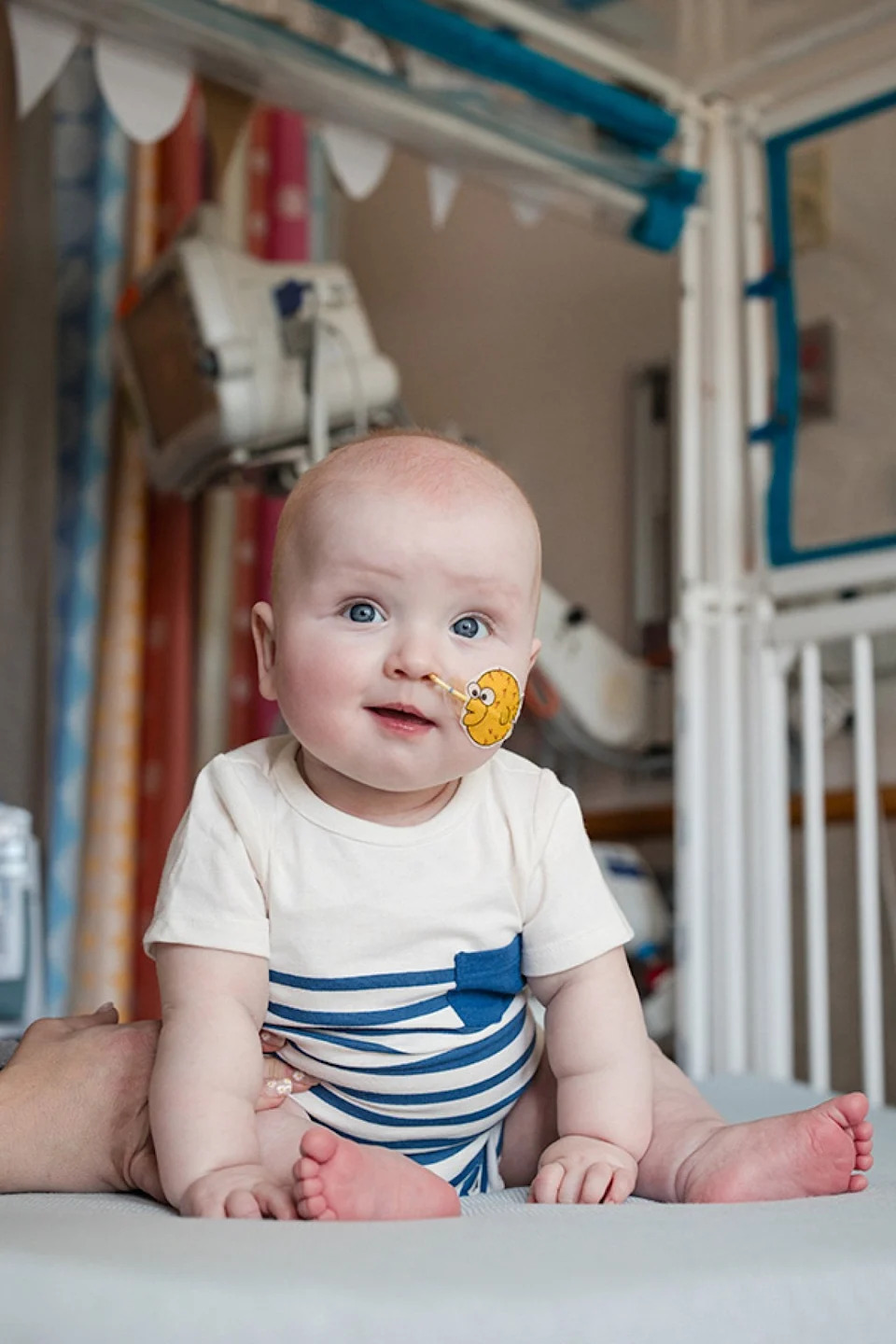
Baby boy, KJ Muldoon, was the first individual to receive a personalized gene therapy treatment, for a potentially fatal condition that threatened his brain with toxic levels of ammonia. - Children’s Hospital of Philadelphia
Global Health Aid Concerns
Policy changes disrupted international aid programs. Cuts to USAID and the President's Emergency Plan for AIDS Relief (PEPFAR) delivered a severe blow to global HIV efforts. UNAIDS warned that permanent loss of PEPFAR funding could lead to millions of additional infections and deaths by 2029, underscoring the fragility of progress without sustained funding.
Astronomy: The Rubin Observatory Comes Online
The Vera C. Rubin Observatory began operations from Chile, equipped with the world’s largest digital camera at 3.2 billion pixels. Rubin is expected to produce more optical survey data in its first year than all previous optical telescopes combined and aims to catalog roughly 5 million asteroids, including about 100,000 near-Earth objects, over the next decade. The observatory will also boost studies of dark matter, supernovae, and optical counterparts to gravitational waves, and it could dramatically increase detections of interstellar visitors.

Heiner Linke, Chair of the Nobel Committee for Chemistry, explains a model showing so-called metal organic frameworks during a press conference on the winners of the 2025 Nobel Prize in Chemistry. - JONATHAN NACKSTRAND // AFP via Getty Images
Genetics and Personalized Gene Therapy
Gene-editing research accelerated. Since the first CRISPR-based therapy approval for sickle cell disease in 2023, trials have expanded to many conditions. In 2025 clinicians reported the first personalized CRISPR gene therapy administered to an infant with a life-threatening genetic disorder; the case prompted a new FDA pathway for individualized genetic medicines and inspired the creation of a Center for Pediatric CRISPR Cures in California, funded by the Chan Zuckerberg Initiative.
Xenotransplantation and Organ Innovations
Xenotransplantation made important steps toward clinical use. Multiple experimental pig-to-human transplants were performed, including the first pig lung transplant, and a pig kidney lasting nearly nine months set a new record. In February the FDA approved the first multiperson trials of pig kidney transplants to enable standardization of protocols. Separately, researchers reported converting a donated kidney's blood type from A to universal donor type O using an enzyme, a development that could expand the donor pool.
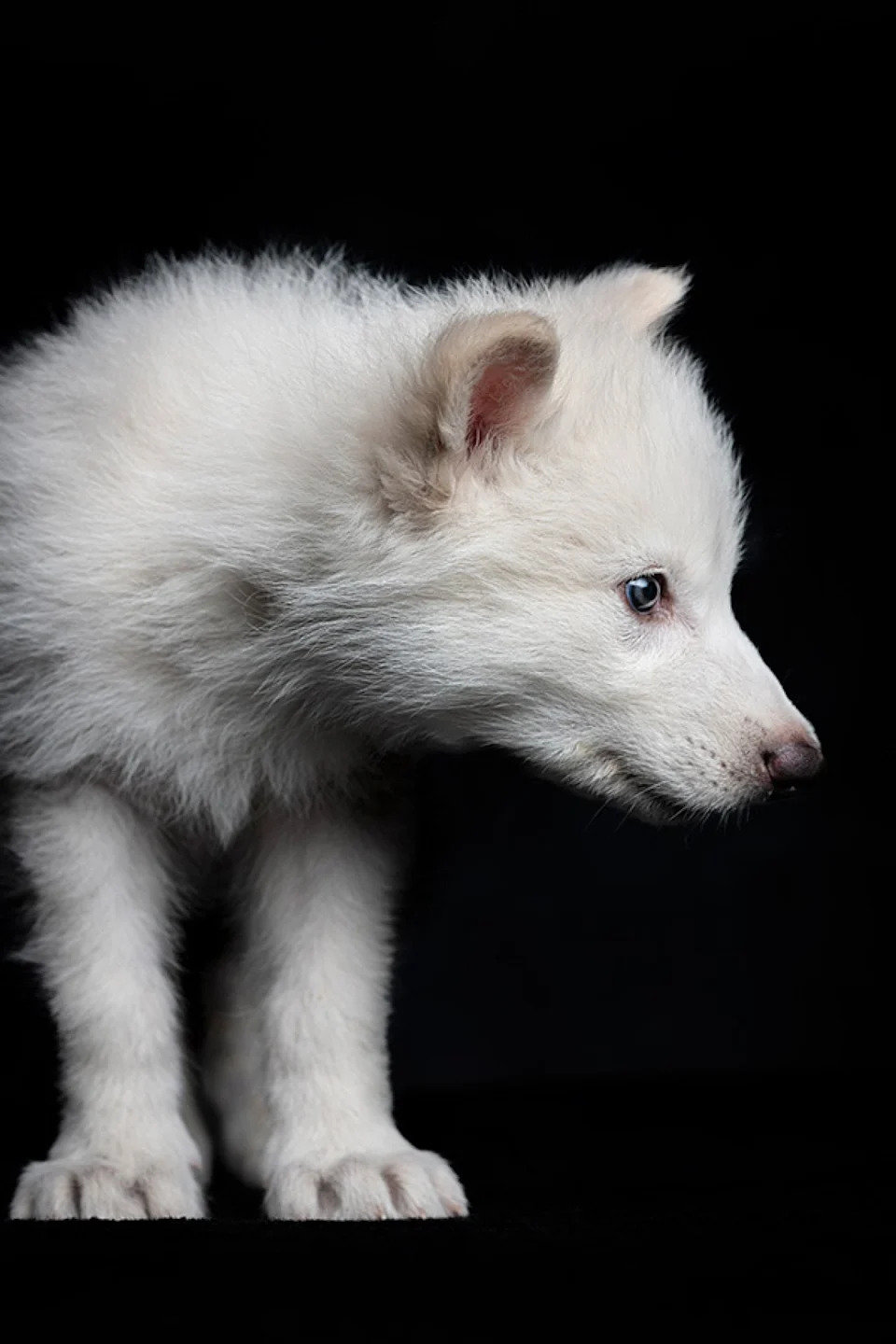
A white wolf pup against a black background, colossal Biosciences claimed to have brought back the dire wolf, a species that went extinct more than 10,000 years ago by editing some of the genes in a related wolf’s genome to match those found in dire wolves. - Colossal Biosciences
Neurology: Huntington's Disease Trial
A small but promising uniQure trial reported slowing of Huntington's disease progression using a viral vector to deliver microRNAs that silence the defective gene. In patients receiving the higher dose, disease progression slowed by about 75%, a notable proof-of-concept that targets the underlying cause rather than only symptoms.
Energy, Climate, and Environment
Renewable energy continued to grow: a report from Ember found that renewables produced more than one-third of global electricity in the first half of 2025, slightly surpassing coal. However, international progress on climate targets lagged. New data ranked 2025 as the second- or third-hottest year on record, with the annual average about 1.48 °C above pre-industrial levels. At the same time, regulatory rollbacks and proposed rescissions of foundational EPA rules in the U.S., stalled international plastic treaty talks, and contentious moves toward seabed mining highlighted policy headwinds.
Materials Science and Quantum Computing
Metal organic frameworks (MOFs) gained broader attention after Nobel recognition and initial commercial scaling for carbon capture and other uses. Advances in AI accelerated MOF discovery, and companies opened facilities to produce MOF-based sponges for direct-air CO2 capture, water harvesting, and hydrogen storage.
Quantum computing showed practical progress. Multiple demonstrations of quantum error correction advanced reliability, and Google announced a “quantum echoes” algorithm that it said was roughly 13,000 times faster than a classical computer at predicting certain molecular structures. The 2025 Nobel Prize in Physics also honored foundational work relevant to quantum technologies.
Curious and Controversial Stories
Two attention-grabbing experiments stirred debate. Colossal Biosciences announced a gray-wolf genome modified at a few dozen sites to approximate traits of the extinct dire wolf; many scientists characterized the result as a simulation rather than true de-extinction. Separately, researchers used a laser to stimulate only the M cone in human retinas, producing a novel hue described by volunteers as “green-blue” or “olo,” an intriguing study of color perception limits.
Looking Ahead
Overall, 2025 delivered major scientific advances amid disruptive political and funding changes. The coming years will determine whether breakthroughs in gene therapy, transplantation, materials science, and quantum computing can scale and whether public funding and international cooperation will rebound to support global health and climate goals.


