The Commodore Hotel in Beirut’s Hamra district — long famed as an unofficial newsroom and refuge for foreign correspondents during Lebanon’s civil war — has closed permanently. The nine-story hotel, built in 1943, rebuilt after heavy 1987 damage and reopened in 1996, shuttered its main gate this week. Dependable communications, armed guards and a lively social scene made the Commodore indispensable to journalists; recent economic collapse, power cuts and regional instability contributed to its final demise.
End of an Era: Beirut’s Iconic Commodore Hotel — Once a Journalists’ Lifeline — Closes Permanently
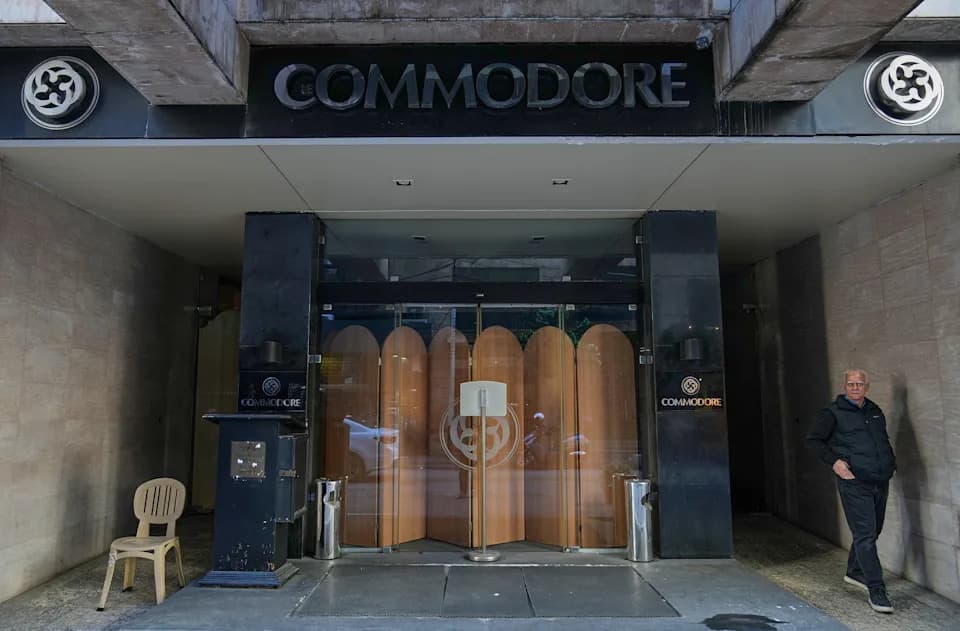
A man stands in the closed main entrance of the Commodore hotel, in Beirut, Lebanon, Sunday, Jan. 11, 2026. (AP Photo/Hussein Malla)(ASSOCIATED PRESS)
The Commodore Hotel in Beirut’s Hamra neighborhood — long a refuge and unofficial newsroom for foreign correspondents during Lebanon’s 1975–1990 civil war — has closed its doors for good. The nine-story property with more than 200 rooms shuttered its main gate on Monday; hotel officials declined to comment on the decision.
A Lifeline for Journalists
At the height of the civil war, when much of Beirut was cut off and telecommunications were unreliable, correspondents relied on the Commodore’s dependable landlines and teleprinters to file dispatches to newsrooms around the world. The hotel lobby once housed teleprinters that regularly carried reports from The Associated Press and Reuters, and its location across from the AP’s regional office helped cement its role as a reporting hub.
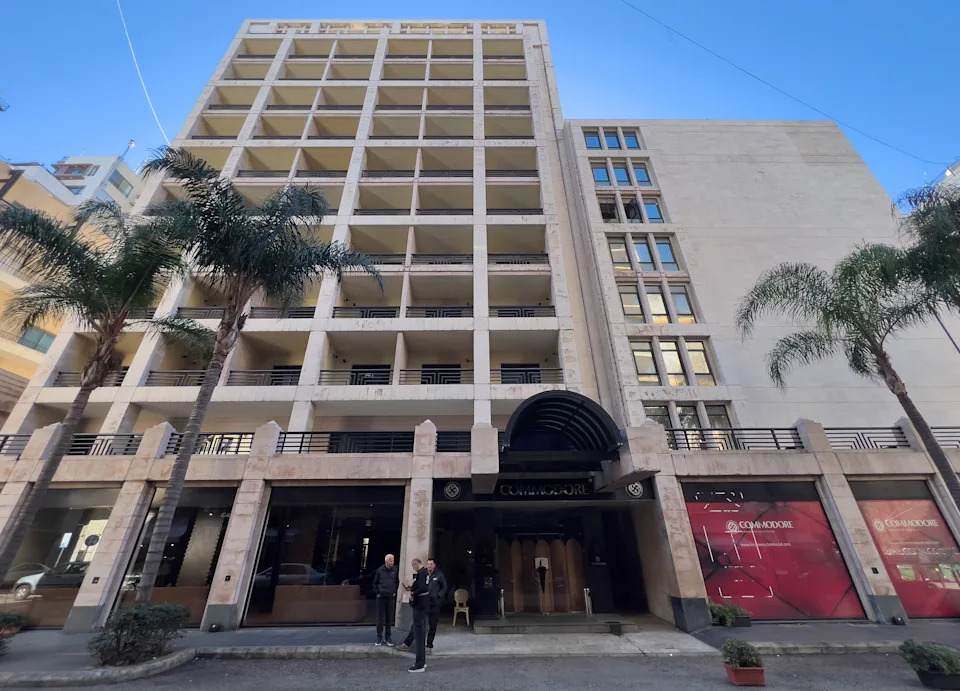
People stand outside the closed Commodore hotel, in Beirut, Lebanon, Sunday, Jan. 11, 2026. (AP Photo/Hussein Malla)(ASSOCIATED PRESS)
Security, Community and Character
Armed guards at the entrance and a streetwise staff gave reporters a degree of security in an increasingly dangerous city. Journalists described the hotel as a mix of modest accommodation — "lumpy mattresses" and basic meals — and warm camaraderie that made it feel like a social club and a workplace rolled into one.
“The Commodore was a hub of information — various guerrilla leaders, diplomats, spies and of course scores of journalists circled the bars, cafes and lounges,”
said Tim Llewellyn, a former BBC Middle East correspondent.
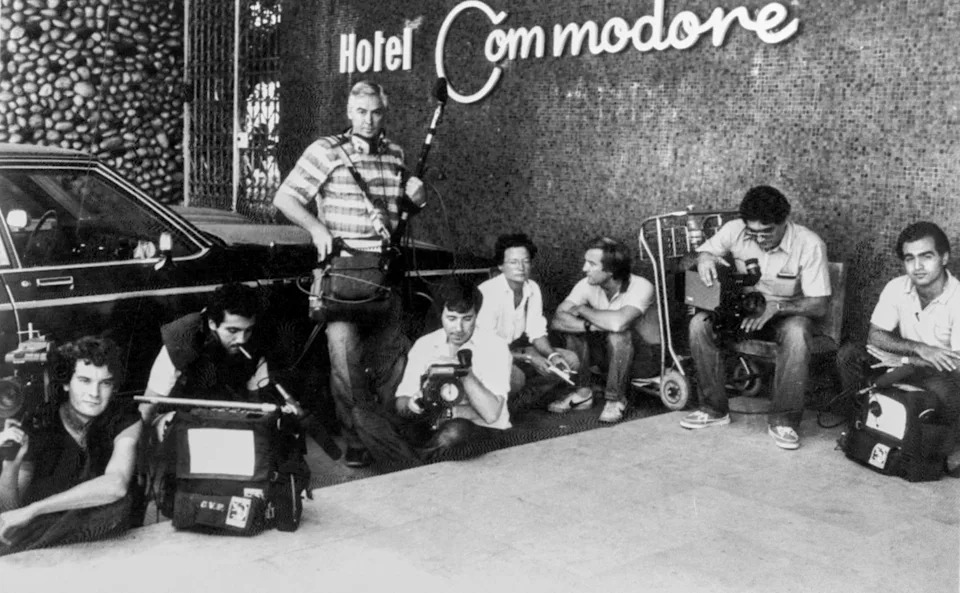
FILE - Television crews, some wearing flak jackets, crouch down in front of the Commodore Hotel, in West Beirut, on Aug. 31,1983, as the Lebanese Army battles with Shiite and Druse militiamen. (AP Photo/Bill Foley, File)(ASSOCIATED PRESS)
Moments of Danger and Memory
The Commodore survived intense fighting, including Israel’s 1982 invasion and the nearly three-month siege of West Beirut, when journalists used the hotel roof to film airstrikes. The 1985 abduction of AP correspondent Terry Anderson — who later appeared on tape wearing a T-shirt reading "Hotel Commodore Lebanon" — and other kidnappings prompted many foreign reporters to leave western Beirut and eroded the hotel’s reputation as a safe haven.
Coco the Parrot and Social Life
One of the hotel’s most vivid characters was Coco, a cheeky parrot who perched near the bar and sometimes mimicked the sound of incoming shells. The bird went missing during the heavy fighting in 1987 and was never found. Staff and guests also remember nights spent partying by the pool and sheltering together in the building’s basement club, Le Casbah, when shelling struck nearby rooms.
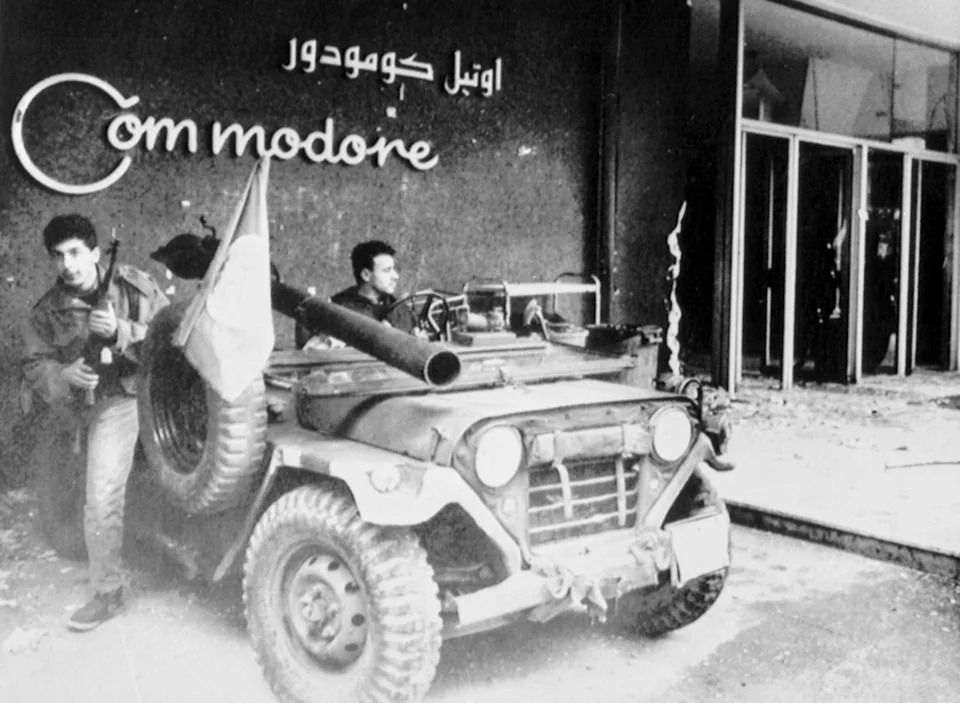
FILE - A jeep-mounted 106mm recoilless weapon of the Druse Progressive Party at the entrance to the Commodore Hotel, in West Beirut, on Feb. 19, 1987. (AP Photo/Zouheir Saade, File)(ASSOCIATED PRESS)
From 1943 Through Rebuilding and Decline
The Commodore was originally built in 1943 and operated until 1987, when heavy fighting between Shiite and Druze militiamen severely damaged the structure. The original building was demolished and replaced; a new hotel with an annex reopened in 1996, but some of the old-era characters and trappings — including Coco — never returned.
Recent Pressures and Final Closure
In recent years the hotel’s fortunes were hurt by Lebanon’s prolonged financial crisis that began in 2019. Although there are tentative signs of economic recovery, regional instability and the aftermath of the Israel–Hezbollah conflict, which paused under a tenuous ceasefire in November 2024, have depressed tourism. Frequent daily electricity cuts force many businesses to rely on costly private generators. Several once-bustling hotels around the country have closed in recent years, and the Commodore is the latest to shut permanently.
For the generations of journalists who filed stories, forged networks and found shelter within its walls, the Commodore’s closure marks the end of an institution closely tied to Lebanon’s modern media history.
Help us improve.