Marco Rubio has become a central architect of U.S. policy toward Venezuela after the Jan. 3 capture of Nicolás Maduro, a development that raises both political opportunity and risk for the senator. Rubio has proposed a three-phase plan — stabilize, recover with U.S. investment, and transition to democratic governance — and early steps include prisoner releases and outreach to oil investors. Analysts caution that moving beyond stabilization will be difficult and depends on sustained institutional and political support.
With Maduro Captured, Rubio’s Political Future Hinges on Venezuela’s Fragile Transition
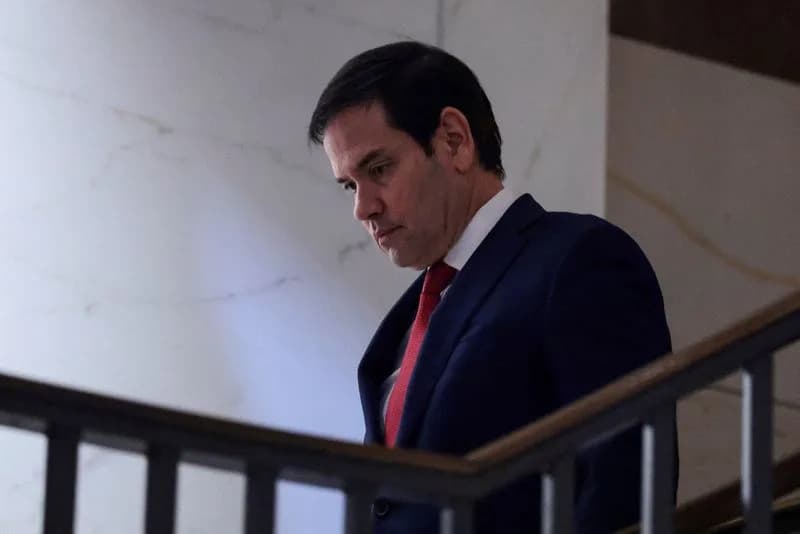
FILE PHOTO: U.S. Secretary of State Marco Rubio arrives to brief members of Congress on the situation in Venezuela, on Capitol Hill in Washington, D.C., U.S., January 5, 2026. REUTERS/Evelyn Hockstein/File Photo
WASHINGTON, Jan. 13 (Reuters) - Marco Rubio has emerged as a central foreign-policy figure in the second Trump administration, holding top roles that range from secretary of state to national security adviser. His prominence — amplified by AI-generated memes portraying him as Venezuela’s new strongman — underscores how closely his political fortunes are now tied to events in Caracas.
The capture of longtime Venezuelan leader Nicolás Maduro on Jan. 3, on U.S. allegations of drug trafficking, was widely seen as a tactical and symbolic victory for the administration. For Rubio, the operation was a personal triumph that also creates political risk: he is now charged with shepherding Venezuela from a dangerous vacuum toward the democratic transition he has long advocated.
Exile Politics And Domestic Gains
Rubio’s hardline stance toward the socialist governments of Caracas and Havana resonates strongly with Cuban- and Venezuelan-American communities in Florida — a crucial political constituency. The operation has burnished his image among online supporters and in his home state, reinforcing a political identity shaped by anti-communist convictions.
“The administration is going to be dealing with Venezuela for months and probably years to come, and this could well be a millstone around Marco Rubio's neck, politically and otherwise,”
— Justin Logan, director of defense and foreign policy studies at the Cato Institute.
Rubio’s Three-Phase Plan
Rubio has outlined a three-phase approach: first, secure stability to prevent violence and chaos; second, facilitate economic recovery — including encouraging U.S. companies to help rebuild Venezuela’s energy sector — while advancing political reconciliations such as prison releases and returns from exile; and third, support a political transition toward democratic institutions.
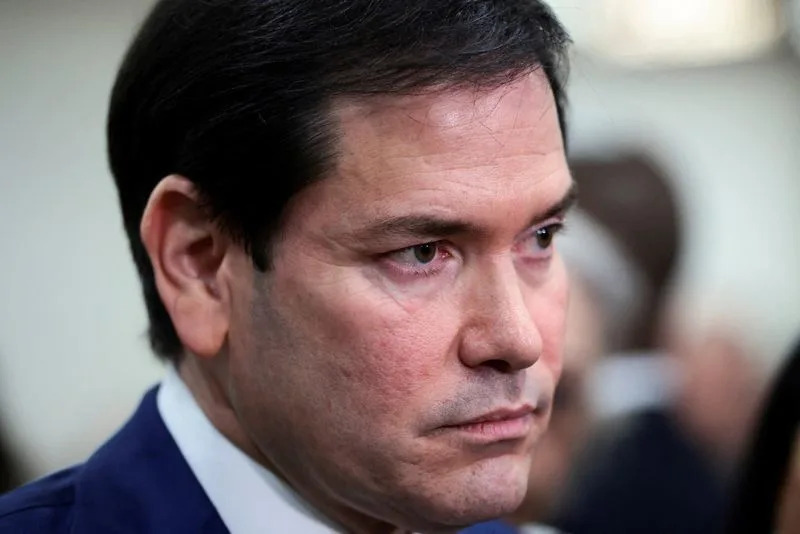
FILE PHOTO: U.S. Secretary of State Marco Rubio looks on on the day of a briefing for the House of Representatives on the situation in Venezuela, on Capitol Hill in Washington, D.C., U.S., January 7, 2026. REUTERS/Evelyn Hockstein/File Photo
There have been early moves consistent with that plan: Venezuelan authorities began releasing prisoners, and the White House has engaged oil executives to spur investment in reconstruction. The State Department has framed the effort as a phased path to normalization.
Uncertainties And Institutional Buy-In
Despite high-level plans, analysts warn that translating stabilization into a lasting democratic transition will be slow and uncertain. Questions remain about whether other senior administration officials and key U.S. political actors will persist beyond the initial stabilization phase to press for deeper reforms.
Will Freeman, a fellow at the Council on Foreign Relations, asked whether Rubio can persuade President Trump and a critical mass of officials that advancing beyond stabilization is in their interest — a hurdle with major political implications for Rubio if the process stalls.
Political Stakes Ahead
Rubio, 54, who ran for the Republican presidential nomination in 2016, is widely viewed as a potential contender for 2028. He could find himself competing with Vice President JD Vance, whose preference for a more restrained foreign policy contrasts with Rubio’s hawkish reputation. How Rubio manages Venezuela could therefore shape his national standing and influence future GOP primary dynamics.
As Washington navigates the immediate aftermath of Maduro’s capture, Rubio’s role makes him a focal point of both praise and scrutiny — celebrated by supporters who want decisive action and criticized by skeptics who warn the administration may lack unified commitment to a full democratic transition.
(Reporting by Simon Lewis and Humeyra Pamuk; Additional reporting by Gram Slattery; Editing by Don Durfee and Rosalba O'Brien)
Help us improve.