
Marco Rubio has emerged as the administration’s chief coordinator on Venezuela and Latin America, combining his roles as secretary of state and national security adviser to shape and explain policy. He helped craft the operation that removed Nicolás Maduro and has proposed a three-phase plan: sell seized oil to fund reconstruction, restore civil society, and transition to a new government. Rubio has worked to temper the administration’s most extreme rhetoric while facing increasing demands from Congress for greater oversight and clearer next steps.
Marco Rubio: The 'Quarterback' Steering Trump's Venezuela and Latin America Strategy

Secretary Marco Rubio meets with Belgian Foreign Minister Maxime Prévot at the State Department, Tuesday, Jan. 6, 2026 in Washington. (AP Phoro/Kevin Wolf)(ASSOCIATED PRESS)
WASHINGTON — Marco Rubio, serving as both U.S. secretary of state and national security adviser, has emerged as the central coordinator of the Trump administration’s approach to Venezuela and broader Latin America. A former college football player who supports the Miami Dolphins and has a son on the University of Florida football team, Rubio’s sports metaphor—he is often described as the administration’s “quarterback”—captures his role: organizing teams, translating presidential pronouncements into policy and explaining decisions to lawmakers and allies.
A Steadying Influence
Rubio has positioned himself as a voice of relative calm amid an administration known for dramatic and sometimes alarming statements, from the military operation that removed Nicolás Maduro from power to provocative talk about Greenland. In public remarks and private congressional briefings, he has sought to temper the most bombastic rhetoric while defending and operationalizing the administration’s more assertive initiatives.
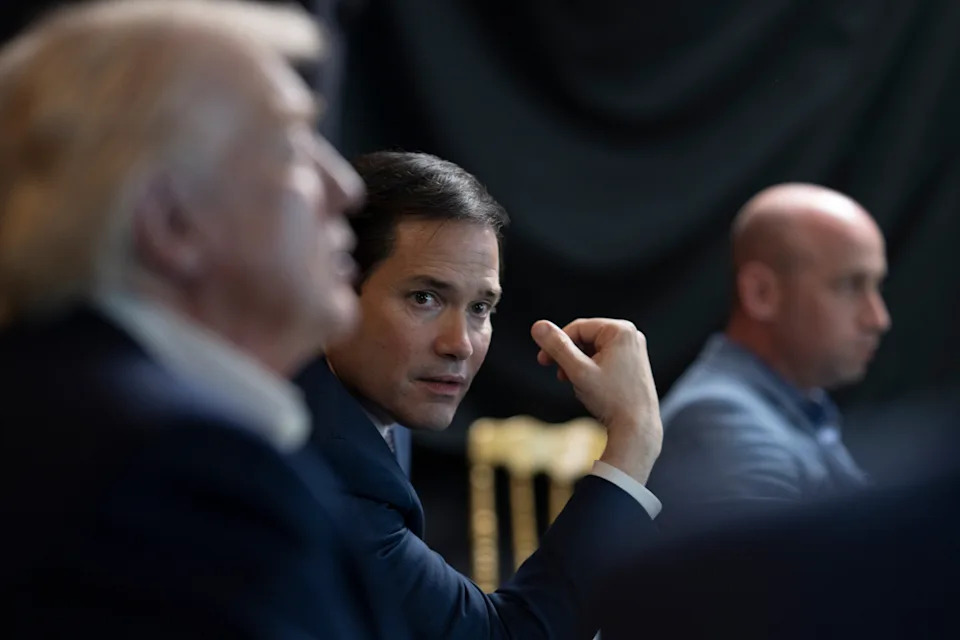
In this photo released by the White House, President Donald Trump monitors U.S. military operations in Venezuela, with Secretary of State Marco Rubio and White House deputy chief of staff Stephen Miller at Mar-a-Lago in Palm Beach, Fla., Saturday, Jan. 3, 2026. (Molly Riley/The White House via AP)(ASSOCIATED PRESS)
“We always prefer to settle it in different ways,” Rubio told reporters when asked about a military option in Greenland, noting the U.S. repeatedly sought nonmilitary resolutions in Venezuela prior to the raid.
Venezuela: Strategy and Oversight
Rubio played a key role in the planning and political case for the action that led to Maduro’s ouster. Publicly, he has laid out a three-phase plan for Venezuela: sell seized Venezuelan oil to generate revenue for reconstruction; restore key elements of civil society; and facilitate a transition to a new government. The administration has signaled support for Delcy Rodríguez, Maduro’s vice president, as an interim leader.
After the Caracas raid, when President Trump said the U.S. would “run” Venezuela without detailed explanation, Rubio clarified that Washington does not intend to govern the country day-to-day but will use economic leverage (including oil sanctions) and the threat of further action to influence outcomes.
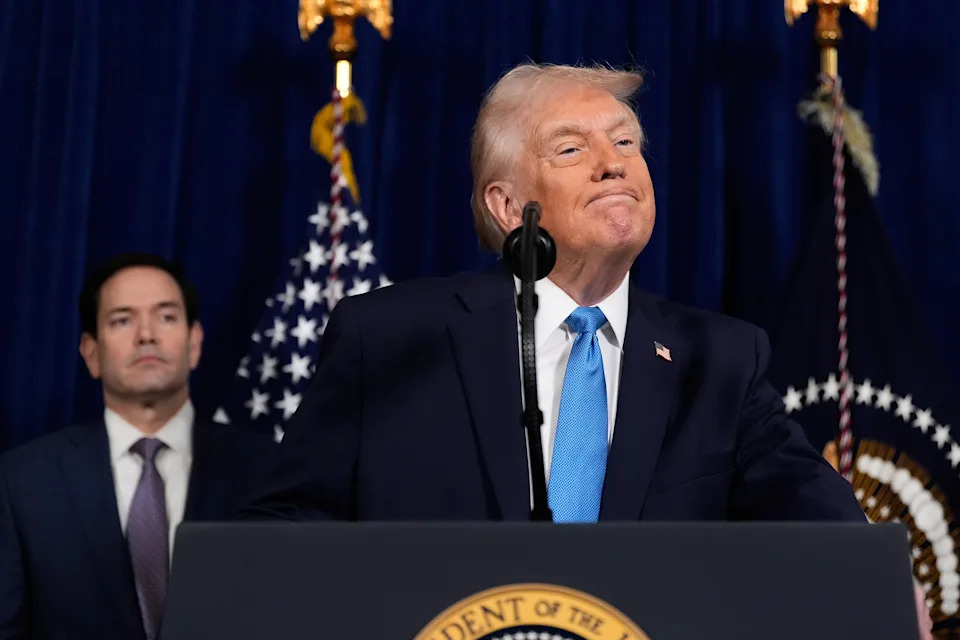
President Donald Trump listens to a question during a news conference at Mar-a-Lago, Saturday, Jan. 3, 2026, in Palm Beach, Fla., as Secretary of State Marco Rubio watches. (AP Photo/Alex Brandon)(ASSOCIATED PRESS)
Running the Team
Aides describe Rubio’s dual jobs as akin to a senior traffic cop who coordinates a small but influential advisory network. The Venezuela team reportedly includes Deputy Chief of Staff Stephen Miller, Defense Secretary Pete Hegseth, Energy Secretary Chris Wright and Vice President J.D. Vance. Fragile efforts on Gaza and Ukraine are overseen by a separate group that has included Vance, special envoy Steve Witkoff and Jared Kushner.
White House press secretary Karoline Leavitt praised Rubio as “a team player” whose colleagues appreciate working with him in the West Wing. Senate Foreign Relations Chairman James Risch and Rep. Mario Diaz-Balart have both described Rubio as a force that pushed the administration to act more decisively in the region.
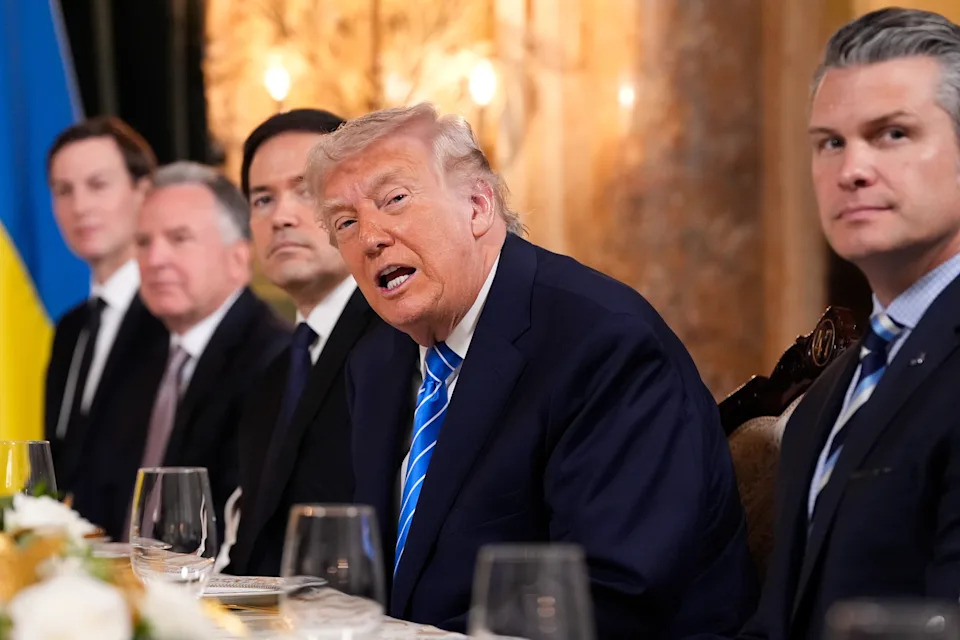
President Donald Trump, accompanied, from left to right, by Jared Kushner, Special Envoy to the Middle East Steve Witkoff, White House chief of staff Susie Wiles, Secretary of State Marco Rubio and Defense Secretary Pete Hegseth, meets with Ukraine's President Volodymyr Zelenskyy, not pictured, at his Mar-a-Lago club, Sunday, Dec. 28, 2025, in Palm Beach, Fla. (AP Photo/Alex Brandon)(ASSOCIATED PRESS)
Answering Capitol Hill
While Pentagon officials have provided technical details about the Maduro raid, Rubio has been the principal official taking questions and addressing concerns from members of Congress in closed briefings. Lawmakers from both parties are demanding more detail and public oversight about the path ahead in Venezuela. Democrats, in particular, have sought hearings and greater congressional engagement before further military steps.
“On the narrow question of Venezuela, Secretary Rubio knows better about what briefings and consultations…need to happen to get and sustain bipartisan support for military action,” said Sen. Chris Coons, who expressed disappointment that broader consultation has not yet occurred. Republican Rep. Carlos Gimenez warned the administration’s timeline is short: “It’s not years, it’s months.”
Roots and Motivation
Rubio’s longtime focus on Cuba and Venezuela is tied to his personal history: his Cuban-born parents settled in South Florida in 1956, and he grew up in Miami among communities shaped by exile and anti-communist sentiment. That background has informed his longstanding criticism of Maduro and Chávez and his readiness to press for strong measures—including sanctions and, at times, military options—when he argues regional security is at risk.
What Comes Next
Rubio’s prominence in shaping policy toward Latin America makes him a central figure in whether recent military and diplomatic moves translate into a stable political outcome in the region. He must now navigate congressional oversight, regional diplomacy and the practical challenges of implementing the administration’s three-phase plan—largely within a compressed timetable.
Key players quoted or described: Sen. James Risch, Rep. Mario Diaz-Balart, Sen. Chris Coons, Rep. Carlos Gimenez, White House press secretary Karoline Leavitt; aides including Stephen Miller, Pete Hegseth, Chris Wright, J.D. Vance, Steve Witkoff and Jared Kushner.
Help us improve.


