
Senator Marco Rubio and ABC host George Stephanopoulos sparred over whether the United States intends to "run" Venezuela after reports that Nicolás Maduro had been removed. Rubio said the U.S. has placed a "quarantine" on Venezuelan oil and is using court-authorized seizures and sanctions as leverage to force change. He denied the U.S. is administering day-to-day governance but acknowledged involvement in law enforcement efforts and said a transition followed by elections is the goal.
Rubio and Stephanopoulos Clash Over Whether the U.S. Is ‘Running’ Venezuela

Secretary of State Marco Rubio addressed President Donald Trump's comments that the U.S. was "going to run" Venezuela after Nicolás Maduro's extraction.
Senator Marco Rubio engaged in a heated exchange with ABC's George Stephanopoulos on Sunday, as the host repeatedly pressed Rubio about whether the United States intended to "run" Venezuela after reports that Nicolás Maduro had been removed from power.
President Donald Trump reportedly told reporters the U.S. was "going to run the country" until a safe transition of power could be arranged. Stephanopoulos pressed Rubio for the legal basis for such action and whether the U.S. is currently administering Venezuela.
Rubio’s Response: Economic Leverage and Legal Orders
Rubio defended the administration’s approach, saying the U.S. had placed a "quarantine" on Venezuelan oil to deny the regime key economic resources. "That means their economy will not be able to move forward until the conditions that are in the national interest of the United States and the interest of the Venezuelan people are met," he said, adding that Washington intends to use that leverage to force change.
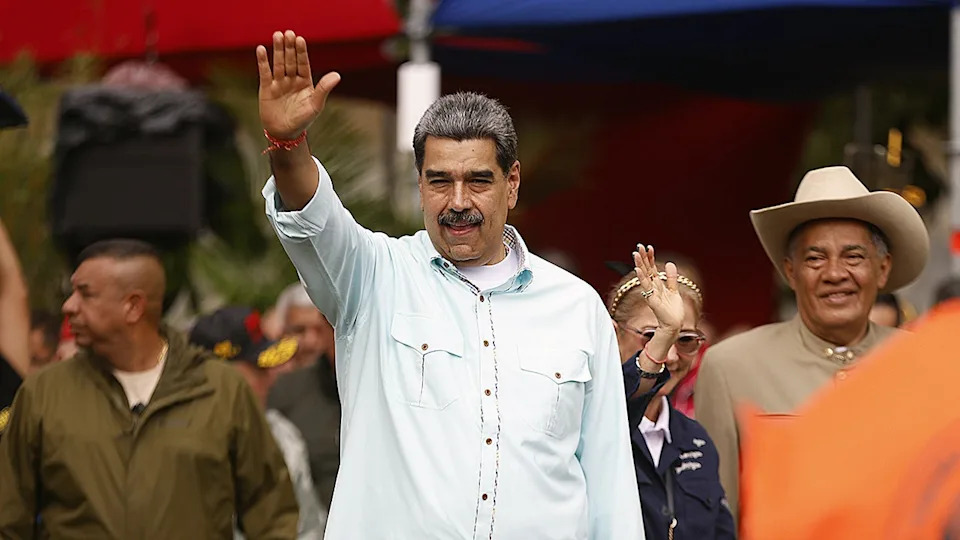
Venezuelan President Nicolás Maduro was captured by the U.S. military on Saturday.
When Stephanopoulos asked what legal authority allowed the U.S. to "run" Venezuela, Rubio pointed to court-authorized actions against sanctioned vessels. "We have court orders. These are sanctioned boats and we get orders from courts to go after and seize these sanctions," he said. "So, I don’t know, is a court not a legal authority?"
Is the U.S. Running Venezuela?
Pressed on whether the U.S. was presently running Venezuela, Rubio clarified that Washington was not administering day-to-day government functions but was "directing the course" of how events would unfold through economic and legal pressure. He also acknowledged being "very intricately involved" in certain law enforcement operations, citing coordination with the U.S. Coast Guard.
"What we are running is the direction that this is going to move moving forward," Rubio said, emphasizing that the administration had already begun to apply its leverage.
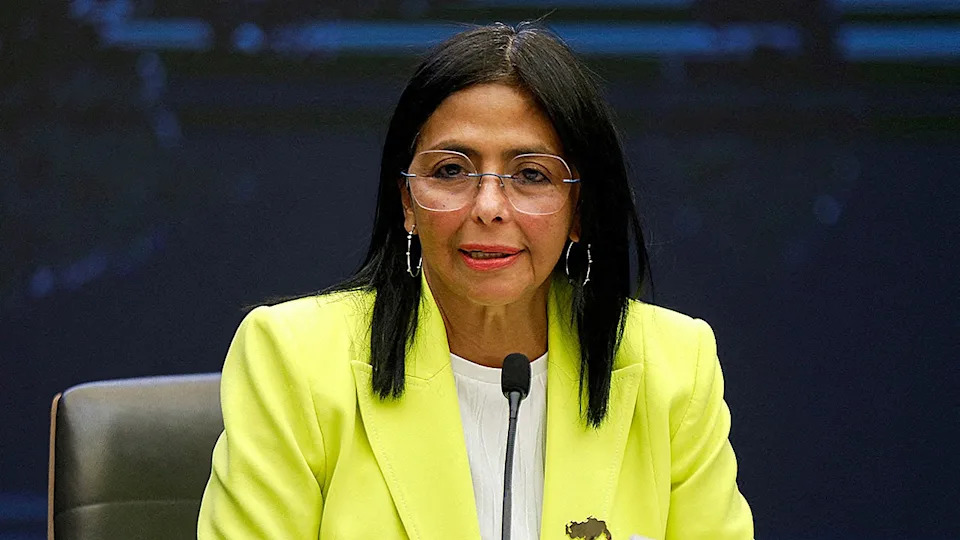
Marco Rubio suggested that Venezuela's Vice President Delcy Rodriguez was not the "legitimate" leader of the country.
Leadership and Legitimacy
Rubio questioned whether Delcy Rodríguez, identified by some as Venezuela’s vice president, should be regarded as the country’s legitimate leader. He reiterated the U.S. position that the Maduro regime lacks legitimacy, a view he said is shared by "60-something" other countries. Rubio said he expects a transition period followed by elections that would produce a legitimate government.
Key quote from Trump (reported): "We're going to run the country" — comment attributed to President Trump after reports of Maduro's removal.
Context and caveats: Much about the situation remained fluid and was described in the interview as based on recent developments and reported removals. Rubio framed U.S. measures in terms of legal authority (court orders) and strategic leverage rather than direct political administration on the ground.
Corrections: The original article incorrectly referred to Marco Rubio as "Secretary of State." Rubio is a U.S. Senator, and this version corrects that error while preserving the substance of the interview.
Help us improve.


