The EPA has proposed a rule to limit how states and authorized tribes use Section 401 of the Clean Water Act to block or condition federally permitted projects such as pipelines, mines and data centers. The draft would tighten submission requirements, impose strict review deadlines and narrow reviews to direct discharges to federally regulated waters — reversing a broader "holistic" approach adopted in 2023. Critics, including environmental groups, say the change weakens local protections for water, fisheries and drinking supplies; the EPA says it will increase predictability and reduce needless delays. A final rule is expected in the spring after a public comment period.
EPA Proposes Curtailing States' and Tribes' Section 401 Powers to Fast‑Track Pipelines and Data Centers
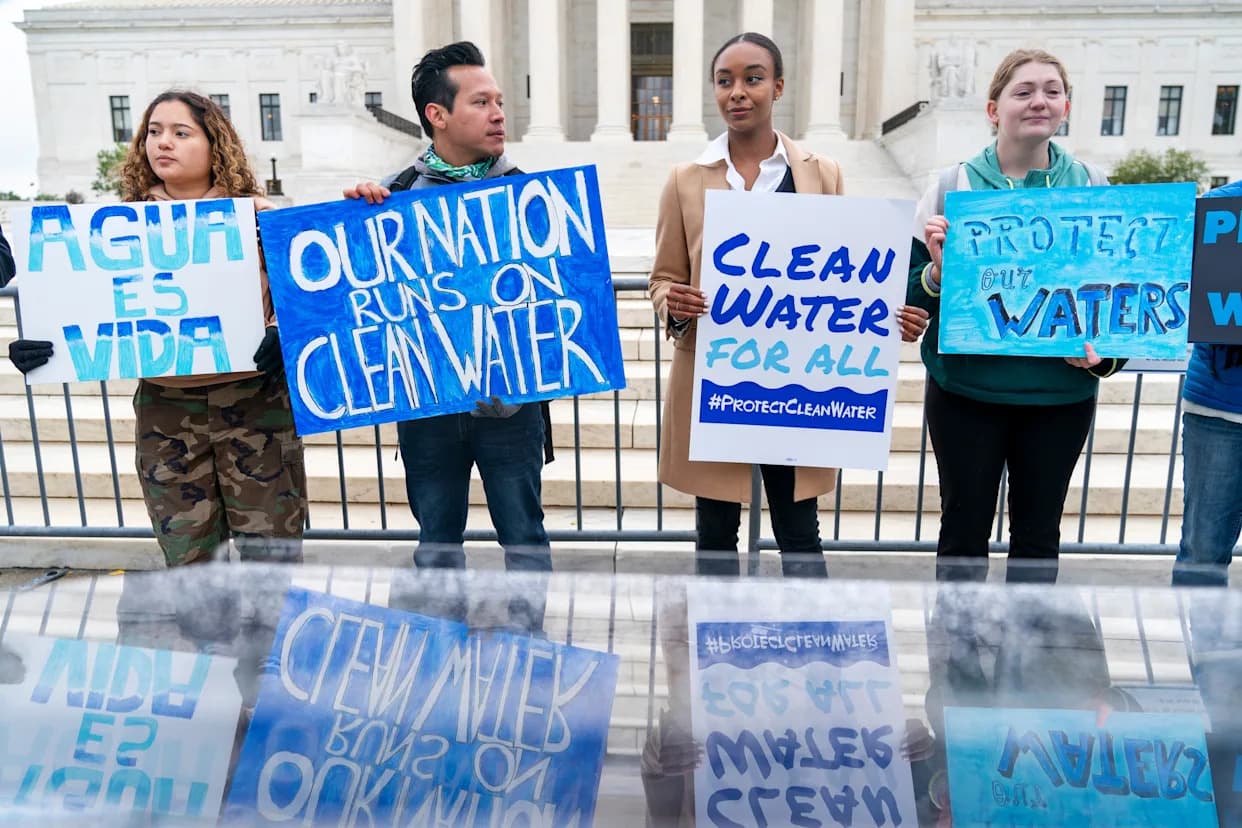
FILE - Bethsaida Sigaran, left, of Baltimore, her brother Jaime Sigaran, with American Rivers, and Thea Louis, with Clean Water Action, join other supporters of the Clean Water Act as they demonstrate outside the Supreme Court, Oct. 3, 2022, in Washington, as the court begins arguments in Sackett v. Environmental Protection Agency (EPA). (AP Photo/Jacquelyn Martin, File)
WASHINGTON — The Environmental Protection Agency on Tuesday proposed a rule that would narrow the ability of states and federally recognized tribes to use Section 401 of the Clean Water Act to block or impose conditions on federally permitted projects, including natural gas pipelines, mines and new data centers. The agency says the changes are meant to reduce delays and increase predictability for federally regulated projects while preserving core state and tribal protections for water quality.
Key Elements of the Proposal
The draft rule echoes steps the EPA took during the first Trump administration. It would:
- Specify exactly what applicants must submit to certifying authorities for a Section 401 review;
- Impose strict deadlines for state and tribal reviews and clarify when those reviews may be waived;
- Require states and tribes to provide detailed explanations when they deny certification or attach conditions to permits;
- Limit the scope of reviews primarily to direct discharges to federally regulated waters rather than broader, "holistic" evaluations of a project's downstream or cumulative impacts.
“When finalized, the proposed rule will increase transparency, efficiency and predictability for certifying authorities and the regulated community,” said Jess Kramer, EPA assistant administrator for water.
Jess Kramer: “It will also ensure states and authorized tribes adhere to their Section 401 role.”
Context And Contention
The Clean Water Act gives states and some authorized tribes the right to assess how federally permitted projects could affect water quality within their borders. Projects such as pipelines, dams and mines frequently cross rivers, streams and wetlands — impacts states have used to scrutinize and, in some cases, stop projects. For example, New York regulators rejected a pipeline permit in 2017, citing inadequate protections for hundreds of streams and wetlands.
The Biden administration in 2023 broadened the scope of state and tribal reviews, urging authorities to "holistically evaluate" a project's effects on local water quality — an approach praised by environmental advocates as stronger protection for ecosystems, fisheries and drinking water. The current proposal would roll back that broader interpretation and focus reviews on direct discharges to waters that remain federally regulated.
This regulatory shift arrives after the U.S. Supreme Court's 2023 ruling in Sackett v. EPA, which narrowed the definition of waters protected under the Clean Water Act and reduced the federal government's regulatory reach over millions of acres of wetlands. That decision means fewer waters fall under federal jurisdiction, a factor the EPA cites as relevant to clarifying the reach of Section 401 reviews.
Critics say the proposal undoes important safeguards. Moneen Nasmith, director of national climate and fossil fuel infrastructure at Earthjustice, argued the agency is addressing a nonexistent problem:
Moneen Nasmith: “EPA’s claims that states and tribes are overreaching are baseless. This proposed rule is trying to solve for a problem that does not exist.”
Administration Priorities And Next Steps
Under Administrator Lee Zeldin, the EPA has framed environmental regulation alongside several economic objectives — described internally as "pillars" — including restoring U.S. energy production and supporting the buildout of data centers. The agency says clarifying Section 401 requirements will help projects move forward with greater certainty as demand for energy and data infrastructure grows.
A public comment period will follow the proposal; the EPA expects to issue a final rule in the spring. The agency and outside groups will likely use that window to argue over how broadly states and tribes should be able to weigh potential harms to waters, fisheries and drinking supplies when federal permits are at stake.
Associated Press writer Matthew Daly contributed to this report.
The Associated Press receives support from the Walton Family Foundation for coverage of water and environmental policy. The AP is solely responsible for all content.
Help us improve.