Before he reshaped the modern Republican Party, Donald Trump built his public persona on branding: a real estate magnate who licensed his name to hotels, television shows, household goods and other ventures. Over time the Trump name came to signify a gilded, ostentatious kind of luxury. Today that brand is inseparable from the presidency, and a recent YouGov survey conducted for The Economist shows how Americans translate the Trump brand into character judgments.
Analysis of data from YouGov polling FOR THE ECONOMIST.Philip Bump/MS NOW
Poll Findings
The YouGov questionnaire asked respondents whether a list of words described the president. The terms most commonly associated with Trump were "dangerous," "corrupt," "racist" and "cruel," although some respondents still used words such as "bold" and "strong." Responses split sharply by party: Democrats were most likely to choose "corrupt," while Republicans were most likely to choose "strong."
Analysis of data from YouGov polling.Philip Bump/MS NOW
Few respondents labeled Trump "inspiring," "steady" or "honest." Even among Republicans, a majority did not describe him as inspiring or steady.
Analysis of data from YouGov polling for The Economist.Philip Bump/MS NOW
How Parties Viewed Negative Labels
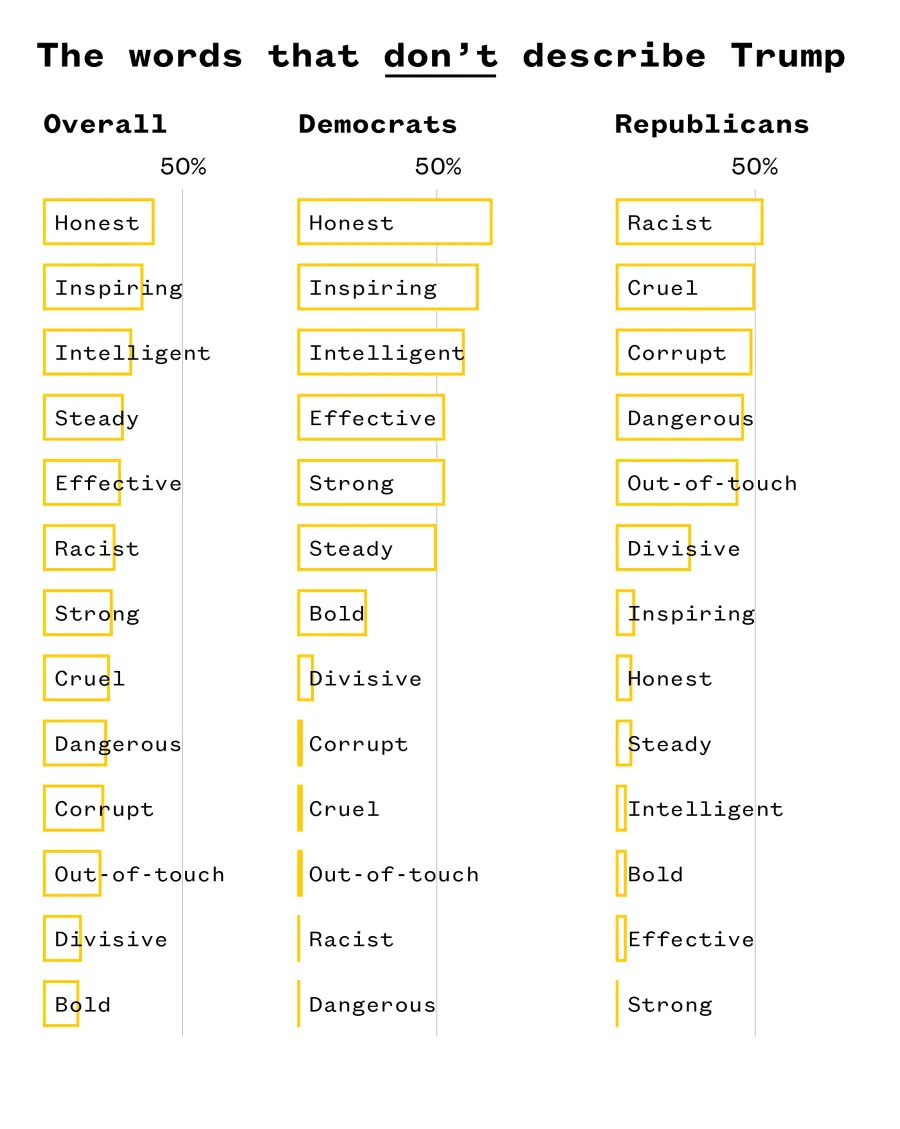
Respondents were also asked whether particular words did not describe Trump, and the partisan divide was again striking. Only just over half of Republicans said that "racist" did not describe him, and 50% or fewer of Republicans said that "cruel" and "corrupt" were inappropriate labels. One term notably near the bottom of the "doesn't apply" list was "out of touch," signaling concerns about personal empathy and connection.
Analysis of data from YouGov polling for The Economist.Philip Bump/MS NOW
Approval Ratings And The Economy
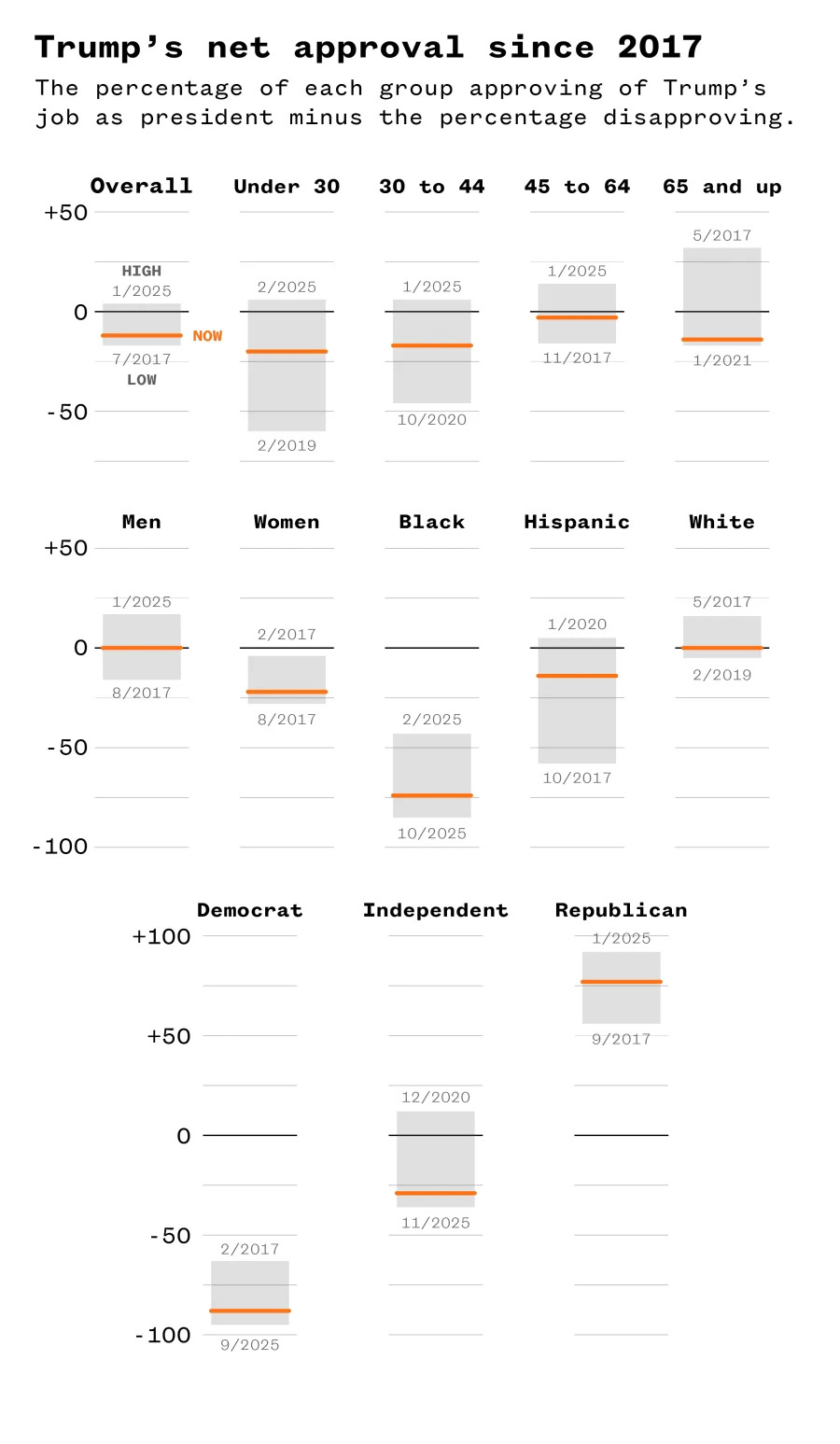
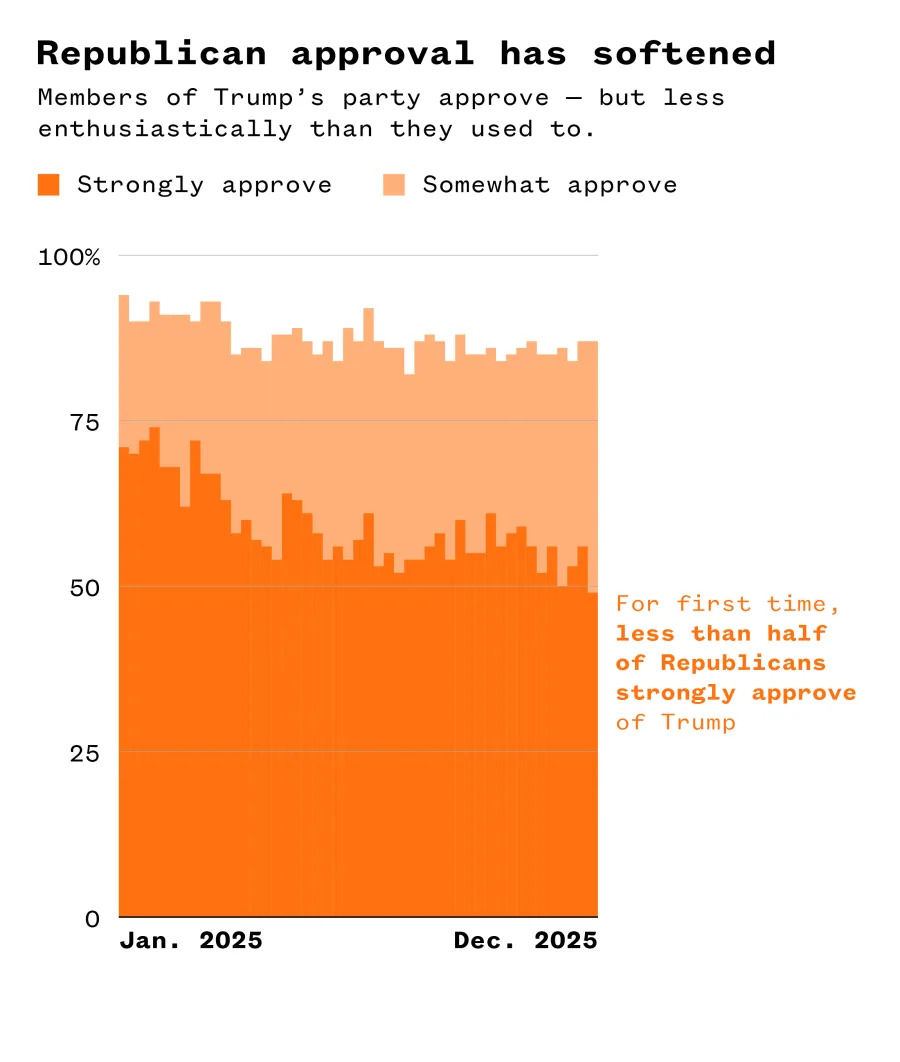
Trump's approval has weakened on a number of measures this year. In YouGov tracking across both of his terms, his approval among women, independents, older voters and white Americans is near polling lows. While he continues to receive strong backing from many Republicans, that support has become less emphatic: fewer than half of Republicans in the latest poll said they "strongly approve" of his presidency, a first for his second term.
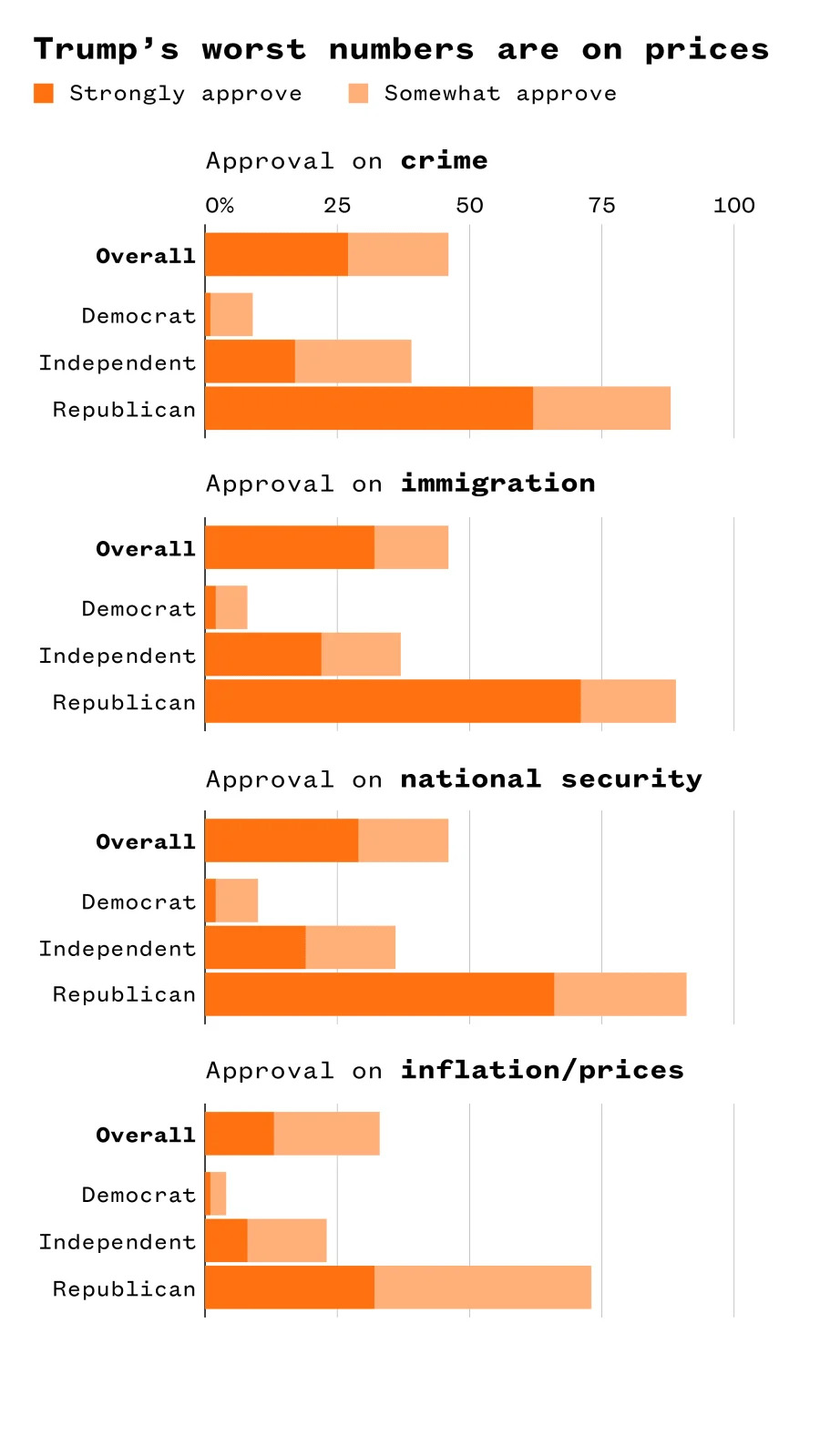
Issue-specific approval is mixed. On crime, immigration and national security, Trump’s approval sits in the 40s overall and rises into the 80s and 90s among Republicans. On inflation and prices, however, his approval is in the 30s overall, with only about a third of Republicans giving him strong marks — a weakness that likely contributes to his eroding support.
Broader Context
Other polls reinforce this economic unease. The Marist Poll found that Americans think their personal finances have worsened since Trump returned to power, and for the first time in its tracking Marist showed Democrats with an advantage on the economy. Trump previously benefited politically from pointing to the pre-pandemic economy of his first term, but he has offered few detailed proposals to reduce costs, and some of his policies — including broad tariffs on imports — are criticized for contributing to higher prices.
That history matters because the Trump brand — once built on flashy luxury and gilded imagery — makes it harder for him to credibly portray himself as in touch with working Americans on economic pain. Culture-war messaging may still resonate with his base, but economic concerns cross party lines and appear to be weighing on his standing.
Bottom Line: The YouGov survey shows Americans translate the Trump brand into sharply divergent character judgments. Many view him as dangerous, corrupt and racist, while Republicans continue to emphasize strength. Economic pains, especially on inflation and prices, are a persistent vulnerability.
The original piece appeared on MS NOW and was first published on ms.now.