
In 2025 neuroscience delivered a series of striking findings: large-scale scans revealed five life-stage "eras" in brain organization, infants were shown to form memories by about one year, and adult neurogenesis received new direct evidence. Other highlights include discovery of a fusiform "reality signal," detection of brain biophotons from outside the skull, a promising Huntington’s therapy (AMT-130), and an experimentally produced novel color called "olo." Together these results push forward our understanding of memory, perception, disease and consciousness.
10 Astonishing Brain Discoveries From 2025 — From New Neurons to a New Color

A representative MRI tractography image of the first era of the human brain. This image is representative of the general pattern seen across the brains in the study during the second era of neural wiring, the adolescent phase.Dr Alexa Mousley, University of Cambridge[Sign up for Today in Science, a free daily newsletter]
The human brain contains roughly 86 billion neurons linked by about 100 trillion synapses, making it one of the most intricate structures known. In 2025 neuroscientists reported a string of surprising, important and sometimes strange findings that deepen our understanding of memory, perception, disease and consciousness. Below are 10 of the year’s most compelling discoveries, presented with context and implications.
1. Five Distinct Life 'Eras' of Brain Organization
Large-scale MRI analyses of thousands of people found that brain organization changes in broad, predictable phases across the lifespan. Researchers identified five distinct eras with major reorganization points near ages 9, 32, 66 and 83. Within each era—such as the long "adolescent" phase between roughly 9 and 32—people’s brains tend to show similar structural and functional shifts, suggesting common developmental and aging trajectories.
2. Infants Can Form Memories By Around One Year
Although most adults have no conscious memories from infancy, a study of the infant hippocampus—the deep-brain region crucial for memory formation—showed that babies can encode memories by about one year of age. The work suggests early memory formation occurs but that the accessibility of those memories changes with development, an ongoing mystery for memory researchers.
3. Newborns Have High Levels Of Tau Proteins
Researchers reported unexpectedly high levels of tau protein in healthy newborn brains. Tau helps stabilize neuronal structure but can become chemically altered and tangle in Alzheimer’s disease. The observation that tau levels are elevated at birth and decline with age raises important questions about how tau dynamics in early life relate to later vulnerability to neurodegeneration—and whether harmful changes might be prevented or reversed.
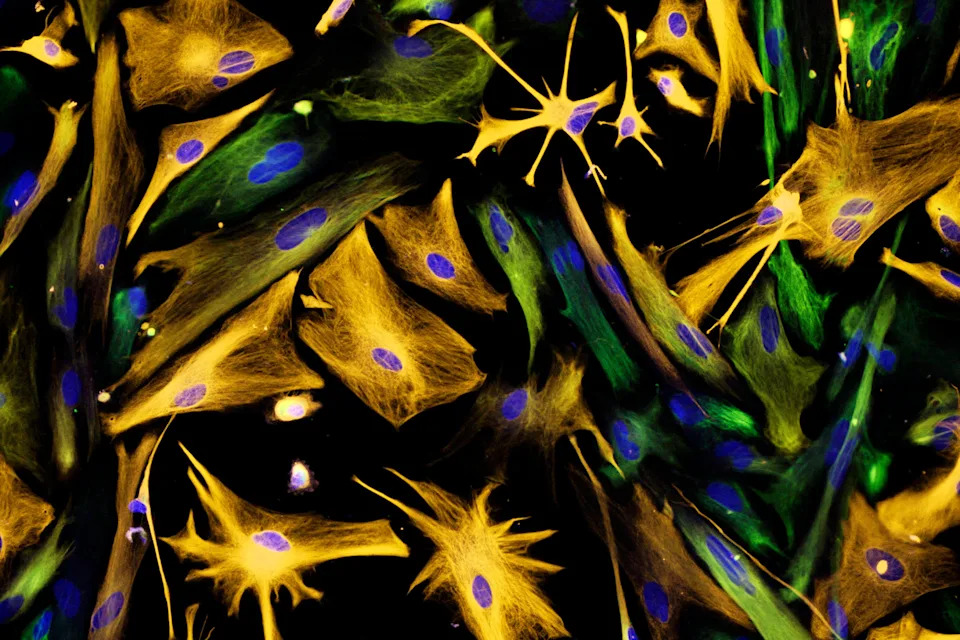
Neural precursor cells (green) have been difficult to identify in human brains.Carol N. Ibe and Eugene O. Major/National Institutes of Health/Science Source
4. Clearer Evidence For Adult Neurogenesis
Long-debated evidence that adults can grow new neurons received a major boost: researchers identified newly formed neurons and their precursor cells in adult human brains, including samples from individuals as old as 78. These direct findings strengthen the case for adult neurogenesis in humans and reopen questions about its functional role and therapeutic potential.
5. A 'Reality Signal' That Distinguishes Imagination From Perception
Scientists discovered a neural mechanism that helps the brain tell imagined content from real perception. A region in the fusiform gyrus generates a "reality signal" that other brain areas evaluate to decide whether an experience is externally driven or internally generated. Dysfunction in this system could help explain hallucinations, where internally produced sensory content is mistaken for real external input.
6. AMT-130 Shows Promise Against Huntington’s Disease
Early clinical-trial results showed that AMT-130, a gene-targeting treatment delivered directly into deep brain tissue via a lengthy surgical procedure, can slow progression of Huntington’s disease. If regulators approve it, AMT-130 would be the first therapy to address the underlying disease mechanism rather than only treating symptoms.
7. Smarter Primates Narrow The Gap With Humans
New studies further eroded claims of human cognitive uniqueness. For example, chimpanzees demonstrated the ability to weigh evidence and revise beliefs when proven wrong, while bonobos inferred when a human lacked information—demonstrating forms of rational updating and theory of mind previously thought to be primarily human traits.

Teal is as close as you can get to seeing the new color without having your eyes lasered.Getty Images
8. Scientists Created A New Perceptual Color Called "Olo"
Color perception arises from retinal cells sensitive to red, green and blue wavelengths. Because no natural light source stimulates only green-sensitive cones, that specific perceptual state is normally unreachable. Researchers used targeted retinal laser stimulation in five volunteers to isolate activation patterns that produced an impossible, highly saturated blue-green hue they dubbed "olo," expanding our understanding of sensory limits and perception.
9. The Brain Emits Ultra-Weak Light (Biophotons) Detectable From Outside The Skull
Living tissues emit ultra-weak photons—biophotons—during metabolic activity. For the first time, scientists detected biophoton emission from the human brain noninvasively, measured from outside the skull. Emission patterns varied with mental tasks, but whether these photons play any causal role in cognition remains unknown and will require further study.
10. Competing Theories Of Consciousness Faced Critical Tests
The perennial question of how networks of neurons produce subjective experience remained unresolved, but two leading theories of consciousness were pitted directly against each other in rigorous experiments. The mixed outcomes challenged key assumptions of both frameworks and underscored how much we still must learn about the neural basis of conscious experience.
Implications: Collectively, these discoveries advance basic neuroscience and point toward clinical possibilities—from new ways to think about neurodegeneration and brain repair to potential therapies for genetic disorders. They also highlight exciting, sometimes surprising links between perception, cognition and biology that will guide research in the coming years.


