Mattel has launched an autistic Barbie developed over 18 months with the Autistic Self Advocacy Network to reflect sensory preferences and behaviors shared by many autistic people. Design features include side-shifted eyes, articulated elbows and wrists to acknowledge stimming, an A-line dress and flat shoes, plus sensory and communication accessories. The doll incorporates facial features inspired by employees in India and will be sold online and at Target for $11.87, with Walmart stocking it in March.
Mattel Debuts Autistic Barbie Co-Created With Autistic Self Advocacy Network
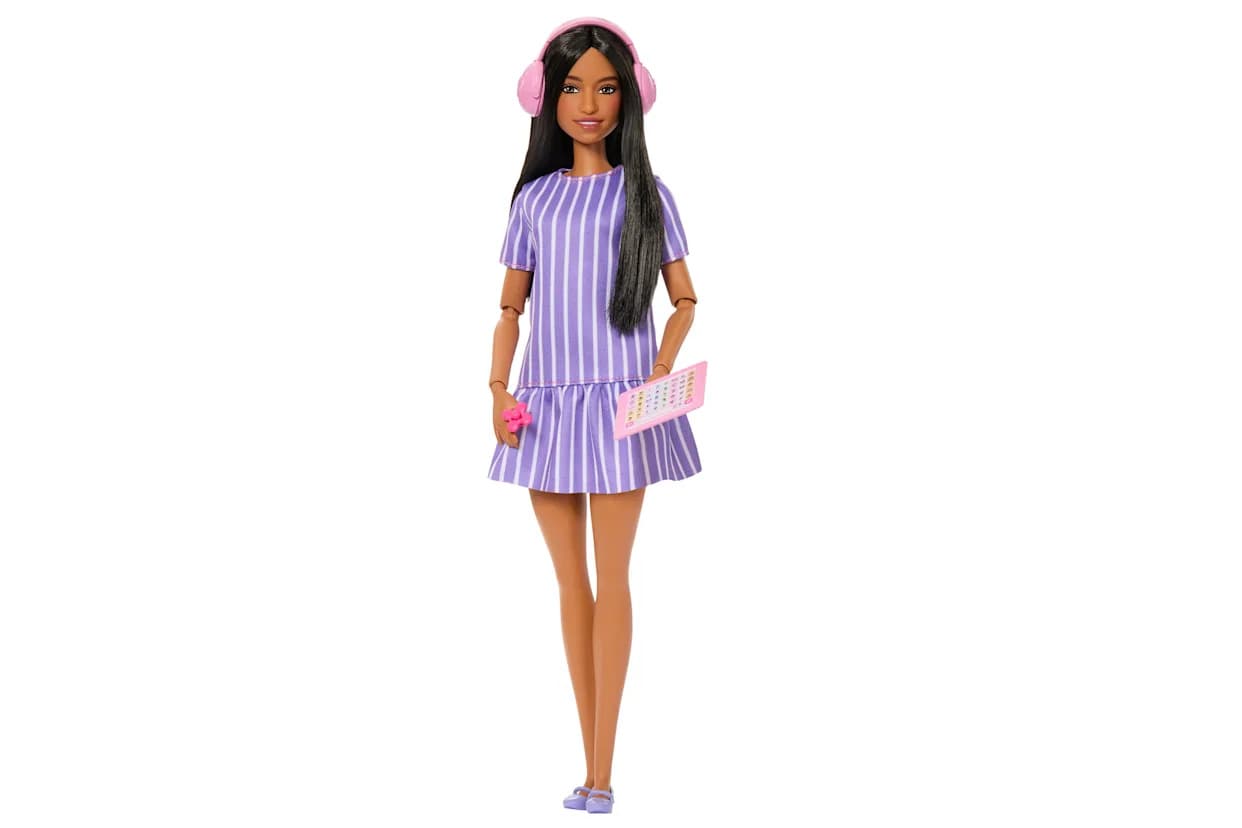
This photo provided by Mattel Inc. shows the new autistic Barbie doll. (Mattel Inc. via AP)
Mattel has introduced an autistic Barbie to its Fashionistas collection, expanding the company's ongoing effort to make its flagship doll line more diverse and inclusive. The new doll was developed over more than 18 months in close collaboration with the Autistic Self Advocacy Network (ASAN) to reflect some ways autistic people may perceive and interact with the world.
Design and Collaboration
Mattel and ASAN worked together to create a doll that thoughtfully represents several traits and sensory preferences common in parts of the autistic community. Because autism is a broad spectrum with many nonvisible traits, the team focused on design choices that respectfully suggest sensory and behavioral experiences rather than presenting a single, definitive depiction.
“Like many disabilities, autism doesn’t look any one way. But we can try to show some of the ways that autism expresses itself,” said Noor Pervez, ASAN’s community engagement manager, who collaborated on the doll prototype.
Notable design features include slightly side-shifted eyes to suggest how some autistic people may avoid sustained direct eye contact, and articulated elbows and wrists to acknowledge stimming behaviors such as hand flapping or repetitive gestures used to process sensory input or express excitement. The development team selected an A-line dress with short sleeves and a flowy skirt to reduce fabric-to-skin contact for those sensitive to seams and textures, while flat shoes were chosen to promote stability and ease of movement.
Accessories and Representation
Each doll is packaged with sensory and communication accessories: a pink finger-clip fidget spinner, noise-canceling headphones, and a pink tablet modeled after augmentative and alternative communication (AAC) devices used by some people who have difficulty speaking. To broaden representation, Mattel also drew on facial features and mood boards inspired by some of its employees in India, aiming to reflect an underrepresented segment of the global autistic community.
Where It Fits In The Fashionistas Line
The autistic Barbie joins a growing roster of inclusive dolls in the Fashionistas series, which in recent years has added a doll with Down syndrome (2023), a Barbie representing someone with Type 1 diabetes (introduced last summer), dolls with a prosthetic leg and with hearing aids, and a wide range of body sizes, hair types and skin tones.
“Barbie has always strived to reflect the world kids see and the possibilities they imagine, and we’re proud to introduce our first autistic Barbie as part of that ongoing work,” said Jamie Cygielman, Mattel’s Global Head of Dolls.
Availability and Context
Mattel said the new autistic Barbie became available on Mattel’s online shop and at Target starting Monday at a suggested retail price of $11.87, with Walmart expected to carry the doll beginning in March. For broader context, the Centers for Disease Control and Prevention reported that an estimated 1 in 31 U.S. children aged 8 were identified with autism, noting variations in diagnosis rates across racial and ethnic groups and that prevalence was higher among boys than girls.
Help us improve.