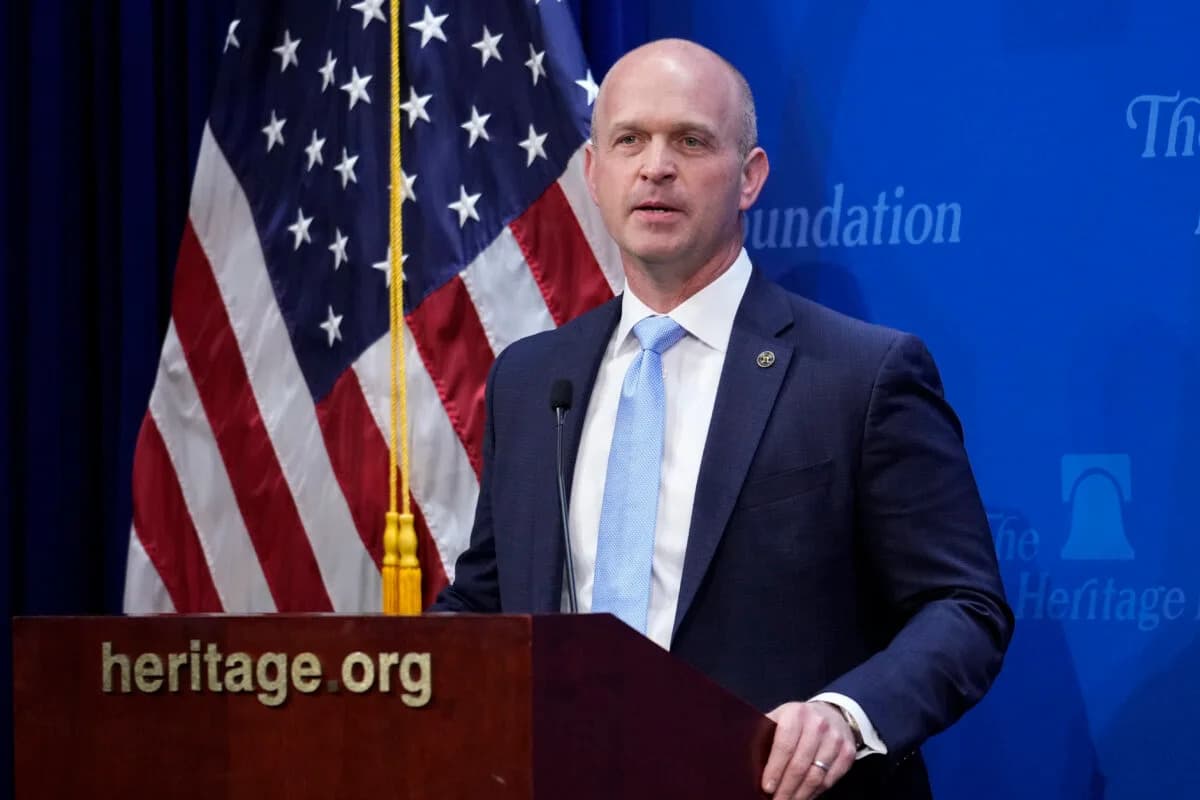
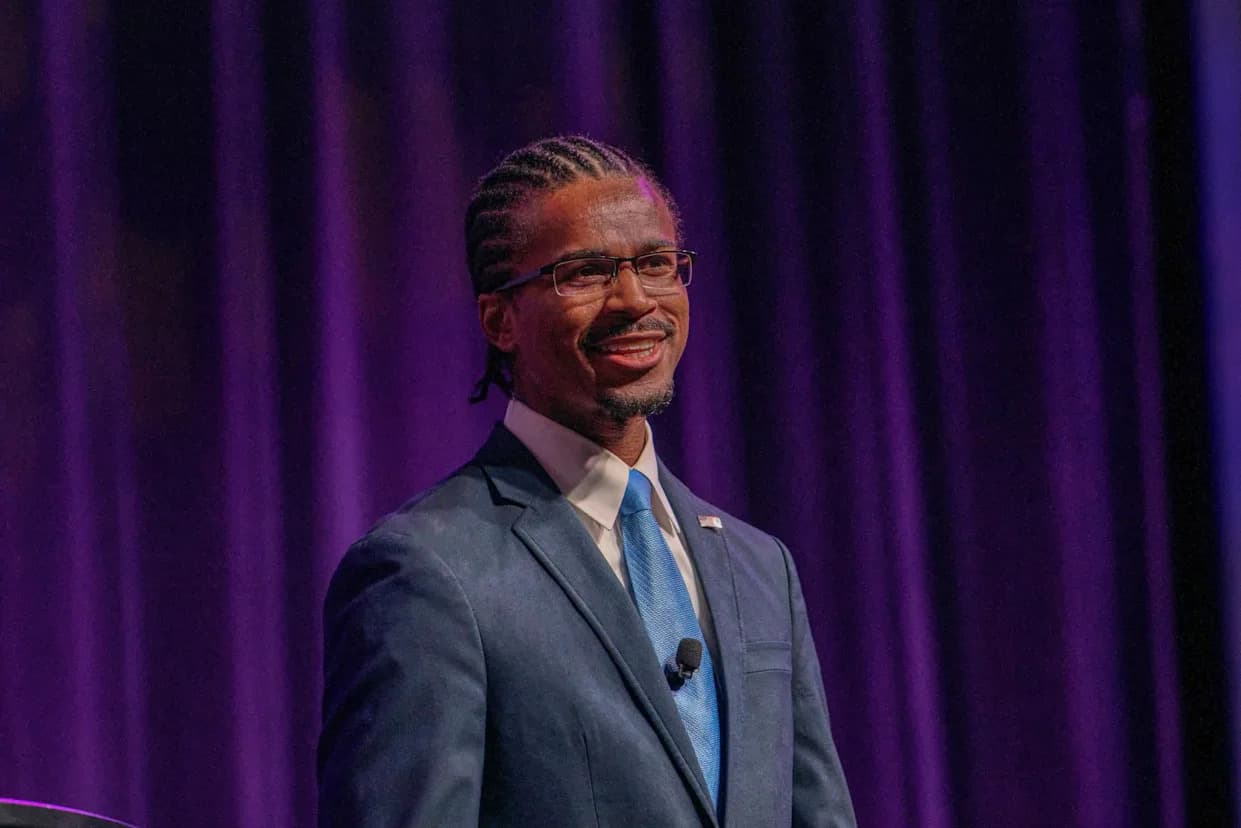
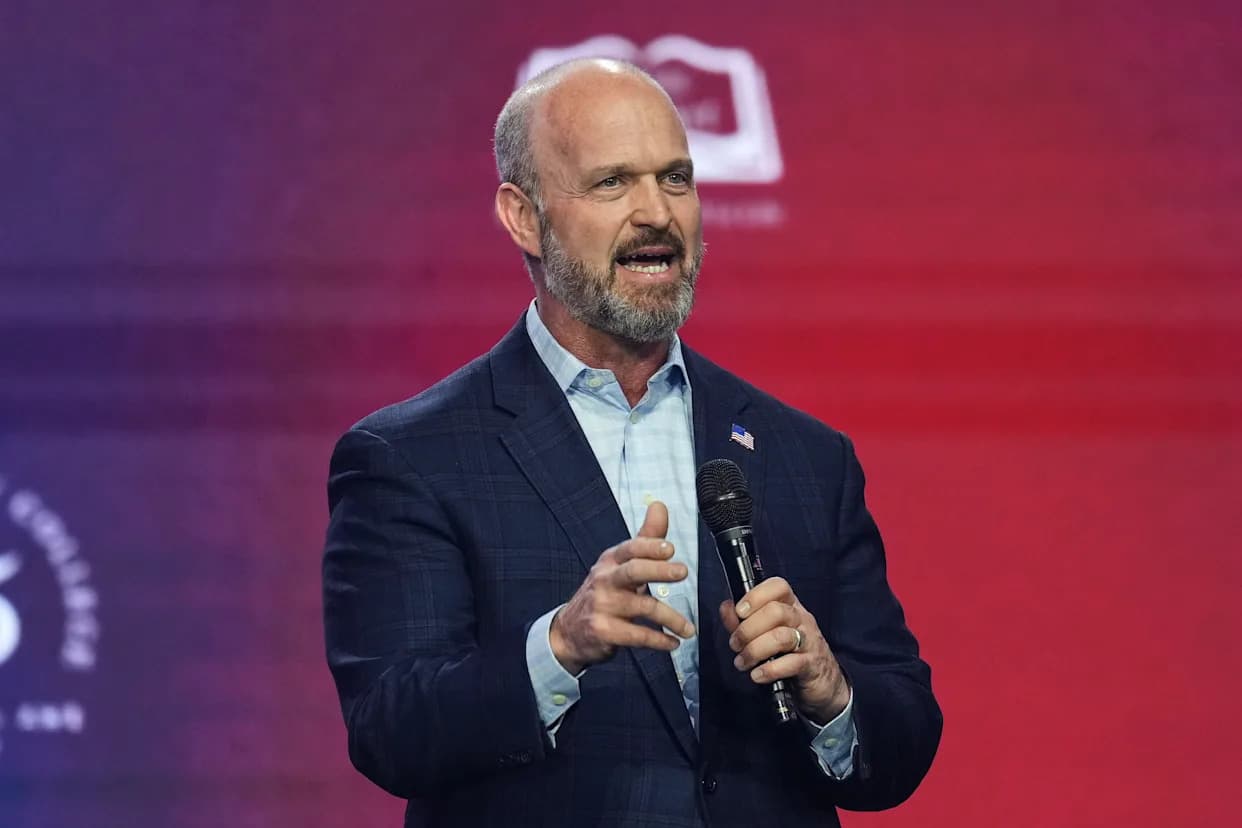
The Roberts twins from Indianapolis — Nick, a Democratic city-county councilor, and Nathan, a Republican policy advocate — publicly testified on opposite sides of an Indiana redistricting debate but maintain a close bond despite sharp political differences. Nathan co-founded Save Heritage Indiana, while Nick strongly opposes his brother’s policy positions. Their story highlights how family ties can survive intense political polarization and underscores experts’ advice to prioritize empathy, warm relationships, and private conversations to reduce conflict.
Twin Politicians, Opposite Parties: How Indianapolis Twins Keep Family Ties Amid Deep Political Division

Nick Roberts, left, and his twin brother, Nathan, pose for a photo at the Wheeler Mission Drumstick Dash in Indianapolis in 2023. - Courtesy Nick Roberts
When Indiana lawmakers faced pressure from President Donald Trump and his allies to redraw congressional maps to favor Republicans, Indianapolis city-county councilor Nick Roberts joined many Democrats at the state capitol to testify against the plan. His twin brother, Nathan Roberts, testified the same day on the opposite side, arguing in favor of the redistricting.
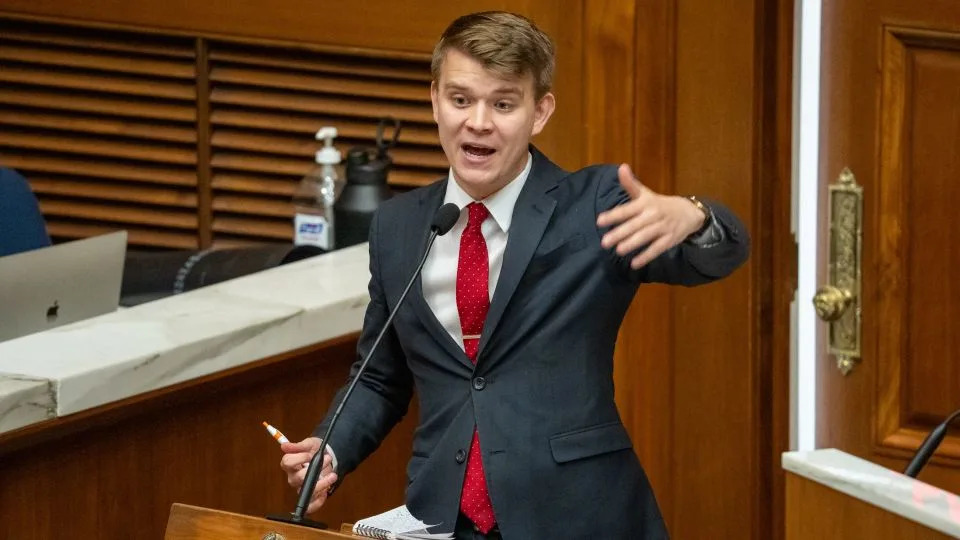
Nick Roberts, a Democratic member of the Indianapolis City-County Council, speaks at a committee hearing in Indianapolis on December 2. - Mykal McEldowney/IndyStar/USA Today Network/Imagn Images
Two Brothers, Two Parties
Nick, 25, who was elected in 2023 as Indianapolis' youngest city-county councilor at 23, has been a visible Democratic voice in local politics. Nathan, also 25, moved into policy advocacy and co-founded the nonprofit Save Heritage Indiana with Daniel Poynter of Technology for Freedom — an organization focused on reducing mass migration to the state and preserving cultural heritage. Their public split led to confusion online after some observers misidentified which twin had testified for which side.
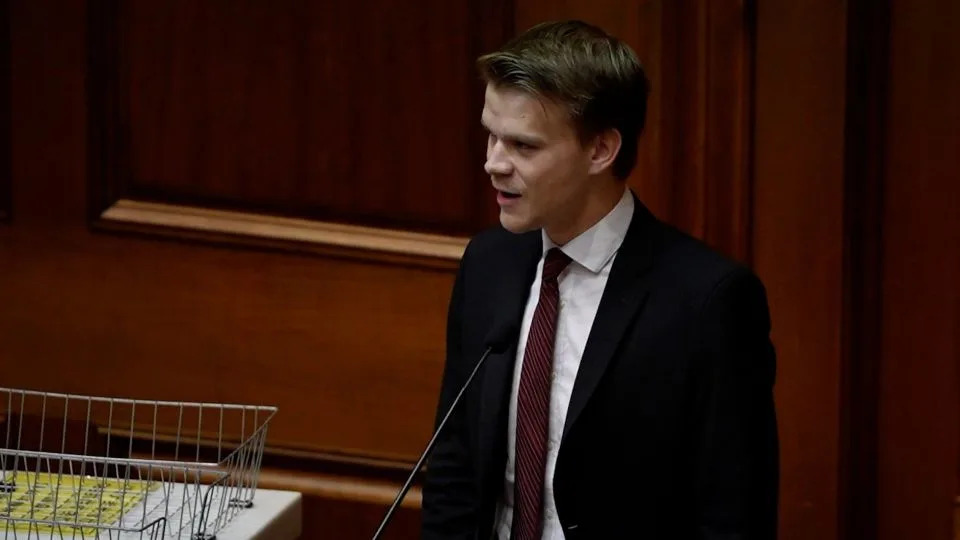
Nathan Roberts speaks at a House elections committee hearing in Indianapolis on December 2. - Mykal McEldowney/IndyStar/USA Today Network/Imagn Images
“If you see somebody that looks like me at a Republican event, or definitely if they’re wearing a MAGA hat, it is not me, it is him,” Nick said in a social-video explanation. “While we disagree on a lot of things, he’s still my brother and I care about him.”
Different Paths, Same Home
The brothers grew up in a multigenerational Indianapolis household shaped by conservative religious voices, progressive relatives, a mother who finished high school, and a disabled veteran father who was intermittently present. Nick credits his father’s work ethic and the family’s small businesses with influencing his political outlook. The twins have shared interests — from maps introduced to them by their great-grandfather to running and a love of dogs — but they say they disagree on roughly 95% of political issues.
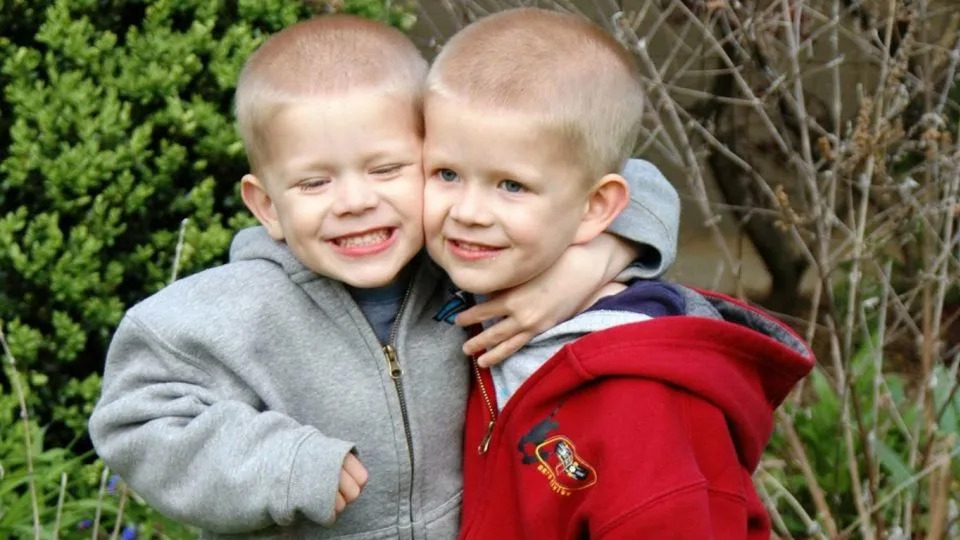
Nathan Roberts, left, and his twin brother, Nick, pose in 2003. - Courtesy Nick Roberts
Public Advocacy and Endorsements
Nathan has said Save Heritage Indiana formed because he saw a gap in state-level discussion of migration issues. The group has drawn endorsements from Republican state lawmakers, including Lt. Gov. Micah Beckwith. Daniel Poynter’s Technology for Freedom, which has worked with conservative organizations such as The Heritage Foundation, is associated with the effort.
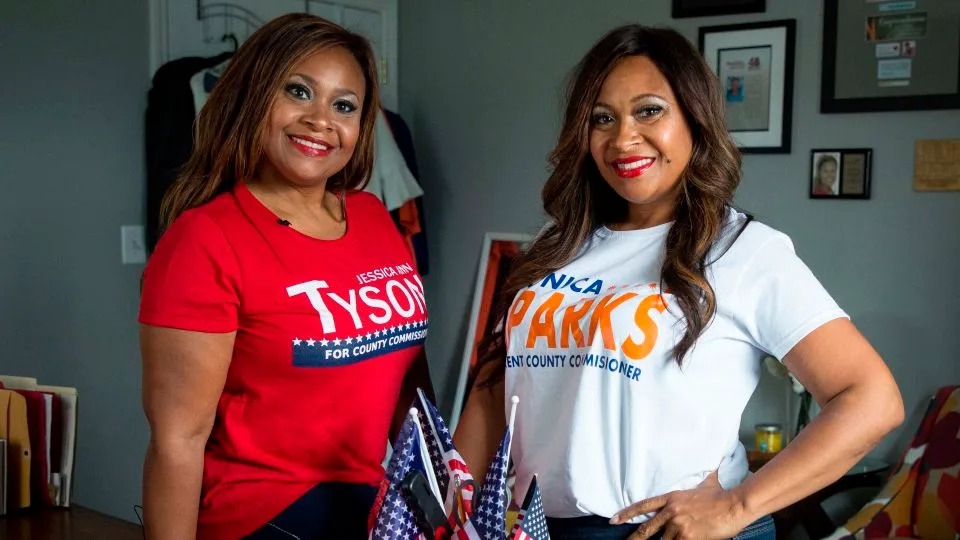
Twin sisters Jessica Ann Tyson, left, and Monica Sparks pose in Kentwood, Michigan, in 2018. Both ran for office in their individual communities. - Steven M. Herppich/AFP/Getty Images
Civility in a Polarized Era
In an era of deepening affective polarization — where supporters of different parties increasingly dislike one another — the Roberts twins are an example of how family ties can endure despite sharp political disagreement. They say a relaxed temperament, private conversations, and shared routines (including a moratorium on politics during Thanksgiving) help preserve their relationship even as their public roles complicate joint appearances.
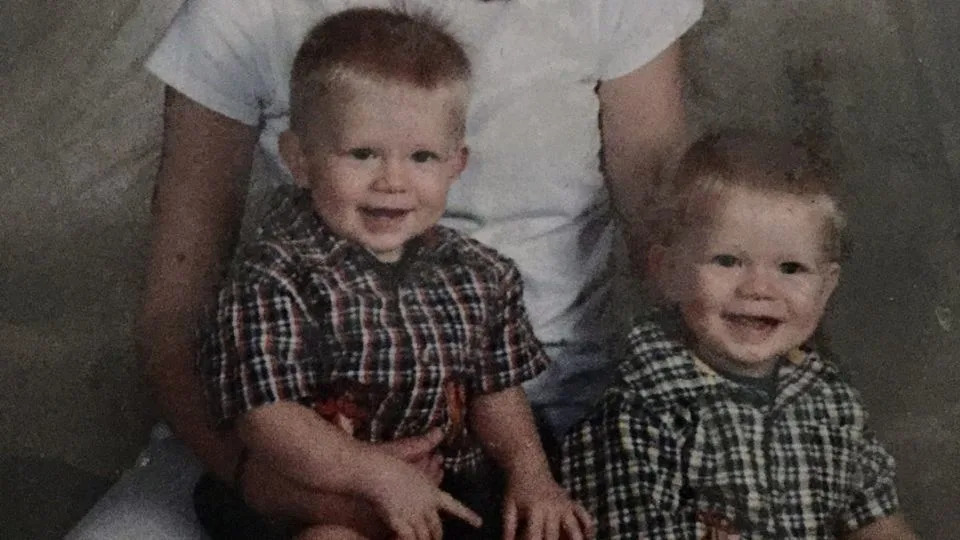
A young Nick Roberts, left, is seen with his twin brother, Nathan, and their mother, Brooke, in 2001. - Courtesy Nick Roberts
Experts say maintaining warm relationships and setting expectations for political conversations reduces conflict. Bill Doherty, cofounder of Braver Angels, and psychologist Dr. Tania Israel, who has written about polarization and mental health, advise that the goal of political discussions within families should be understanding, not persuasion. Israel recommends one-on-one settings such as walks or coffee chats to avoid performative dinner-table debates.
“If we want to change hearts and minds, you don’t do it by shouting people down and telling people how wrong they are. You have to do it through empathy,” Nick said.
This story has been updated.
Help us improve.