A rising generation of young U.S. leaders is turning personal encounters with gun violence into central campaign platforms, helped by a pipeline from organizations such as March For Our Lives and Moms Demand Action. Tennessee state representative Justin Pearson—after personal losses and a high-profile expulsion and reinstatement—has made gun-safety reform the core of a congressional primary bid. Advocates call for federal measures such as red flag laws and waiting periods, paired with mental health, veteran suicide prevention, and economic supports to address the root causes of violence.
“It’s Our Turn”: Young Gun-Safety Advocates Transform US Politics
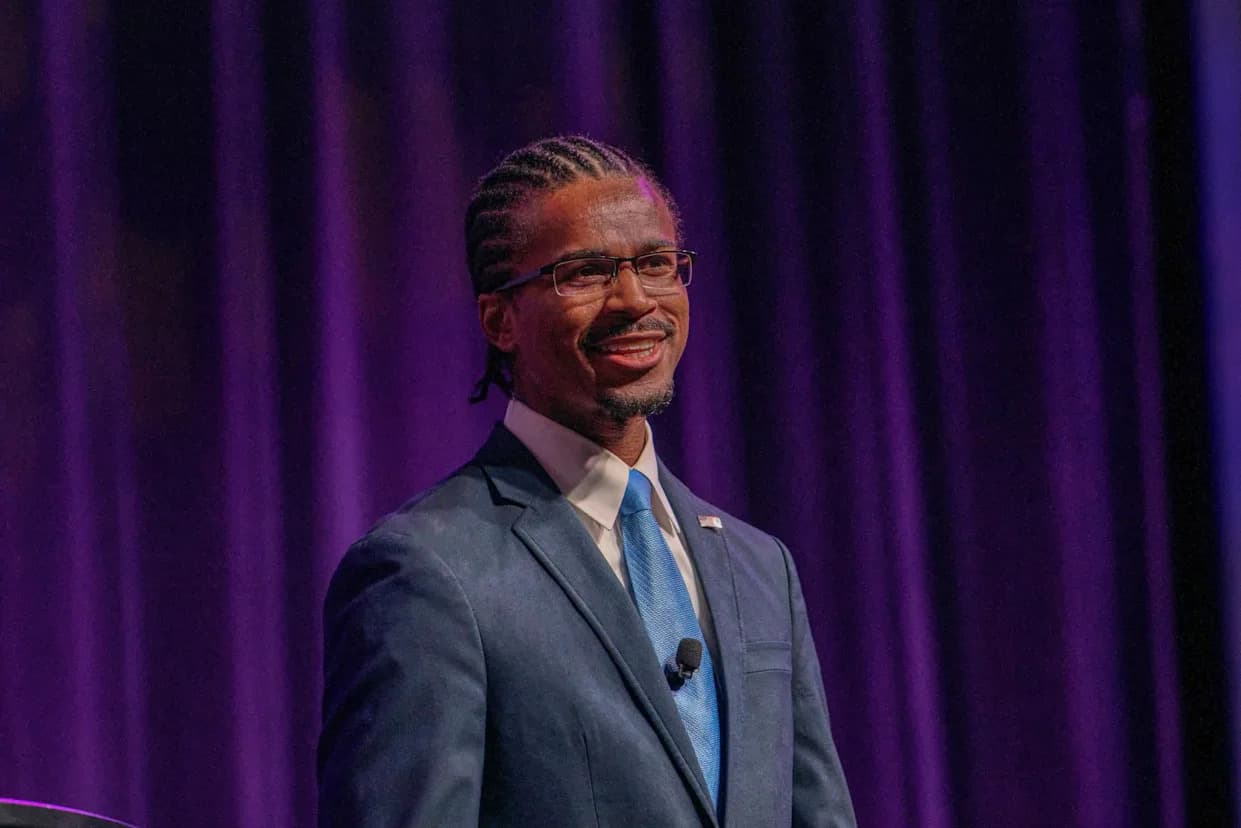
Tennessee state representative Justin Pearson in New Orleans, Louisiana, on 8 August 2025.Photograph: Dominic Gwinn/Middle East Images/AFP/Getty Images
A new generation of young political leaders is converting direct experience with gun violence into a central campaign issue, arguing that the United States is finally ready for meaningful reform. What was once widely treated as a political third rail has, over the past decade, become a viable platform for candidates—especially Democrats—who are winning races and reshaping debate around public safety and prevention.
From Personal Loss To Public Office
Justin Pearson, a 30-year-old Tennessee state representative now running in a Democratic primary for the U.S. House, says his candidacy grew from both personal grief and frustration with government inaction. "It’s been an issue that has impacted my life," Pearson said, describing how serving as a state lawmaker and seeing stalled responses to community harm convinced him to prioritize gun policy.
Pearson’s early days in office were marked by tragedy: he was sworn in the same day Tennessee experienced its deadliest shooting when three children and three adults were killed at Covenant Catholic school in Nashville. Shortly afterward, he and two other Democratic legislators led a protest on the House floor demanding stronger gun laws; Pearson and Justin Jones were expelled for the demonstration and later reinstated, a sequence that drew national attention.
The toll of gun violence has continued to touch Pearson’s life. In December 2024 his brother, Timphrance Pearson, died of a self-inflicted gunshot wound. Earlier, his mentor Yvonne Nelson and a former classmate, Larry Thorn, were shot and killed in Memphis. Pearson is running a primary challenge to long-serving Democratic incumbent Steve Cohen, placing gun violence at the center of his platform and citing Tennessee Department of Health data showing firearm injuries are the leading cause of death for young people in the state.
A Pipeline From Activism To Elected Office
The rise of candidates who focus on gun-safety issues is partly a product of the prevention movement itself, which has become an organizing and leadership pipeline. Maxwell Frost, the first member of Congress from Generation Z, rose through March For Our Lives to become a national organizer. Georgia Representative Lucy McBath and Virginia Governor-elect Abigail Spanberger both cut their political teeth volunteering with Moms Demand Action before running for office. Parkland survivor and activist Cameron Kasky has also launched a congressional campaign in New York.
“I see myself as a small part of a bigger movement,” Frost said, recalling that the Sandy Hook shooting motivated him to start organizing as a teen. Activists and organizers say that the sustained work since the Sandy Hook and Parkland tragedies has normalized campaigning on gun-safety policy and diminished political risk for candidates willing to take a stand.
Shifts In Political Calculus
Shannon Watts, founder of Moms Demand Action, traces a turning point to the 2012 Sandy Hook elementary school massacre and Congress’s failure to advance stronger gun-safety measures afterward. She and others point to gradual but durable change in Democratic politics: formerly gun-friendly Democrats began to support limits on magazine capacities and assault weapons, and after Parkland many Democrats stopped seeking an A rating from the National Rifle Association.
Survivors And Families Enter The Arena
The movement has also propelled newcomers whose lives were directly affected by mass shootings. Shaundelle Brooks lost her son Akilah DaSilva in the 2018 Waffle House shooting in Nashville; another son who survived that attack was wounded in a separate shooting in 2023. After years of urging lawmakers to act and feeling ignored, Brooks decided to run for office so she could push for change from within government.
"When people see you’re personally impacted, they feel that you’re more credible to talk about this kind of stuff. They know it’s not a political thing for us," Brooks said.
Policy Priorities And Broader Solutions
Pearson and others argue that federal policies such as red flag laws and mandatory waiting periods must be paired with investments in mental health, veteran suicide prevention, economic opportunity, and housing stability. That approach, they say, recognizes the intersectionality of harms: gun violence is concentrated in communities facing poverty, pollution, and other structural deprivation.
As a recent gun owner himself, Pearson emphasizes pragmatic, bipartisan steps that may find traction even in states with Republican supermajorities. "We’re not single-issue candidates," he said. "It’s not just gun violence. It’s poverty, pollution, communities that are deprived—these are the places subjected to the highest levels of gun violence. We have to have leaders who have proximity to that pain."
What This Means For US Politics
Organizers and elected officials describe the current moment as the result of a sustained, long-term campaign to change public attitudes and political incentives. The pipeline from grassroots organizing to electoral office has created a cohort of leaders who combine personal credibility with organizing experience—and who see gun-safety policy as inseparable from broader public health and social-policy reforms.
For this new cohort, the message is straightforward: repeated inaction has cost lives, and bold, multifaceted policy responses are overdue. "With our constituents’ support, it’s our turn," Pearson said—summing up a movement intent on translating grief and activism into legislative change.
Help us improve.