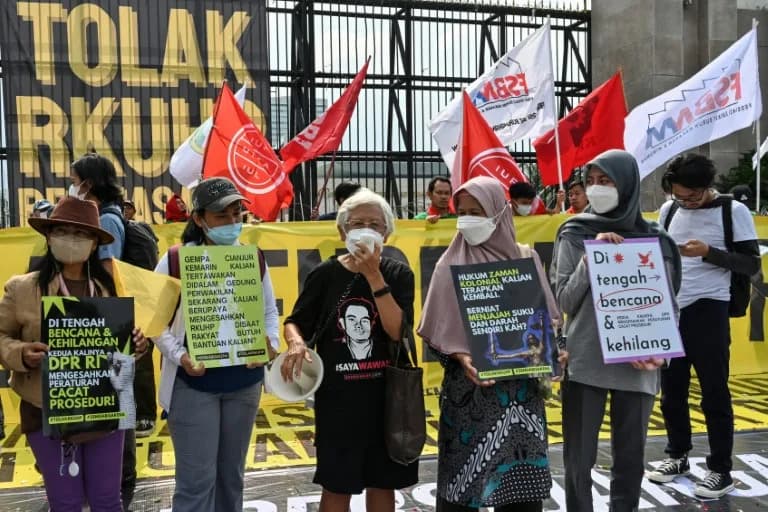
Indonesia has begun enforcing a 345-page penal code (KUHP) that replaces Dutch colonial criminal law after more than 80 years. The code criminalizes consensual sex outside marriage, restores penalties for insulting state leaders, and expands blasphemy and anti-communist provisions. While officials highlight new noncustodial sentences and a probation mechanism for death row inmates as reformist steps, rights groups warn the law risks curbing privacy and freedom of expression.
Indonesia Enforces New Penal Code, Ending Dutch-Era Law and Triggering Rights Debate
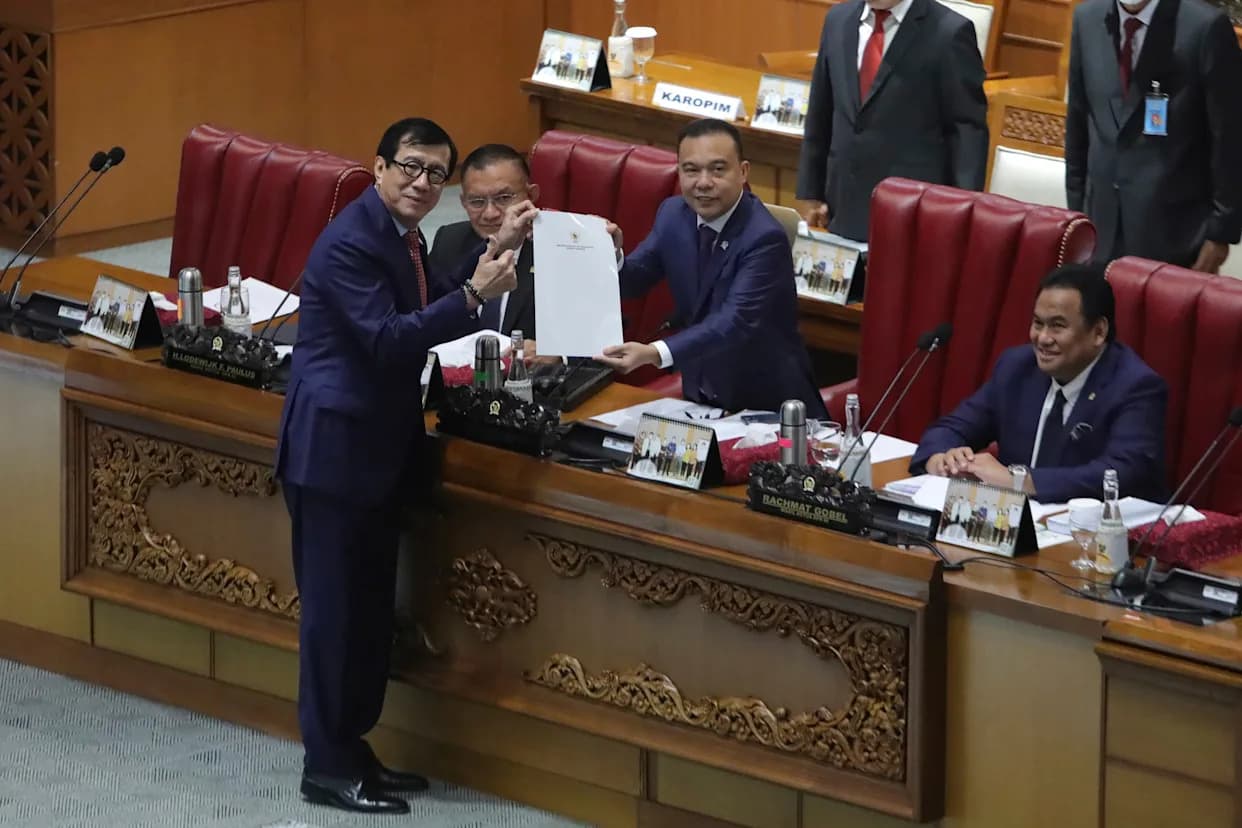
FILE - Indonesian Law and Human Right Minister Yasonna Laoly, left, pose for the media with Deputy House Speaker Sufmi Dasco Ahmad, center, during a session ratifying the country's new criminal code at the parliament building in Jakarta, Indonesia, Tuesday, Dec. 6, 2022. (AP Photo, File)
On Friday, Indonesia began enforcing a newly ratified national penal code (KUHP), replacing a Dutch-era criminal law that had been in effect for more than 80 years. The 345-page code comes into force after a three-year transition period and marks a major overhaul of the country’s criminal justice framework.
Background
Since declaring independence in 1945, Indonesia continued to operate under criminal statutes inherited from Dutch colonial rule. Rewriting the penal code was repeatedly delayed as lawmakers balanced human rights, religious norms and local traditions in the world's largest Muslim-majority nation. A parliamentary task force finalized the bill in November 2022 and the legislature approved it the following month.
Key Changes in the KUHP
The new criminal code makes several high-profile changes and preserves others that have long concerned rights advocates:
- Morality-related Offenses: Consensual sex outside marriage is punishable by up to one year in prison; cohabitation without marriage carries a penalty of up to six months. Adultery prosecutions may proceed only after a complaint is filed by a spouse, parent or child—an intended safeguard against arbitrary enforcement.
- Insulting State Leaders: The code restores criminal penalties for insulting the president, vice president, state institutions and the national ideology. Such cases must be initiated by the president and can carry up to three years in prison for "attacking the honor or dignity" of state leaders.
- Blasphemy and Political Ideologies: Prison terms of up to five years remain for deviations from the core teachings of Indonesia's six recognized religions. Penalties for association with Marxist-Leninist organizations remain as high as 10 years, with up to four years for spreading communist ideology.
- Death Penalty Mechanism: The KUHP retains capital punishment but introduces a 10-year probationary mechanism. After 10 years, a death sentence may be commuted to life imprisonment or to a 20-year term if the convict demonstrates good behavior.
- Abortion Rules: The law maintains a general ban on abortion while formalizing existing exceptions for life-threatening medical conditions and pregnancies resulting from rape, limited to cases where the fetus is under 12 weeks.
- LGBTQ Issue: Lawmakers dropped a proposed article that would have criminalized homosexual sex — a concession welcomed by civil society and LGBTQ advocates.
Reactions and Concerns
Government officials described the KUHP as a long-overdue move to create a criminal code "rooted in Indonesian culture." Coordinating Minister Yusril Ihza Mahendra called its enforcement "the end of the colonial criminal law era and the beginning of a more humane, modern, and just legal system." Deputy Minister Edward Hiariej emphasized new guidelines intended to distinguish legitimate criticism from criminal insult.
"This is a historic moment for the Indonesian nation," Mahendra said.
Rights groups have been sharply critical. Human Rights Watch and Amnesty International warned that morality-based provisions and the restored insult laws could threaten privacy, freedom of expression and be used selectively against critics. Amnesty International Indonesia called the KUHP "a significant blow" to civil liberties.
Sentencing Philosophy and Reform Elements
Legal experts point out that parts of the KUHP also reflect reformist aims: the code expands noncustodial sentences such as community service and judicial supervision, gives judges greater discretion to tailor penalties, and includes the probationary mechanism for those sentenced to death. The Institute for Criminal Justice Reform said these elements could help reduce prison overcrowding and better address victims' needs.
What Comes Next
With the KUHP now in force, its implementation and the way authorities apply contested provisions will determine whether it delivers the stated goals of modernization and cultural relevance or undermines civil liberties. Observers inside and outside Indonesia will be watching how safeguards are enforced and whether the law prompts legal challenges or further legislative adjustments.
Help us improve.