After the Dec. 14 Bondi Beach massacre, Australia expanded federal and New South Wales hate-speech laws — a response that critics say did not prevent the attack and risks curbing legitimate dissent. Similar crackdowns in the U.K. and Germany show how vague restrictions can be misapplied to peaceful protest and satire. Drawing on U.S. civil-rights history, the article argues governments should prioritize law enforcement, education and solidarity over broad censorship to confront hate and protect democracy.
Australia’s Post-Bondi Hate-Speech Push Risks Silencing Legitimate Dissent

Australia’s hate speech crackdown is a threat to legitimate dissent
The Bondi Beach massacre on Dec. 14 — in which 15 people were killed during a Hanukkah celebration — has become a grim emblem of rising antisemitic violence across Western democracies. In cities from Sydney to Paris, London, Berlin and Copenhagen, Jewish communities have reported heightened threats, intimidation and fear.
Governments have understandably felt pressure to respond. But an increasingly common reaction has been to expand criminal laws that regulate speech. Such measures can create the appearance of decisive action while doing little to address the root causes of violence and much to weaken civic freedoms. Australia offers a stark case study.
What Happened In Australia
After spikes in antisemitic incidents following Hamas’ Oct. 7, 2023 attack on Israel, Australia broadened hate-speech legislation at both the federal level and in New South Wales, the state that includes Bondi Beach. These legal changes, tragically, did not prevent the Dec. 14 attack.
What began as a moment of national mourning has evolved into one of the most ambitious expansions of hate-speech and protest-restriction powers in modern Australian history. Prime Minister Anthony Albanese promised additional speech-restrictive laws. Intended as an urgent response to antisemitism, the proposed federal and state measures risk reaching beyond incitement to violence and reshaping how expression, protest and political dissent are policed after acts of terror.
International Echoes
The effects of this approach are not confined to Australia. British authorities have moved to arrest people for pro-Palestinian slogans such as "globalize the intifada" and "from the river to the sea," and Germany has enacted similar restrictions affecting protests and online speech. While these phrases are deeply offensive to many and can be read as legitimizing violence, criminalizing ambiguous or merely offensive language carries significant dangers.
Real-World Consequences
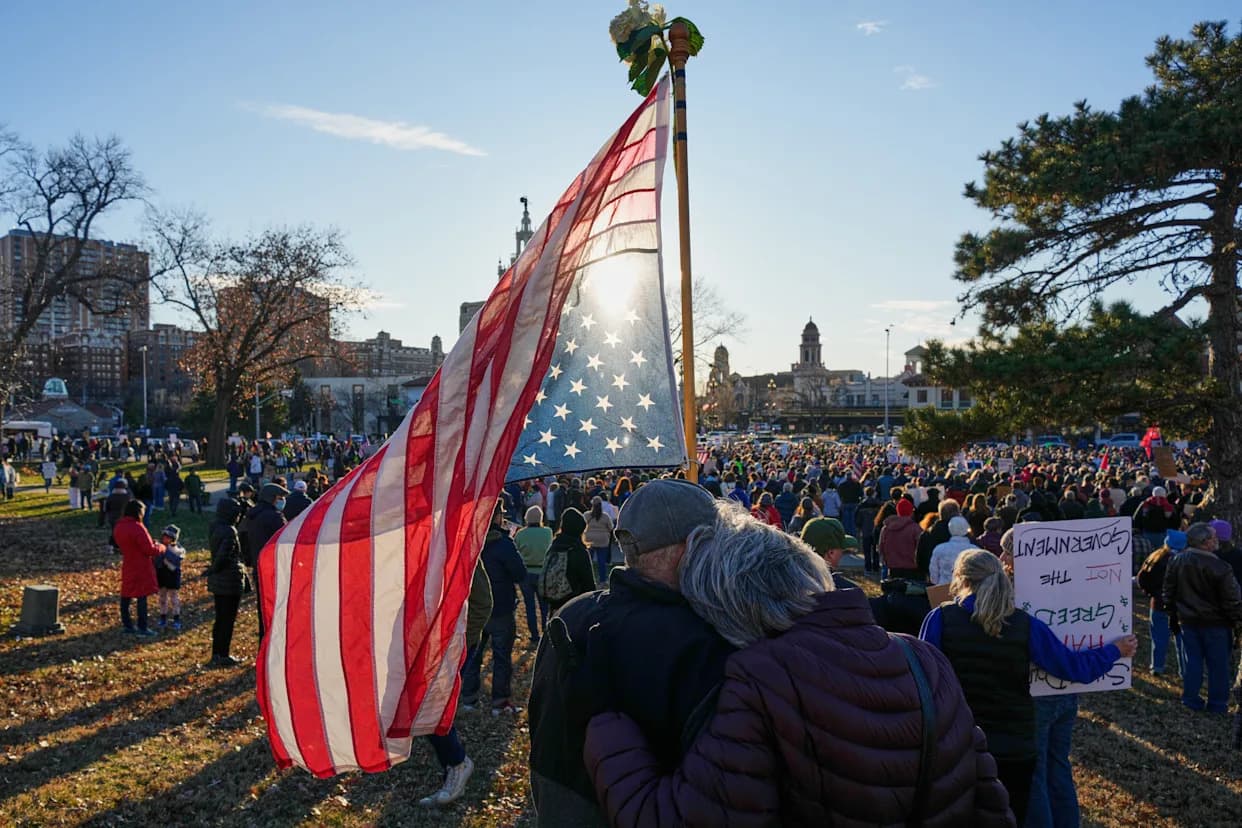
Vague or overly broad hate-speech rules can chill lawful protest and dissent. In Germany, Israeli-Jewish activist Iris Hefets was detained several times for solo protests holding a placard that read, "As a Jew and Israeli, stop the genocide in Gaza." Arresting peaceful demonstrators for politically charged signage undermines the right to dissent. In one extreme instance, Berlin police required protests in languages other than German or English to include a police-approved interpreter — a rule that later disrupted a pro-Ukrainian demonstration where Ukrainian speakers were protesting a Russian airstrike.
These laws can also be weaponized to shield the powerful from criticism. In the U.K., teacher Marieha Hussain faced a racially aggravated public-order charge after carrying a placard that caricatured political leaders; she was doxxed, lost her job and stood trial while nine months pregnant before being acquitted on the grounds of political satire.
Lessons From History
“There is grave danger that these bills when enacted will serve to throttle … any [speaker] which seeks to champion the cause of minority groups.” — Thurgood Marshall (on hate-speech legislation)
American civil-rights organizations historically opposed broad hate-speech laws for precisely these reasons. In the 1930s, the American Jewish Committee warned that criminalizing rhetoric labeled as racial or religious "hatred" or "offense" could be turned against minorities. During the 1950s and 1960s, Jewish and Black organizations argued that counter-speech, public education and law enforcement responses — not expanded censorship — were the most effective long-term remedies to bigotry.
What Works
Laws that promise safety by policing words may appease a frightened public, but they rarely stop violence. Instead, they corrode democratic culture and can hand extremists the grievance narratives they exploit. If liberal societies are serious about preventing hate crimes, they should resist the shortcut of criminalizing speech and recommit to harder, evidence-based measures: targeted law enforcement against credible threats, improved hate-crime investigations, community education, and cross-community solidarity.
Conclusion: Defending vulnerable communities requires action that addresses violence directly and preserves civil liberties. Expanding vague speech offences risks trading off the very freedoms that enable minorities to organize, protest and demand justice.
Help us improve.