Australian Prime Minister Anthony Albanese has announced a national gun buyback and proposed tougher federal hate‑speech laws after the Bondi Beach mass shooting at a Hanukkah event. The plans—still to be drafted—have prompted debate about free speech, potential political misuse and whether the measures address intelligence and radicalisation failings. Intelligence agencies say the attack was ISIS‑inspired; investigators are probing a prior trip the perpetrators took to Davao City, Philippines. Observers warn that legal changes should be paired with improved intelligence and counter‑radicalisation efforts.
Australia Announces National Gun Buyback and Tougher Hate-Speech Laws After Bondi Beach Attack

Prime Minister Anthony Albanese visits the NSW Police headquarters following the deadly shooting at Bondi Beach, in Sydney, Australia, Dec. 16, 2025.
Australian Prime Minister Anthony Albanese has announced a nationwide gun buyback and signalled plans for tougher federal hate‑speech legislation following the mass shooting at Bondi Beach during a Hanukkah event. The proposals, which have not yet been drafted, aim to tighten controls on firearms and create new federal offences for aggravated hate speech and serious vilification. The announcements have prompted intense public debate about civil liberties, public safety and the best ways to prevent future attacks.
Government Response
Albanese told reporters the government is seeking to "get the laws right" and is mindful of free‑speech concerns. He said officials are working with security agencies to ensure any new measures are both effective and legally robust so they survive judicial scrutiny.
Proposed Measures and Local Steps
Media reports indicate the reforms under consideration would establish federal offences for "aggravated hate speech"—for example, speech by preachers that actively promotes violence—and for "serious vilification" based on race. The Australian Broadcasting Corporation noted the federal framework was already strengthened about ten months earlier to address antisemitism and Islamophobia.
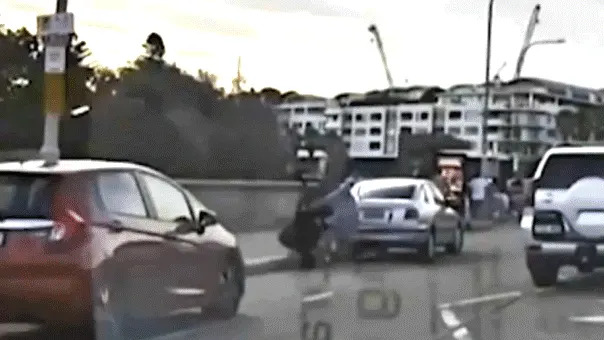
Bystanders were seen confronting one of the gunmen behind the deadly attack on a Hanukkah celebration at Australia's Bondi Beach.
In New South Wales, where the attack occurred, state authorities are also weighing a ban on chants such as "globalise the intifada," public displays of ISIS flags and other extremist insignia. NSW Premier Chris Minns said police would be given broader powers, including the authority to demand removal of face coverings during protests when necessary for public safety, according to The Associated Press.
Free-Speech Concerns
"Well, it's a bit hard for them to actually strengthen the laws. It's not clear what they're proposing to do," said Dr. Reuben Kirkham, director at the Free Speech Union of Australia, to Fox News Digital. He warned that expanding anti‑vilification laws risks sweeping in legitimate political or religious expression and could be used for partisan ends.
Critics argue that rushed or poorly drafted laws could chill legitimate debate and erode trust, particularly among minority communities. Some say such measures could even exacerbate divisions rather than reduce bigotry.
Intelligence Findings and Investigation
Albanese said intelligence assessments suggest the Bondi Beach attack was ISIS‑inspired. He told reporters the Office of National Intelligence identified an online ISIS video feed that reinforced that conclusion, and that security agencies continue work to establish motive and any external connections.
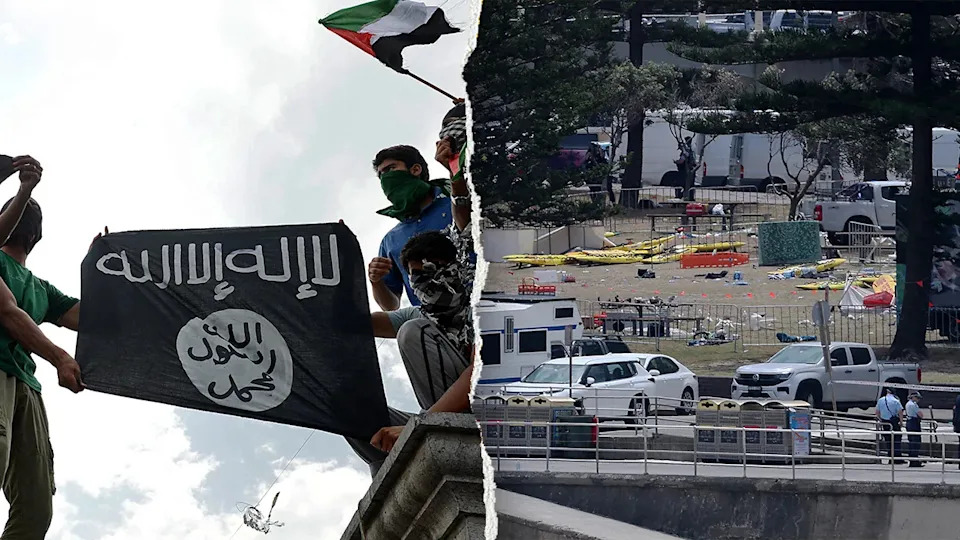
A split image shows an ISIS flag held by masked men, left, and a police-secured crime scene at Bondi Beach in Australia following a shooting.
Investigators have also examined a trip the two gunmen—a father and son—took to Davao City in the Philippines in the weeks before the attack. Reuters reported they checked into the GV Hotel on Nov. 1, paid in cash, extended their stay multiple times and had little contact with staff. Philippine police said the older man showed an interest in firearms and CCTV captured the pair doing what appeared to be physical conditioning.
Expert Views
Bill Roggio, senior fellow at the Foundation for Defense of Democracies, told Fox News Digital that Western governments have struggled to confront the spectrum of radical Islamist ideologies. "There is a radical Islamist ideology that spans a spectrum ... and we in the West have often failed to take that on," he said.
Security experts say the investigation must determine whether the trip to the Philippines involved operational planning, training or ideological reinforcement, and whether domestic intelligence lapses contributed to the attack.
What Comes Next
The government faces choices about balancing public safety with civil liberties. While some call for rapid legislative action on guns and speech, others urge a broader focus on intelligence, counter‑radicalisation, community engagement and policing. As inquiries continue, debate is likely to persist over whether the announced measures will reduce threats or amount to short‑term political responses.
Help us improve.