The Northern Territory is preparing to reintroduce doctor‑assisted dying legislation, potentially making it the last Australian jurisdiction to enact such laws after its 1995 law was repealed. Attorney‑General Marie‑Clare Boothby says a bill will be considered by mid‑2026 and that lawmakers will have conscience votes. A parliamentary committee recommended the reform in September 2025 and called for public education focused on remote and Indigenous communities. Critics warn that cultural, linguistic and logistical challenges mean the territory must proceed cautiously.
Northern Territory Moves To Reintroduce Assisted‑Dying Law, Seeks Conscience Votes As Debate Continues
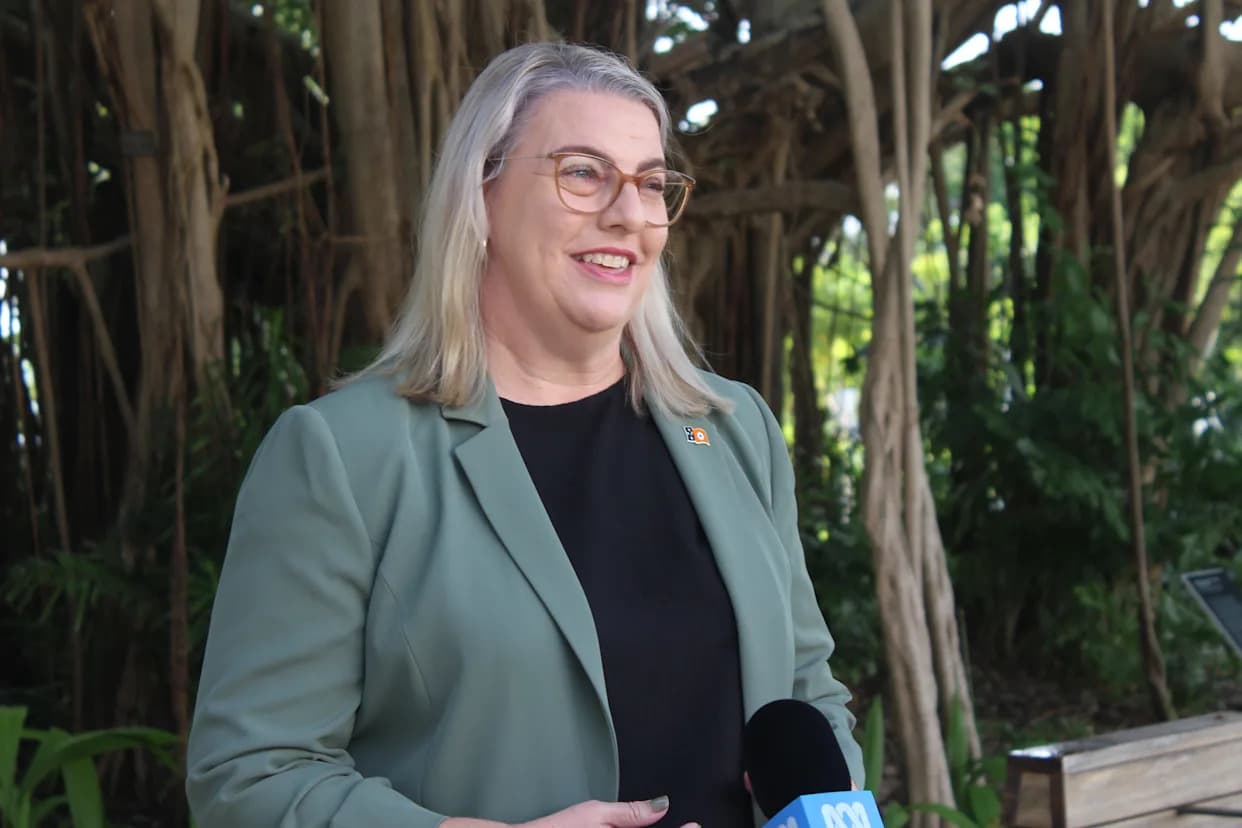
Northern Territory Attorney-General Marie-Clare Boothby comments in Darwin, Australia, on Oct. 14, 2025. (Lloyd Jones/AAP Image via AP)
MELBOURNE, Australia (AP) — The Northern Territory, which in 1995 became the first jurisdiction in the world to legalize voluntary euthanasia, has announced plans to reintroduce doctor‑assisted dying legislation. If passed, the bill would bring the last Australian jurisdiction into line with the rest of the country.
The territory's pioneering 1995 law was overturned by the Australian Parliament two years later after four terminally ill patients were legally helped to die. Since that repeal, all six Australian states have enacted assisted‑dying laws, and the federal ban that once prevented the two territories — the Northern Territory and the Australian Capital Territory (ACT) — from legislating on the matter has been lifted.
The ACT approved voluntary euthanasia legislation in 2024. Northern Territory Attorney‑General Marie‑Clare Boothby said on Friday that lawmakers are expected to consider a new assisted‑dying bill by mid‑2026. She also confirmed that members of the Legislative Assembly would be allowed to vote according to conscience rather than along party lines.
"Legislating for the rights of the terminally ill is one of the most sensitive and complex reforms any government can undertake," Boothby said. "We’re taking the time to get this right. We’re working carefully and consultatively — not rushing it — and we are committed to getting the balance right."
A parliamentary committee recommended in September 2025 that the Northern Territory adopt a doctor‑assisted suicide law and urged a public education campaign to improve understanding and counter misinformation, particularly in remote and Indigenous communities. Boothby said drafting of the bill was already underway.
The Northern Territory presents distinct logistical and social challenges. It has the smallest population among Australia's eight jurisdictions — roughly 260,000 people — spread across an area nearly the size of France, while Australia's total population is cited at about 28 million. Indigenous Australians made up 3.8% of the national population at the 2021 census, but they constitute more than a quarter of the Northern Territory's residents.
Views on voluntary euthanasia among Indigenous communities are diverse: some express deep mistrust of medical systems and fear the possibility of being harmed without consent, while others argue for equitable access to assisted dying paired with strong cultural safeguards. Cultural beliefs about death and dying also vary across communities.
Robyn Lambley, Speaker of the Northern Territory Legislative Assembly, warned about practical hurdles in outreach and education. In an online post she wrote: "I don't think we're ready. Maybe we'll never be ready in the Territory. Aboriginal people have reluctance around accessing health services for anything, even having babies." She added that rushing a law without sufficient preparation could lead to poor outcomes.
Supporters of reform emphasize careful drafting, cultural consultation and targeted public education — particularly in remote areas — as essential steps. Opponents and cautious lawmakers stress the need for robust safeguards, clear consent procedures and culturally appropriate outreach before implementation.
With drafting underway and public debate intensifying, the Northern Territory is poised to begin a major legislative and social conversation about end‑of‑life choice and protections for vulnerable people as it moves toward a possible vote in mid‑2026.
Help us improve.