
The University of Florida used tens of thousands of mosquitoes to noninvasively survey local wildlife at the DeLuca Preserve, 80 miles south of Orlando. Over eight months, researchers recovered more than 2,000 blood meals from 21 mosquito species and identified DNA from 86 vertebrate species, from frogs to alligators. The endangered Florida panther was not detected — likely because only about 120–230 adults remain, making mosquito encounters rare. The study highlights a cost‑effective, complementary tool for biodiversity monitoring, while noting sampling limitations.
How Mosquitoes Helped Scientists Map Wildlife — Jurassic Park Vibes, Real Science

This Jurassic Park science is now a reality
In the 1993 blockbuster Jurassic Park, scientists fantasized about resurrecting dinosaurs by extracting DNA from blood trapped in mosquitoes preserved in amber. While we’re far from de‑extinction, a new study from the University of Florida uses a similar idea at a practical, modern scale: researchers analyzed blood carried by local mosquitoes to survey the animals living around a protected preserve.
What the team did
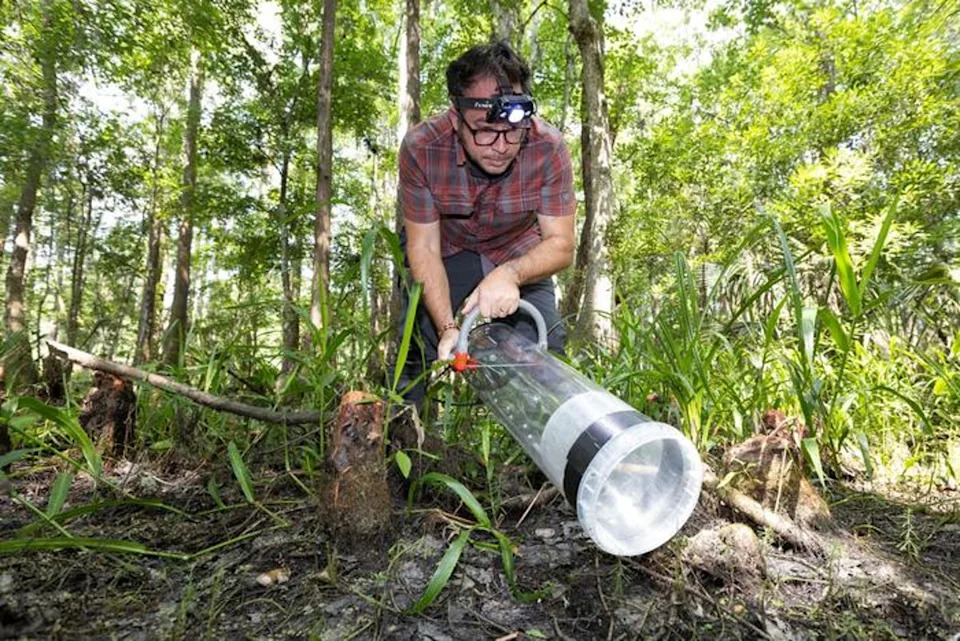
University of Florida researchers have analyzed the blood of tens of thousands of Florida mosquitoes, finding the DNA of a lot of the area’s biodiversity (University of Florida)
Over eight months, scientists collected tens of thousands of mosquitoes at the university‑managed DeLuca Preserve, about 80 miles south of Orlando. Using vacuum traps to catch resting, well‑fed females (the only sex that bites), the team recovered more than 2,000 distinct “blood meals” from 21 mosquito species. Genetic analysis of that material revealed DNA from 86 different vertebrate species.
What they found

The researchers worked to trap mosquitoes at the DeLuca Preserve, a conservation habitat 80 miles south of Orlando (UF/IFAS, Tyler Jones)
The blood‑meal DNA captured a wide swath of vertebrate diversity: amphibians, reptiles and mammals were all detected, including frogs, toads, tortoises, rattlesnakes, otters, bald eagles, coyotes, deer, cows and alligators. Dr. Lawrence Reeves, an entomologist at the University of Florida, said the approach sampled animals with very different life histories — arboreal, aquatic, migratory and resident — and included native, invasive and endangered species.
“Using mosquitoes, we captured vertebrates that ranged from the smallest frogs to the largest animals like deer and cows,” said Dr. Lawrence Reeves.
Not detected: the Florida panther
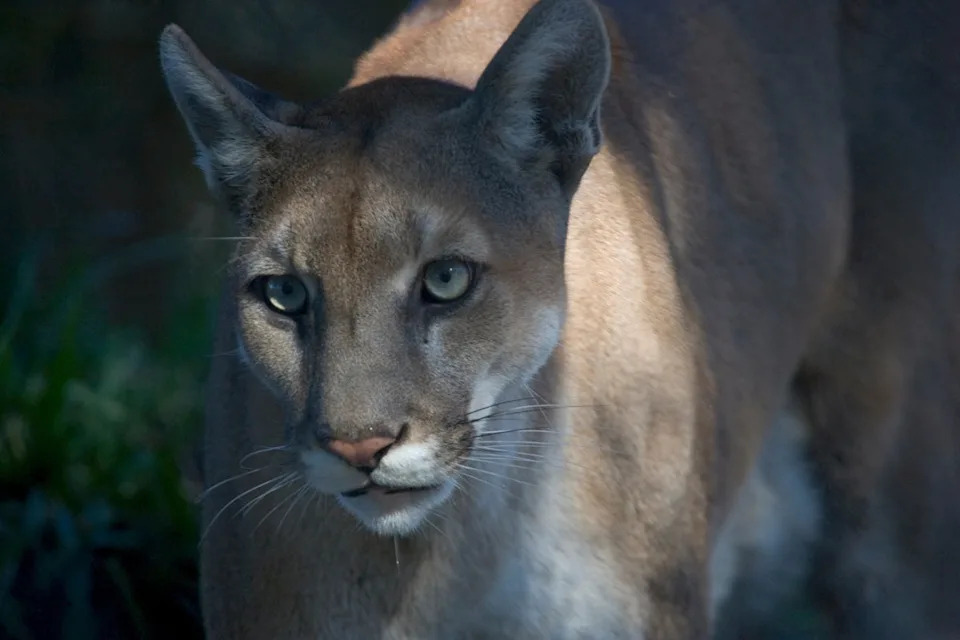
The endangered Florida panther is seen in this 2006 photo. There are only just under 230 left in the wild (NPS / Rodney Cammauf)
One notable absence in the mosquito DNA dataset was the endangered Florida panther, one of the state’s two big cats (the other being the bobcat). According to the Florida Fish and Wildlife Conservation Commission, only about 120–230 adult panthers remain in the wild south of Lake Okeechobee. The researchers say the panther’s rarity likely reduces the chance that mosquitoes feeding on them were sampled, making the nondetection a likely sampling limitation rather than proof of absence.
Why this matters
Analyzing mosquito blood meals offers a noninvasive, cost‑effective way to monitor vertebrate biodiversity across habitats. The method can complement camera traps, acoustic surveys and environmental DNA from water or soil. Still, it has limitations: mosquito host preference, seasonal activity, and the spatial range of the insects can bias which species are detected, and rare species may be missed unless sampling is extensive and targeted.
Bottom line
The Florida study demonstrates a creative use of well‑known insect behavior to produce a biological snapshot of an ecosystem. While it won’t bring back dinosaurs, the approach is a powerful example of how modern genetics and clever field methods can reveal the hidden diversity around us.


