The DOE ordered Craig Generating Station Unit 1 in Colorado to stay online through March, citing grid reliability and affordability. State officials and the plant owner say the unit is currently offline, would require costly repairs, and is not needed for regional reliability. Independent analysis estimates at least $20 million for 90 days and about $85 million for a year — potentially up to $150 million depending on required run time. Environmental groups have challenged similar DOE orders in court.
DOE Orders Colorado Coal Unit To Remain Online — Could Cost Ratepayers Tens Of Millions
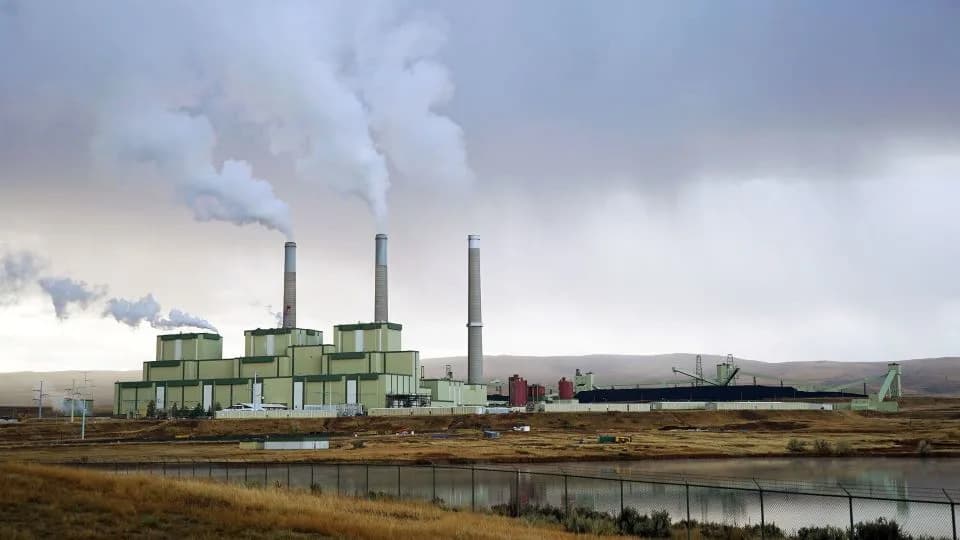
Craig Station, near Craig, Colo, is one of the largest coal-fired power plants in the West. Its oldest portion, Unit 1, was due to be shuttered as of Dec. 31, 2025, under a deal designed to improve air quality in the Rocky Mountains. A new order from the Department of Energy will keep it open until at least March, 2026. - Trevor Hughes/USA Today Network/Imagn Images
The Trump administration directed the nearly 50-year-old Craig Generating Station Unit 1 in northwest Colorado to remain in operation through the end of March, with the Department of Energy (DOE) reserving the option to extend that deadline. Energy Secretary Chris Wright said the move was intended to "ensure Americans maintain an affordable, reliable, and secure supply of electricity."
Why The Order Matters
This is the DOE's sixth order this year forcing retiring generators to stay online. Similar directives have kept coal units in Indiana, Michigan and Washington state running and have even extended the life of an oil-fired plant in Pennsylvania. Critics say the orders shift large, unplanned costs onto ratepayers while delivering little to no grid reliability benefit.
State Officials, Owner Push Back
Colorado Gov. Jared Polis and state energy officials argued the order will raise — not lower — electricity costs. Gov. Polis said it would pass "tens of millions in costs to Colorado ratepayers, in order to keep a coal plant open that is broken and not needed." Tri-State Generation and Transmission Association, the cooperative that owns Craig 1, said the unit has been offline since a critical component failed on December 19.
"As a not-for-profit cooperative, our membership will bear the costs of compliance with this order unless we can identify a method to share costs with those in the region," said Tri-State CEO Duane Highley.
Cost Estimates And Operational Challenges
A report prepared by power-sector consultant Grid Strategies for the Sierra Club estimated the cost to keep Craig 1 operating at roughly $20 million for 90 days and about $85 million to run for a year. Depending on how much the DOE requires the unit to run, the report warned costs could reach roughly $150 million annually — mostly driven by coal purchases and logistics.
Colorado Energy Office Executive Director Will Toor noted Tri-State has already added gas and renewable capacity to replace Craig 1's output, and said the North American Electric Reliability Corporation (NERC) has not identified material reliability risks in the region. Toor also pointed out that the coal seam nearest the plant has been exhausted, meaning fuel must be sourced from elsewhere at added cost.
Broader Context
Keeping retiring plants online has already resulted in large expenses for customers elsewhere. Consumers Energy reported it cost about $80 million to keep a Michigan coal plant running from late May to late September — costs the utility says will increase residential bills in Michigan and 10 other states served by the plant. Environmental groups have begun legal challenges to prior DOE orders.
What Officials Say
Energy Secretary Chris Wright framed the order as protecting affordability and reliability. State leaders and local officials counter that the action is unnecessary, costly, and ideologically motivated — and could hamper faster deployment of wind and solar resources that can be built quickly to meet demand.
Bottom line: The DOE order keeps a damaged, offline coal unit from retiring as scheduled, creates substantial short-term costs borne by ratepayers, and is drawing legal and political pushback amid debate over grid reliability and the role of coal in the electricity mix.
Help us improve.