A year‑long mouse study found that intermittent, low‑dose aspartame exposure (≈1/6 of the WHO's human ADI) produced heart and brain changes despite modest weight and body‑fat loss. Treated mice showed reduced cardiac pumping efficiency, minor heart structural changes, fluctuating brain glucose uptake and worse performance on memory and maze tasks. The authors recommend reassessing safety limits and advise caution—especially for children—until neurological effects are clearer.
Low‑Dose Aspartame Linked to Heart and Brain Changes in Mice — Study Calls for Safety Review

Sweetener tablets and hand with box whit cup of tea
The artificial sweetener aspartame — widely used in gum, diet sodas and tabletop sweeteners — may affect heart and brain function even at low, intermittent doses, a new mouse study suggests.
Researchers at the Center for Cooperative Research in Biomaterials (Spain) exposed male mice to small amounts of aspartame over one year. The dosing regimen, delivered for several days every two weeks, amounted to roughly one‑sixth of the World Health Organization’s currently acceptable daily intake (ADI) for humans.
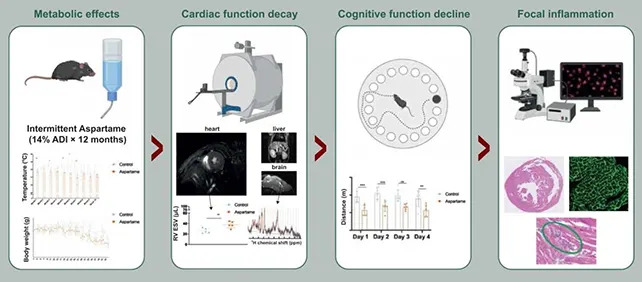
The researchers investigated the effects ofaspartameon mice, looking at the animals' metabolism, heart function, cognitive performance, and inflammatory cells. (Aiestaran-Zelaia et al.,Biomed. Pharmac., 2025)
Key Findings
By the end of the trial the aspartame‑exposed mice weighed less and had about 10–20% lower body fat than untreated controls. Despite the modest weight loss, the treated animals showed signs of cardiac and neurological decline:
- Reduced cardiac pumping efficiency and minor structural and functional changes in the heart, consistent with increased cardiac stress.
- Altered brain glucose handling: uptake rose initially but fell sharply by the end of the year‑long experiment, a pattern that could reduce brain energy availability.
- Behavioral deficits in memory and learning tests—treated mice moved more slowly and took longer to complete mazes, indicating cognitive impairment.
"The study demonstrates that long‑term exposure to artificial sweeteners can have a detrimental impact on organ function even at low doses, which suggests that current consumption guidelines should be critically re‑examined," the authors write.
Context, Limitations and Recommendations
The authors emphasize several important caveats. The experiment used only male mice and an intermittent dosing schedule; results from animals do not directly predict human outcomes. The observed cognitive effects were described as "relatively mild" compared with prior studies that used daily dosing or younger animals. Possible explanations include reduced impact from off‑periods between doses, greater tolerance in mature mice, or adaptation to long‑term exposure.

Subscribe to ScienceAlert's free fact-checked newsletter
Given these uncertainties, the researchers suggest caution—particularly for children and adolescents—and recommend re‑evaluating human safety limits for aspartame until neurological sequelae are better understood.
These findings add to accumulating, though not conclusive, evidence linking non‑nutritive sweeteners to biological changes associated with conditions such as dementia, atherosclerosis and liver disease. At the same time, low‑calorie sweeteners can help reduce calorie intake and lower the risk of obesity and type 2 diabetes. More research in humans is needed to determine safe consumption levels and long‑term effects.
The study is published in Biomedicine & Pharmacotherapy.
Help us improve.