The Department of Homeland Security has increased its voluntary departure payment from $1,000 to $3,000 for undocumented migrants who register and leave the U.S. by Dec. 31, 2025, and will provide government-funded airfare and potential waivers of some civil penalties. The program uses a rebranded CBP Home app modeled on the earlier CBP One platform and is part of a holiday push to accelerate removals while reducing costs. DHS claims 1.9 million voluntary self-deportations since January 2025, but those figures and key implementation details have not been independently verified.
DHS Triples "Exit Bonus" to $3,000 — Free Airfare and Penalty Waivers Offered for Migrants Who Self-Deport by Dec. 31, 2025

A monitor displays a new U.S. Customs and Border Protection app with
The Department of Homeland Security has announced an increase in its voluntary departure payment, raising the stipend from $1,000 to $3,000 for undocumented migrants who register with the U.S. government and leave the country by Dec. 31, 2025. Eligible participants will also be offered government-funded airfare home and may have some civil fines or penalties tied to unlawful presence waived if they use the rebranded CBP Home smartphone app to document and complete their departure.
What the Program Offers
Cash Stipend: $3,000 for qualifying individuals who register and are confirmed to have departed the United States by the end of 2025.
Travel Assistance: Government-funded airfare to the migrant's home country.
Penalty Relief: Potential waivers of certain civil fines or penalties associated with unlawful presence, when participants use the program as directed.
How It Works
The program uses a rebranded app called CBP Home, modeled on the Biden-era CBP One platform but adapted under the current administration to support voluntary departures. Migrants indicate their intent to depart through the app. After DHS confirms an individual's eligibility and verifies they have left the country, officials say they will provide travel support and the cash stipend.
Deprioritization and Unanswered Questions
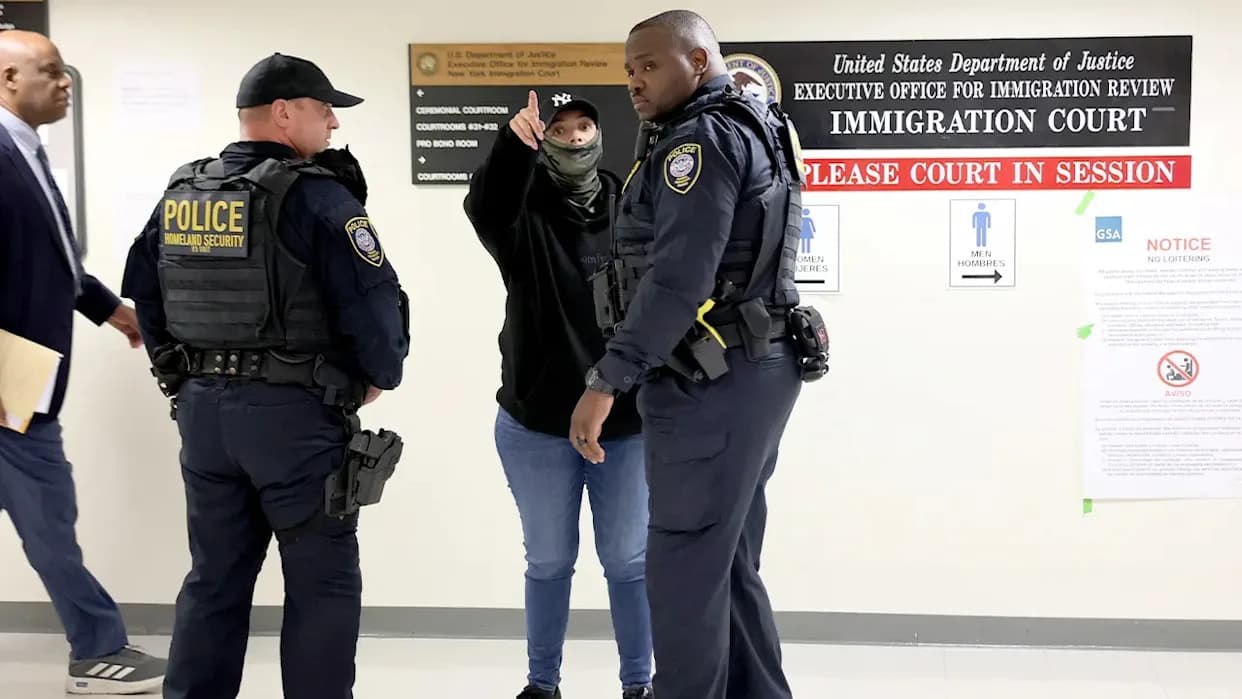
DHS says participants who show "meaningful strides" toward leaving will be deprioritized for ICE arrest and detention. Officials have not published detailed guidance on what constitutes "meaningful strides," how long deprioritization lasts, or how compliance will be evaluated. DHS figures and program details cited by news outlets have not been independently verified.
Administration Rationale and Costs
DHS frames the policy as a cost-saving measure and part of a holiday-season effort to accelerate removals. The agency and related immigration officials contend that providing travel support is often less expensive than full arrest, detention and formal deportation operations. As of May 2025, U.S. Immigration and Customs Enforcement estimated the average cost to arrest, detain and remove an undocumented migrant at roughly $17,000.
Statement: In a statement to CBS News, Homeland Security Secretary Kristi Noem warned that people who do not accept the temporary incentive may instead be "found," "arrested" and prevented from returning to the U.S.
Reported Results And Verification
DHS says that since January 2025, some 1.9 million undocumented immigrants have "voluntarily self-deported," and that "tens of thousands" used the CBP Home program specifically. Those figures, and the breakdown of how many received stipends or travel support versus leaving independently, have not been publicly released and have not been independently verified by CBS News.
Context
This voluntary departure initiative sits alongside more visible immigration enforcement activities by ICE and U.S. Customs and Border Protection. The administration has also introduced related incentives, such as a previously reported $2,500 stipend for migrant teenagers who choose to return to their home countries voluntarily.
Bottom line: The boosted $3,000 stipend and free airfare are intended to encourage self-deportation and reduce the cost of removals to taxpayers, but important details about eligibility, enforcement reprieves and verification of DHS's reported outcomes remain unclear.
Help us improve.