Congress has less than two weeks to pass a Department of Homeland Security (DHS) funding bill, and negotiations are stalling over immigration‑enforcement conditions pushed by House and Senate Democrats.
Funding Fight: Reform Riders vs. Republican Resistance
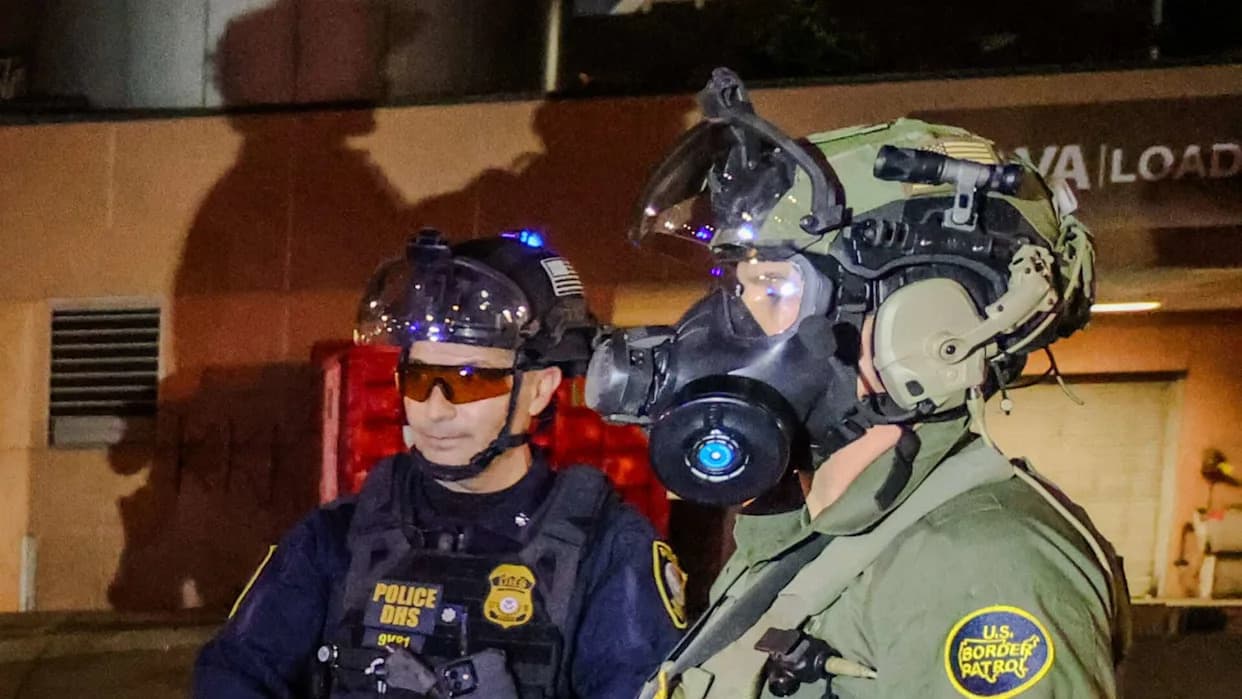
Democrats are insisting that any DHS spending package include several immigration‑enforcement reforms: bans on agents wearing masks, requirements that officers wear uniforms and visible identification, and adherence to a "reasonable use of force" policy. Republicans have pushed back strongly; Sen. Katie Britt (R–Ala.), chair of the Senate homeland security subcommittee, dismissed the list as a "ridiculous Christmas list," according to press reports.
If no agreement is reached, DHS funding is scheduled to lapse at the end of next week. That said, many immigration‑enforcement operations and other federal activities can continue for a time using previously appropriated funds, meaning a lapse may produce limited immediate disruption. TSA screeners could face missed paychecks, but travelers would still be subject to airport screening and security procedures.
Detention Center NIMBYism: Byhalia and Beyond
Sen. Roger Wicker (R–Miss.) has opposed a DHS plan to convert a warehouse in Byhalia, Mississippi, into a proposed 10,000‑bed Immigration and Customs Enforcement (ICE) detention facility. Wicker says he supports immigration enforcement generally but does not believe that particular location is appropriate.
This episode is part of a broader pattern: local governments from New Jersey to Portland, Oregon, have used zoning restrictions to try to keep ICE facilities out of their communities. Activists have also turned to the National Environmental Policy Act (NEPA) to challenge detention projects — the same statute that has delayed other federal projects and that critics argue is sometimes used as a pretext to oppose detention centers on ideological grounds.
These dynamics cut both ways. Some local opposition appears pretextual — driven by opposition to detention centers rather than specific neighborhood impacts — while other objections resemble classic NIMBY complaints: the project may be acceptable in principle, but "not here." The procedural hurdles that frustrate builders and federal planners can also complicate large‑scale enforcement implementations like mass detention or deportation operations.
Scenes From D.C. And Other Notes
Other developments around the capital and beyond include:
- People have been walking on the frozen Potomac River — a risky activity public commentators advise against.
- Politico, citing three anonymous sources, reports President Donald Trump told Senate Minority Leader Chuck Schumer he would unlock funding for a major New Jersey–New York rail link if Washington‑Dulles Airport and New York's Penn Station were renamed after him.
- Commentators continue to debate the connections between the Epstein files and Russiagate, and writers such as Matt Yglesias argue whale recovery resulted from a mix of market forces and political action.
- Federal authorities say a man illegally BASE jumped from Glacier Point in Yosemite; the suspect claims the video evidence is AI‑generated.
- Vice President Kamala Harris has relaunched her campaign X account as "Headquarters," a youth‑oriented effort organizers say will mobilize younger voters against what they describe as "far‑right extremism."
Context: A DHS funding lapse remains possible if Congress does not resolve the impasse. Even with a lapse, many functions will continue temporarily, but political, legal, and local‑zoning battles will shape how and where immigration enforcement is carried out.
Originally published by Reason.com; this version edits and clarifies the reporting for readability and context.