The Zug court has admitted a landmark climate lawsuit by four residents of Pari Island against cement giant Holcim, allowing the case to proceed. The plaintiffs seek CHF3,600 each, funding for mangroves and breakwaters, and large emissions cuts from Holcim by 2030 and 2040. Holcim says it will appeal and argues policy, not courts, should set climate goals. Environmentalists warn 11% of the island has already been lost and it could be submerged by 2050.
Swiss Court Agrees To Hear Landmark Climate Lawsuit Against Holcim Over Eroding Pari Island

The case is part of a wider international movement seeking to hold major companies responsible for climate damage (Fabrice COFFRINI)(Fabrice COFFRINI/AFP/AFP)
A Swiss court in Zug has agreed to admit a landmark climate lawsuit filed by four residents of Pari Island, Indonesia, who say rising seas tied to global warming are eroding their home. The plaintiffs are suing cement giant Holcim, seeking compensation and funding for protective measures such as mangrove planting and breakwater construction.
Court Decision And Next Steps
NGOs supporting the islanders, including Swiss Church Aid (HEKS), said the Zug court has "admitted the complaint in its entirety," marking the first time a Swiss court has accepted climate litigation against a major corporation. Both sides received the ruling ahead of its public release; Holcim has said it intends to appeal.
What The Plaintiffs Want
Four residents of Pari Island filed the complaint in January 2023. Each plaintiff is seeking 3,600 Swiss francs (about $4,500) to help cover damages and finance protective projects — notably mangrove restoration and construction of breakwaters. The NGOs note this sum represents about 0.42% of the estimated actual costs, a figure they link to estimates that Holcim is responsible for roughly 0.42% of global industrial CO2 emissions since 1750.
Beyond financial relief, the plaintiffs demand that Holcim reduce its greenhouse gas emissions by 43% by 2030 and by 69% by 2040.
Corporate Response And Legal Arguments
Holcim said it has committed to reaching net zero by 2050 and argued that lawmakers, not courts, should determine how climate targets are set and implemented. The NGOs said the Zug court rejected Holcim's argument that the courtroom is not the appropriate forum for such claims. Holcim also notes it has not owned cement plants in Indonesia since 2019.
Context And Significance
Environmental campaigners emphasize the significance of targeting the cement industry: cement production is responsible for roughly 8% of annual human-caused CO2 emissions. They place Holcim among the world’s 100 largest corporate CO2 emitters and say holding large emitters accountable is a growing international movement to address climate-related loss and damage that disproportionately affects vulnerable communities.
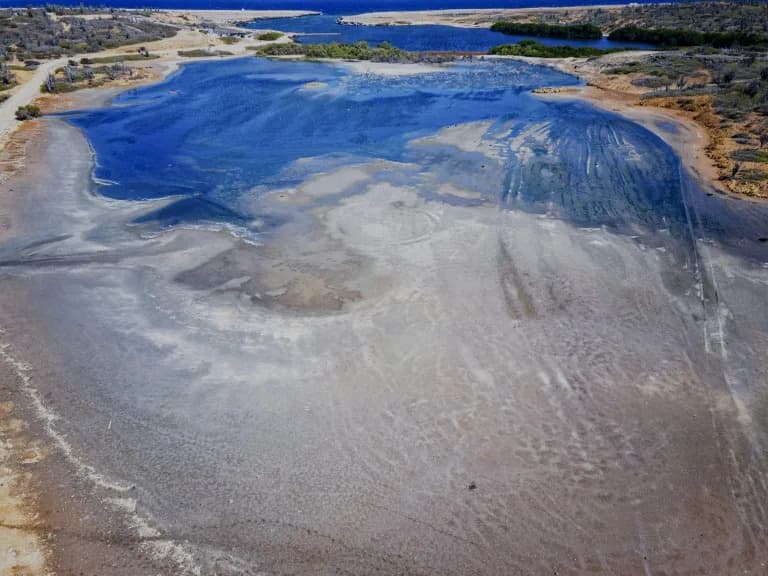
Environmentalists report that about 11% of Pari Island’s 42 hectares (104 acres) has disappeared in recent years, and warn the island could be fully submerged by 2050 if coastal protections are not implemented.
One plaintiff, known by the single name Asmania, welcomed the court decision: "We are very pleased. This decision gives us the strength to continue our fight," she said in a statement conveyed by the NGOs.
The court’s admission of the complaint does not determine liability; it allows the case to proceed so the facts and legal arguments can be heard. Either party may still appeal the admission decision as the litigation moves forward.
Help us improve.