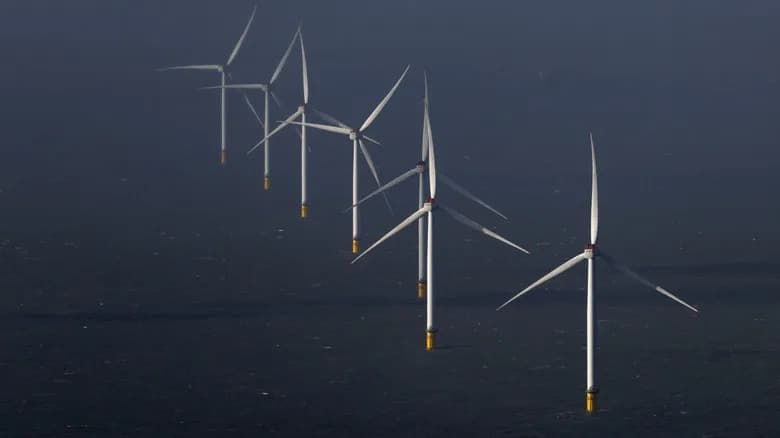
Puyrolland, a French village of about 185 residents, is resisting a WindStrom plan to install seven turbines on nearby fields. WindStrom is seeking €44m in damages and access to municipal and private tracks; the company says the project was authorised in 2019 and upheld by courts. A Bordeaux court recently blocked an emergency permit demand, and WindStrom has appealed to the Conseil d'État. The dispute highlights tensions between national renewable targets, developer power and local consent, and has prompted calls for citizen-led alternatives like the nearby cooperative model.
Tiny French Village Takes On Wind Giant as €44m Lawsuit Raises National Questions
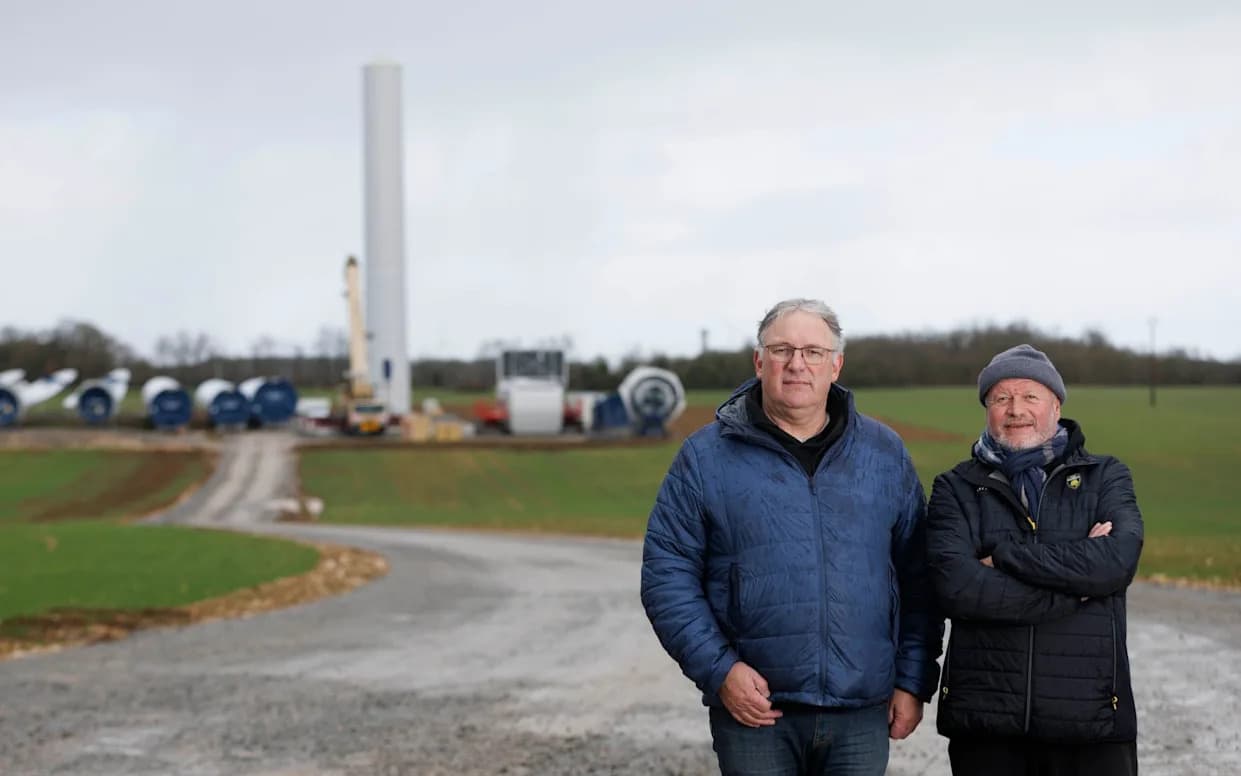
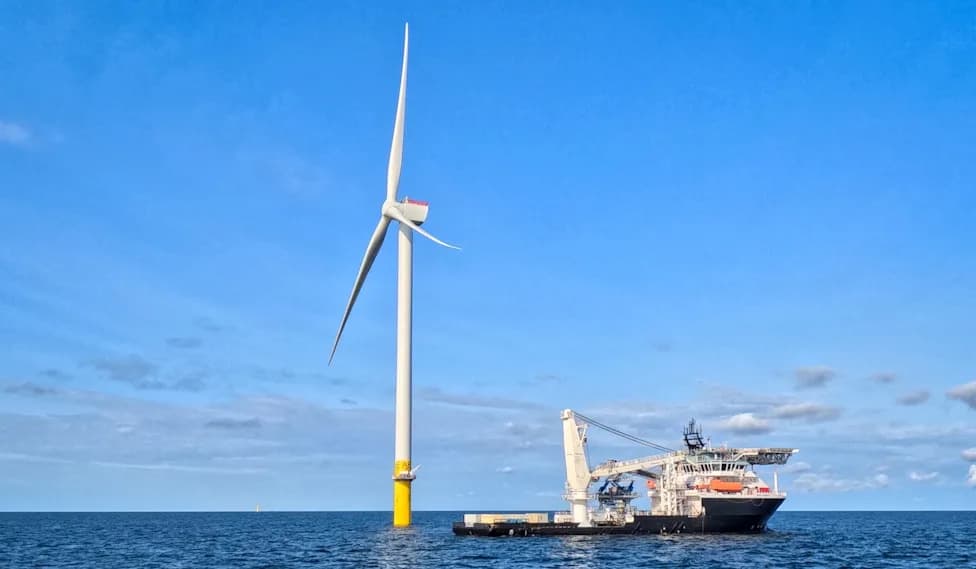
Villagers have rallied round Thierry Giraud, left, and Jean-Marie Giraudeau, mayor and deputy mayor of Puyrolland, pictured beside a turbine under construction - Belinda Jiao
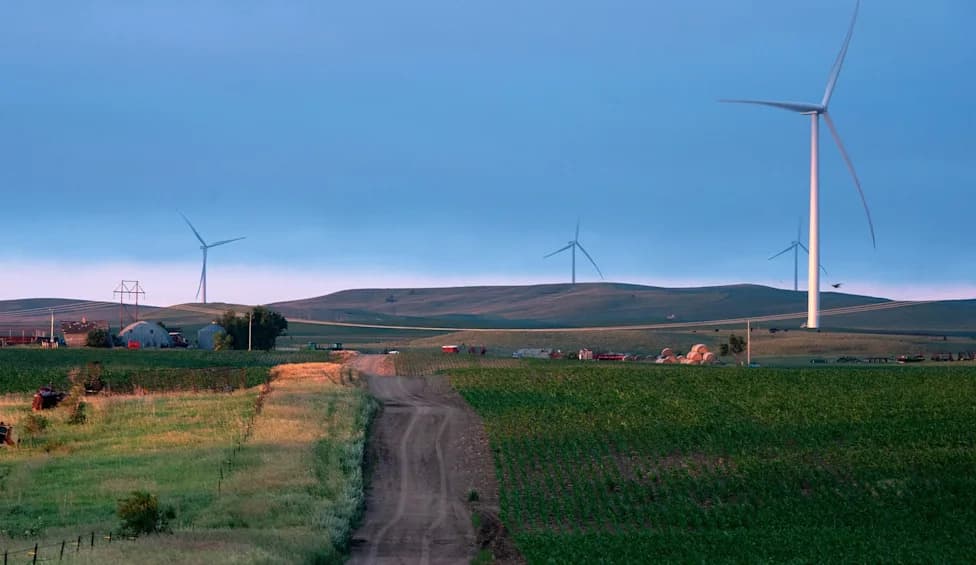
Wind gusts past a 12th-century hilltop church above Puyrolland as Mayor Thierry Giraud gestures toward a scattering of turbine towers on the plains below. "A few years ago there were only a handful. Now there are 90. We are surrounded," he says.
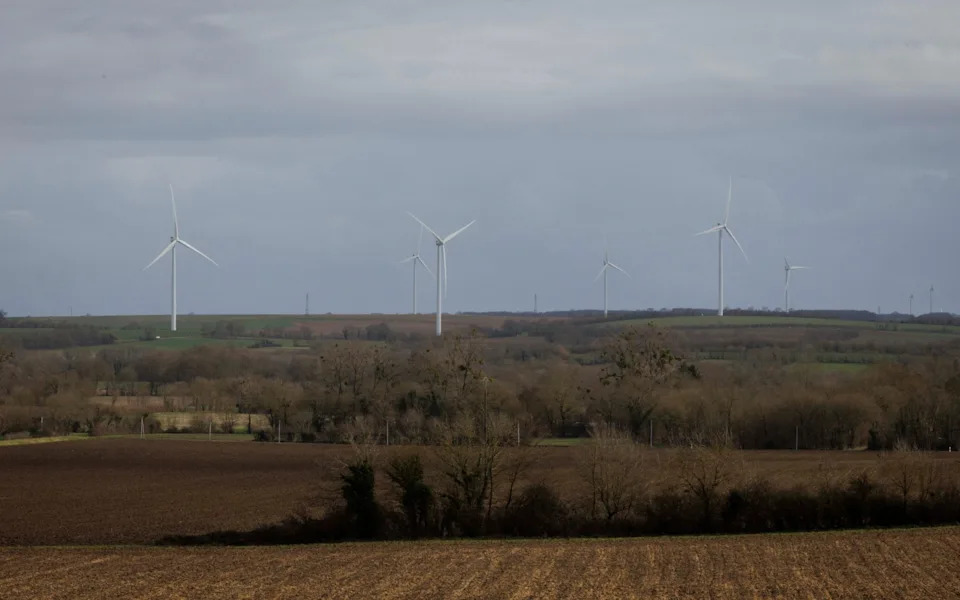
Wind farms are ranged across the landscape surrounding Puyrolland - Belinda Jiao
Puyrolland, a commune of about 185 people, is locked in a legal battle with German developer WindStrom after the village and roughly 50 landowners refused access to fields where WindStrom has state authorisation to erect seven turbines. The company is seeking €44 million in damages and compensation, arguing the community is delaying a state-approved project.
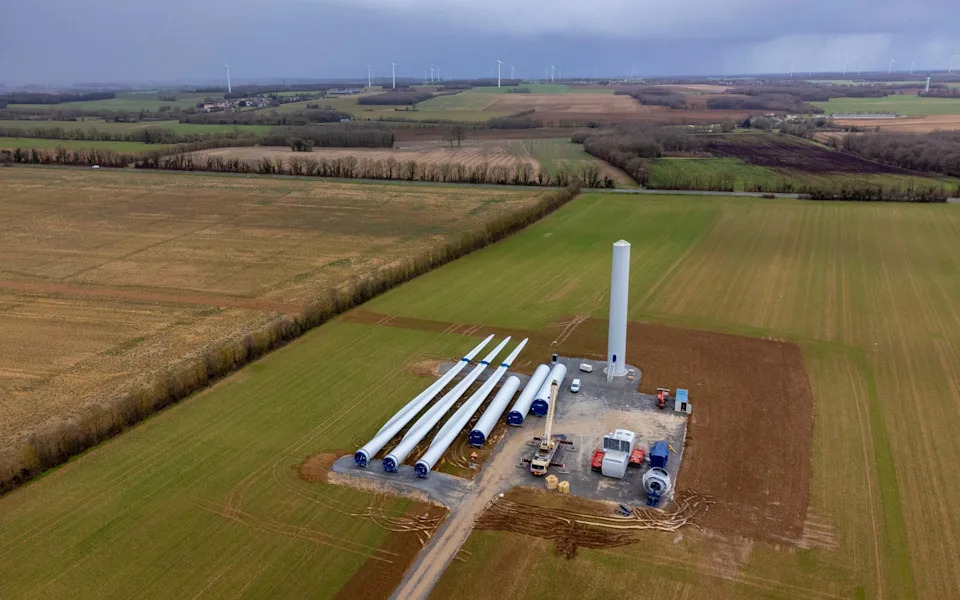
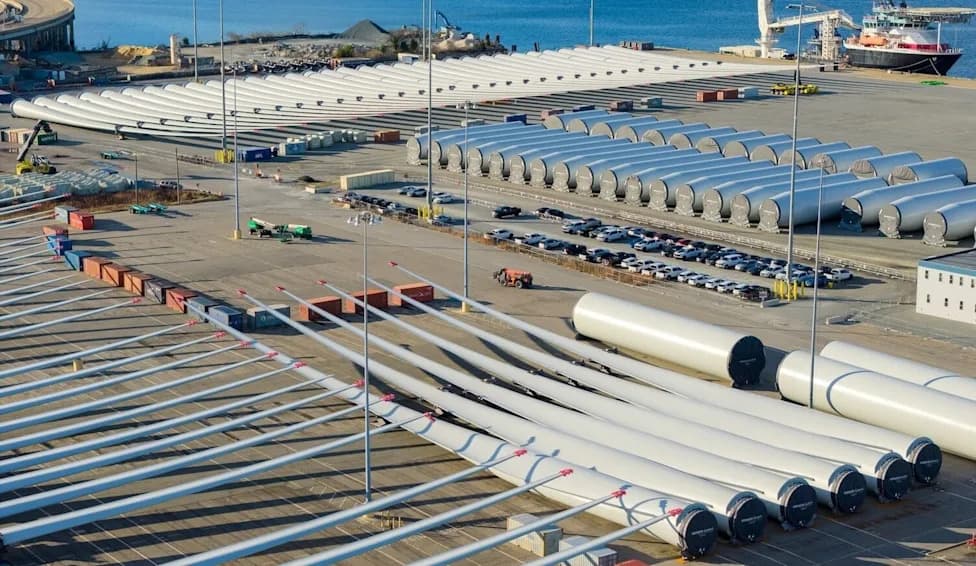
The immense blades for a turbine under construction lie in a field near the village - Belinda Jiao
The Dispute
WindStrom says the project received a prefectural decree in 2019 and that administrative decisions upholding the authorisation were confirmed last December. The developer, which operates about 470 turbines across Europe, has filed civil proceedings to compel access across municipal tracks and private land or to recover estimated "losses due to delay" of about €6.5 million per year.
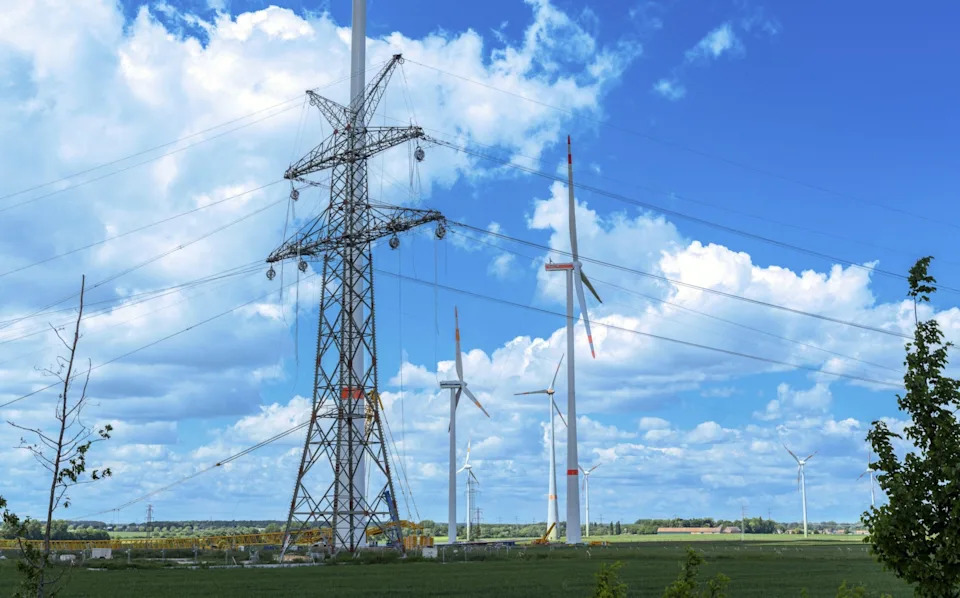
A wind farm developed by WindStrom near Salzgitter in Lower Saxony, Germany - imageBROKER.com/Alamy Stock Photo
Puyrolland’s mayor, 58-year-old cereal farmer Thierry Giraud, calls the €44m figure "absurd," noting that it would represent dozens of years of municipal budgets and significant sums per household. Local lawyers describe the claim as "judicial terrorism," saying the headline amount was intended to intimidate a tiny community.
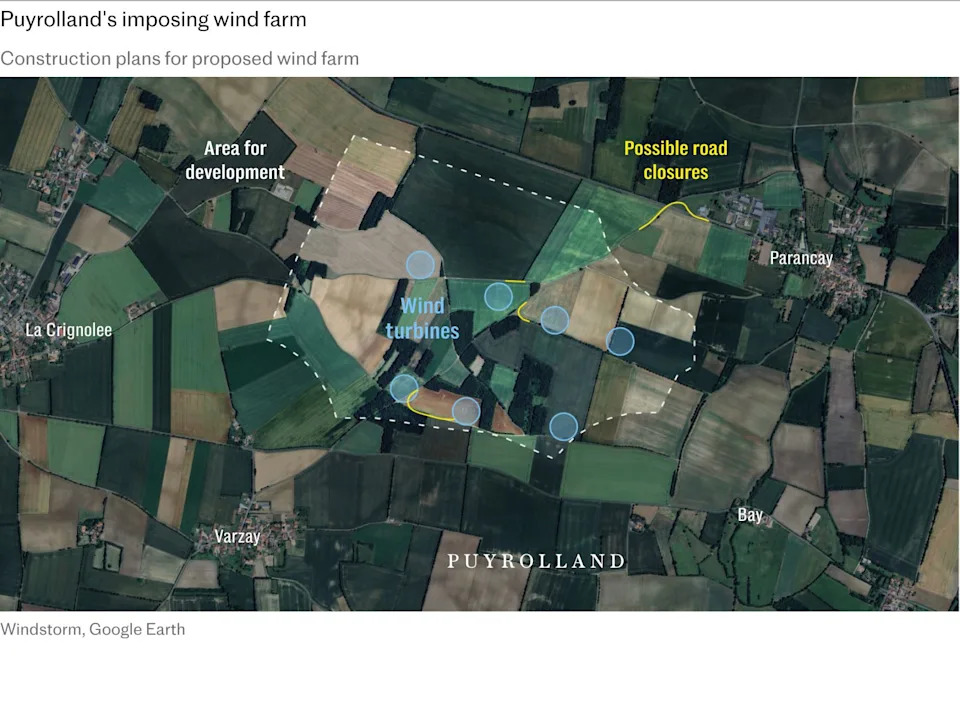
0802 French windfarm
Legal Moves and Local Response
In December, the Bordeaux administrative court of appeal rejected WindStrom's attempt to force the mayor to grant emergency permits for heavy lorries carrying 80m blades, finding no legal "urgency." WindStrom has appealed that decision to the Conseil d'État, France’s highest administrative court. The case has become a focal point for questions about the balance of power between national energy goals, developers and local elected officials.
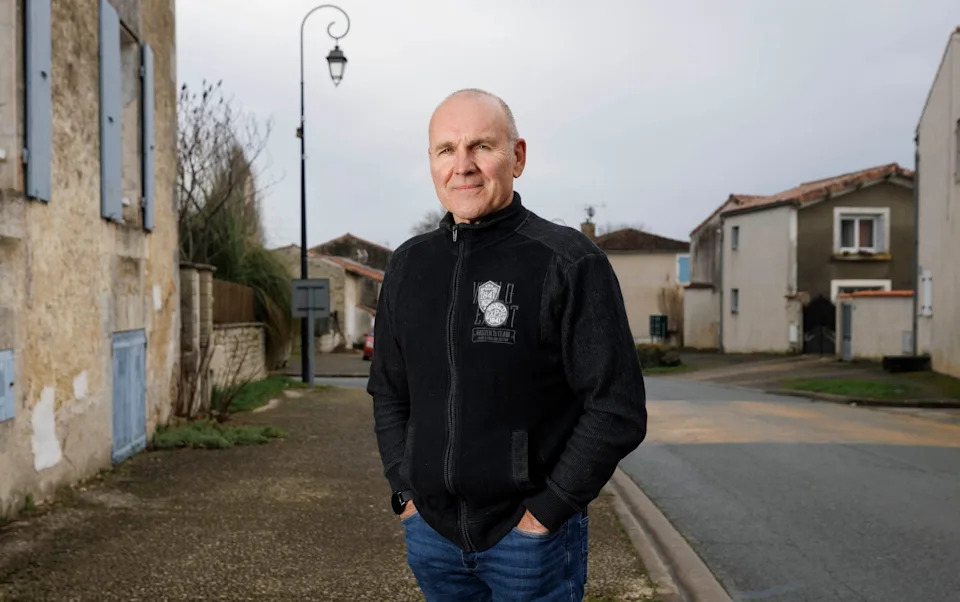
Patrick Beslin, head of the Puyrolland landowners’ association, is outraged at summonses sent to villagers, including some who are dead - Belinda Jiao
Residents and local leaders point to landscape degradation, impacts on wildlife and uneven burden-sharing as key concerns. Some landowners initially welcomed the project as a source of additional income — between roughly €7,000 and €12,000 a year per turbine — but say promised community benefits, such as help renovating the church or tax revenue, never materialised.
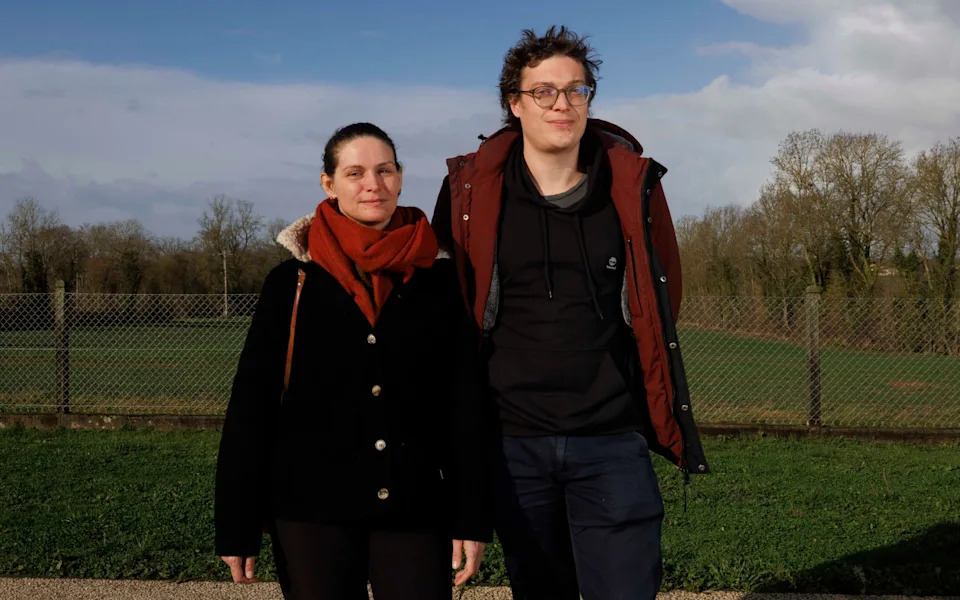
Anaïs Dasnon (left), a data analyst, with Guillaume Folliot, a water treatment worker, said residents needed compensation for the degraded landscape - Belinda Jiao
"We weren't thrilled to have turbines, so we didn't want the sacrifice to be in vain," says Mr Giraud. "We asked them to make an effort. Their response was court."
Wider Stakes
At a national level, the conflict highlights France's broader dilemma. Long reliant on nuclear power, France faces pressure from the EU to expand renewables while also confronting growing rural resistance and complaints that planning and decision-making are dominated by developers.
Local Socialist MP Fabrice Barusseau warns the dispute exposes weaknesses in the framework for rolling out renewables and argues for stronger local planning rules and citizen-led energy projects that share profits and decision-making.
One nearby alternative is the cooperative in Andilly, where citizens directly benefit from a wind park and the cooperative commits €62,000 a year for 25 years to energy-saving programmes and measures to tackle fuel poverty — a model supporters say offers a fairer approach than purely private, shareholder-driven developments.
Looking Ahead
WindStrom maintains it opened many months of discussions and that the courts must decide whether a municipality can effectively block a state-approved project by denying access. Back on the hill, Mr Giraud says the legal pressure has hardened local resolve; he plans to run for a sixth term as mayor. "The more they push, the stronger the resistance," he says.
The case is likely to be watched closely as a test of how France reconciles national climate and energy targets with local consent, compensation and planning authority.
Help us improve.