The Hague District Court will rule on whether the Netherlands must adopt stronger measures to protect Bonaire from climate change after residents and Greenpeace sued for a formal protection plan by April 2027 and an accelerated net‑zero target of 2040. The case follows an ICJ advisory opinion that states breaching climate obligations may be committing an "unlawful" act and could establish a global precedent for adaptation duties and possible reparations.
Dutch Court Could Force Netherlands To Protect Bonaire — A Potential Landmark Climate Ruling
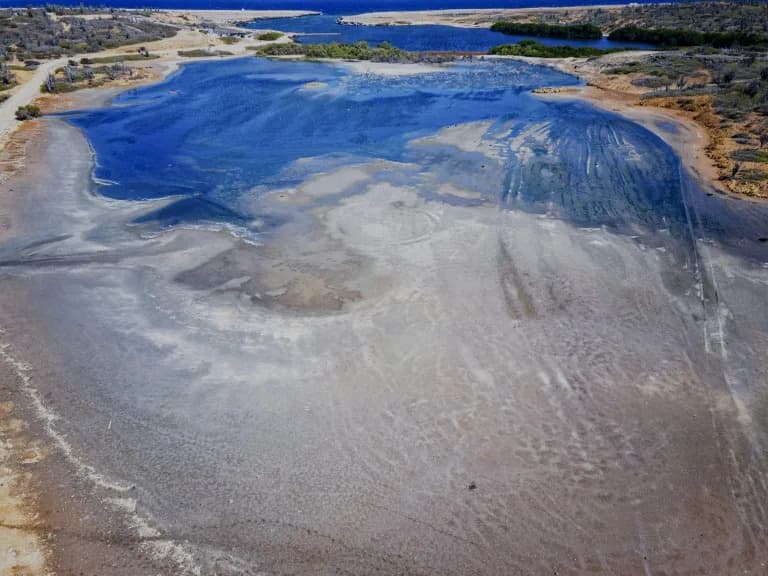
The effects of climate change have made life on Bonaire 'unbearable', according to some of the island's 27,000 residents (Stephan Kogelman)(Stephan Kogelman/ANP/AFP)
A Dutch court will decide on Wednesday whether the Netherlands must adopt stronger measures to protect Bonaire, the small Caribbean island that is a special municipality of the Netherlands, from the impacts of climate change. The case — brought by island residents with Greenpeace — could set an influential precedent for how states are required to adapt to and mitigate climate harms.
The claims and demands
Residents of the Dutch territory off Venezuela’s coast, supported by Greenpeace, are asking the Hague District Court to require the national government to deliver a formal protection plan for Bonaire by April 2027 and to accelerate the country’s CO2 net‑zero target from 2050 to 2040.
Legal context
The hearing follows an advisory opinion by the International Court of Justice (ICJ) that found states that breach their climate obligations may be committing an "unlawful" act. That opinion suggested polluters and states could potentially be liable for reparations where climate damage occurs — adding weight to litigation aimed at forcing stronger adaptation and mitigation measures.
Government position
The Dutch government contends that preparing local adaptation plans is an "autonomous task" for Bonaire’s local authorities and therefore not entirely the central government's responsibility.
On-the-ground impacts
Campaigners cite research from Vrije Universiteit Amsterdam showing that, without stronger protections, as much as a fifth of Bonaire could be submerged by the end of the century. During last year’s hearings, islanders described how rising seas, higher temperatures and extreme weather are already disrupting daily life for the territory’s roughly 27,000 residents.
"Climate change is not a distant threat for us," said Bonaire farmer Onnie Emerenciana in court. "Where we used to work, play, walk, or fish during the day, the heat is now often unbearable."
Why the ruling matters
Greenpeace and other campaigners say the case is the first major test of a state's mitigation and adaptation ambitions following the ICJ opinion and could create a global precedent for adaptation obligations for overseas territories. If the court requires the Netherlands to act, it could influence similar litigation worldwide and strengthen legal arguments that governments and major polluters must take concrete steps to prevent and remedy climate harms.
Background on Bonaire
Bonaire is a former Dutch colony in the Caribbean that became one of three special municipalities of the Netherlands in 2010, alongside Saba and St Eustatius. The island’s low-lying geography makes it particularly vulnerable to sea-level rise and storm surges.
The Hague District Court’s verdict, expected Wednesday, will be watched closely by environmental lawyers, governments and vulnerable communities around the world.
Help us improve.