The Deep Maniots, an isolated community on Greece's Mani Peninsula, retain a distinctive genetic profile that traces substantial ancestry to Bronze Age and Roman-era Greek-speaking populations. Analysis of 102 paternal and 50 maternal lineages reveals a rare Caucasus-related Y-chromosome lineage and evidence of paternal and maternal founder events in the early medieval period. Researchers conclude the Maniots represent a genetic "island," preserving a snapshot of southern Greece's pre-Migration Period genetic landscape.
Isolated for Centuries: Deep Maniots Preserve a Bronze Age Genetic Legacy
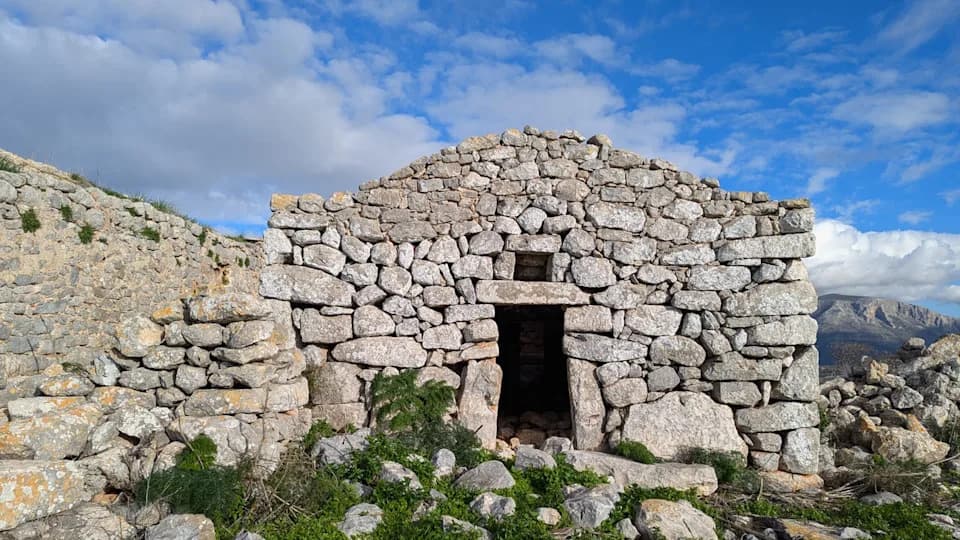
The 11th-to-12th-century church of Agios Georgios in the ancient settlement of Ano Poula. The structure showcases the megalithic building tradition of Deep Mani, which is characterized by the use of exceptionally large stone blocks that are laid without mortar. | Credit: Leonidas-Romanos Davranoglou
A remote community at the southern tip of Greece's Peloponnese — the Deep Maniots of the Mani Peninsula — has remained unusually genetically distinct for more than a thousand years, according to a new DNA analysis. The study, published Feb. 4 in the journal Communications Biology, finds strong evidence of long-term isolation, founder effects and a patriarchal social structure that together shaped the group's modern genetics.
Key Findings
Genetic “Island”: Researchers analyzed Y-chromosome markers from 102 men with documented paternal Deep Maniot ancestry and mitochondrial DNA (mtDNA) from 50 people with maternal Deep Maniot ancestry. The results show the Deep Maniots form a distinct genetic cluster compared with other modern mainland Greeks.
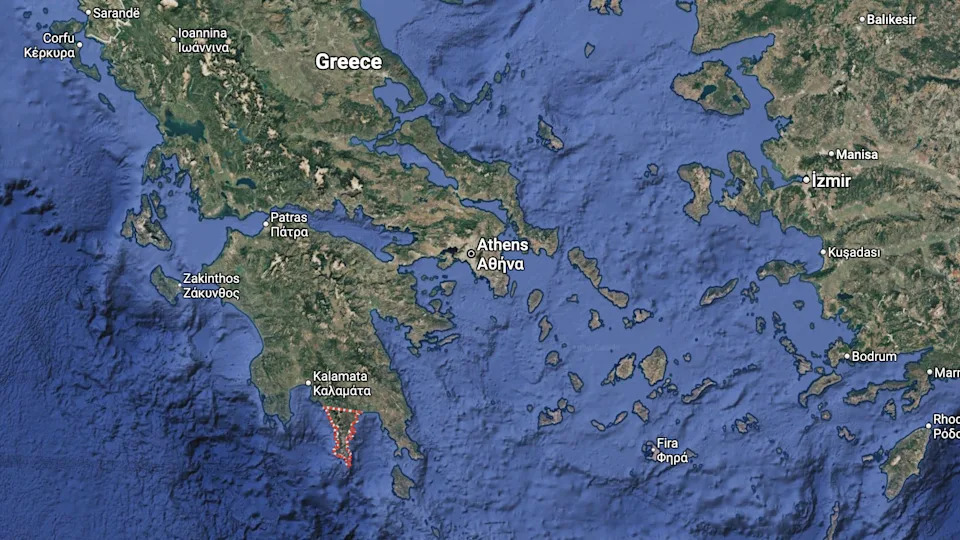
The Mani Peninsula (in red) has been home to an isolated population of people, known as the Deep Maniots, for over a millennium. | Credit: Imagery ©2026 Data SIO, NOAA, U.S. Navy, NGA, GEBCO, Landsat/Copernicus, Imagery ©2026 NASA, Map data ©2026 Google
Rare Paternal Lineage: The study found an exceptionally high frequency of a rare Y-chromosome lineage with roots in the Caucasus (estimated origin ~28,000 years ago). Compared with present-day mainland Greeks, Deep Maniot Y-DNA lacks many Germanic and Slavic lineages associated with the Migration Period (circa A.D. 300–700).
Founder Events and Bottlenecks: Genetic evidence indicates a paternal founder event dated roughly A.D. 380–670, during which a small number of male ancestors disproportionately contributed to the modern male gene pool. As a result, more than 50% of Maniot men today descend from a single male ancestor from around the seventh century. A parallel maternal founder event occurred around A.D. 540–866.
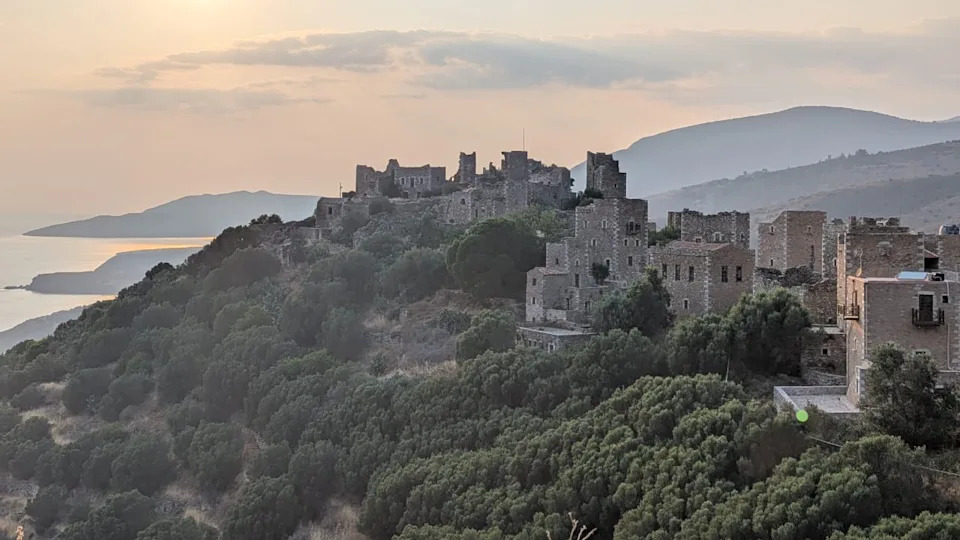
The Deep Maniot landscape is dotted with tower houses, such as those in the village of Vatheia, shown here. Each belonged to a particular male-headed clan starting in the 14th century. | Credit: Leonidas-Romanos Davranoglou
Motherlines Show Greater Diversity: Mitochondrial DNA revealed 30 distinct maternal lineages among 50 sampled individuals. Most maternal lineages connect to Bronze Age and Iron Age populations across western Eurasia, while several appear to be unique or highly localized to the Mani region.
"Deep Maniots preserve a snapshot of the genetic landscape of southern Greece before the demographic upheavals of the early Middle Ages," said lead author Leonidas-Romanos Davranoglou of the Oxford University Museum of Natural History.
Historical Context and Interpretation
The Mani Peninsula — historically part of ancient Laconia and dominated by Sparta in antiquity — remained geographically and culturally isolated during the Migration Period, when many parts of the Balkans experienced major population shifts. The genetic patterns observed are consistent with prolonged geographic isolation, strong genetic drift (loss of diversity in a small population), patriarchal clan structure that kept male lineages locally rooted, and occasional integration of women from outside communities.
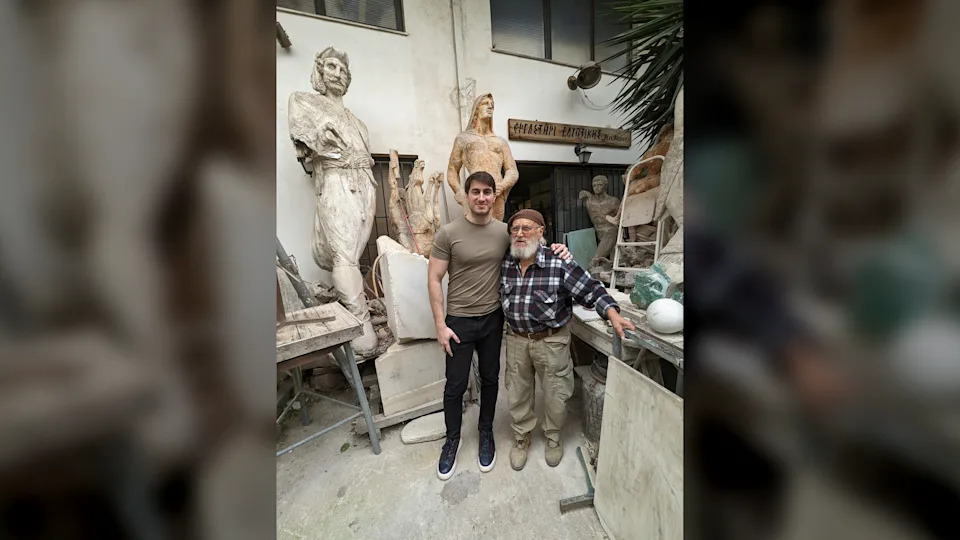
Deep Maniot sculptor and painter Michalis Kassis (right) and study lead author Leonidas-Romanos Davranoglou (left). Kassis' firsthand knowledge of Maniot oral history, genealogy and settlement patterns provided cultural context that helped shape the study’s design. | Credit: Vinia Tsopelas
Limitations: The study is based on modern DNA samples rather than ancient DNA from archaeological remains. While modern population genetics can robustly infer past events like founder effects and relative affinities to ancient populations, conclusions about precise migration routes and timings remain probabilistic and benefit from corroborating ancient-DNA and archaeological evidence.
Significance
The Deep Maniots offer a rare, well-preserved genetic window into the pre-Migration Period Greek-speaking world. Their genetics support some long-held oral traditions of shared descent and provide a case study of how geography, social structure and demographic events produce distinct human populations over centuries.
Study Contributors: Lead author Leonidas-Romanos Davranoglou (Oxford University Museum of Natural History), co-author Alexandros Heraclides (European University Cyprus), and independent researcher Athanasios Kofinakos, among others.
Help us improve.