The team used NASA’s Pleiades supercomputer to run 100+ high-resolution simulations of two 1.4-solar-mass neutron stars during the final 7.7 milliseconds before merger. They found the stars' magnetospheres entwine, repeatedly connect and reconnect, driving rapidly changing, anisotropic electromagnetic signals that depend on viewing angle and magnetic orientation. Extremely high-energy gamma rays are produced but are trapped by prompt pair creation; lower-energy gamma rays and X-rays can escape, offering observational targets for wide-field gamma-ray telescopes and next-generation gravitational-wave detectors like LISA.
NASA Supercomputer Reveals Chaotic Magnetic Dance Before Neutron Stars Collide
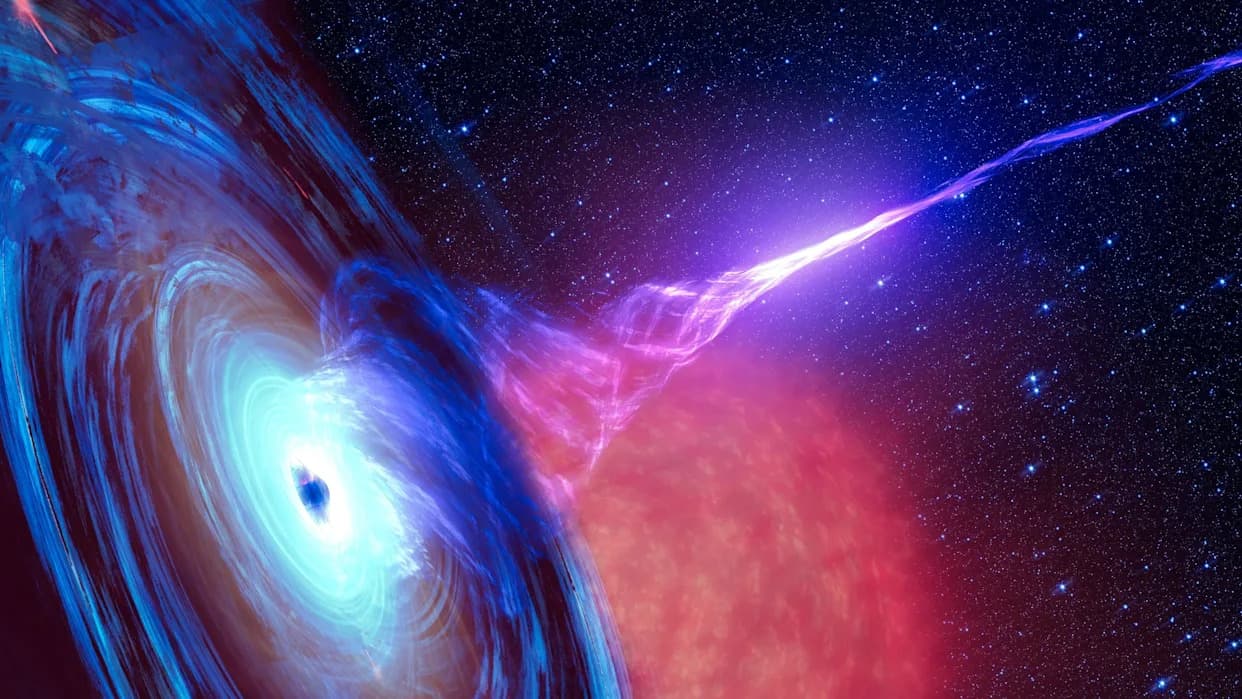
Credit: Robert Lea (created with Canva)
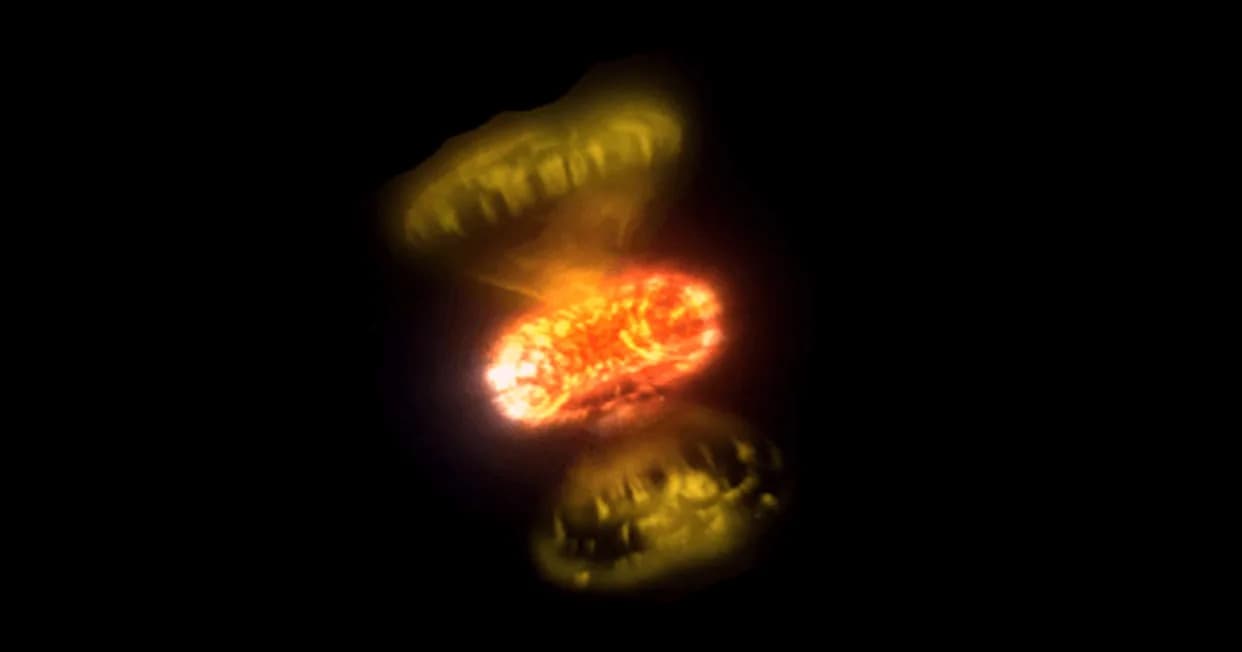
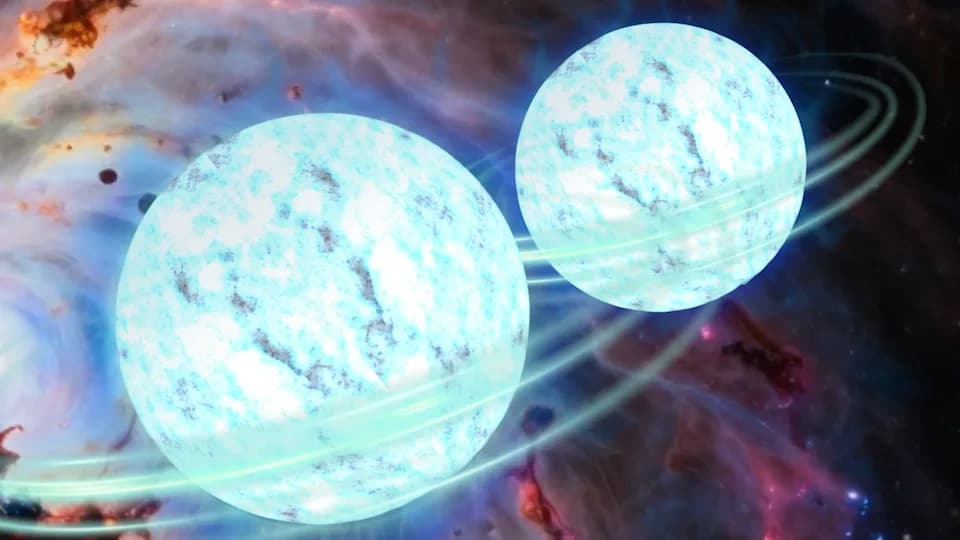
A new high-resolution simulation run on NASA's Pleiades supercomputer shows that neutron-star mergers grow chaotic long before the stellar cores meet: their magnetospheres — the strongest magnetic fields known — entwine, snap and reconnect, producing rapidly varying, high-energy electromagnetic behavior that depends on viewing angle and magnetic orientation.
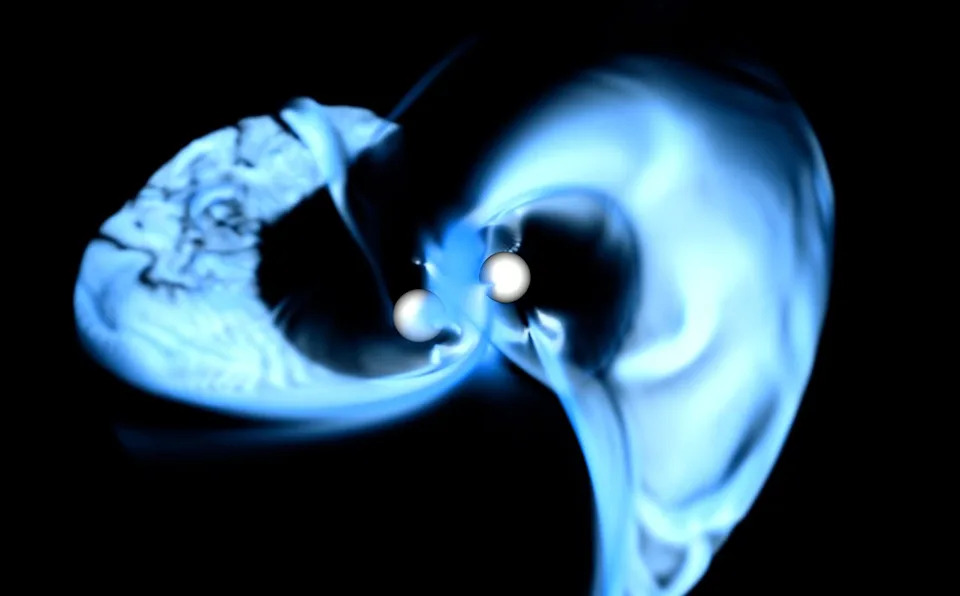
A screenshot of a NASA supercomputer simulation showing neutron stars spiraling together, creating magnetic chaos | Credit: NASA’s Goddard Space Flight Center/D. Skiathas et al. 2025
Why This Matters
Neutron stars are the densest stellar remnants in the universe, born when very massive stars explode as supernovae. A teaspoon of neutron-star matter would weigh around 10 million tons on Earth. When two neutron stars collide, the event produces gravitational waves, a short gamma-ray burst (GRB), and neutron-rich ejecta that forge elements heavier than iron — including gold and silver — via rapid neutron capture.
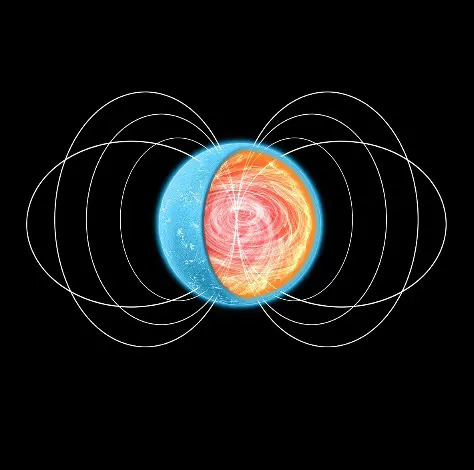
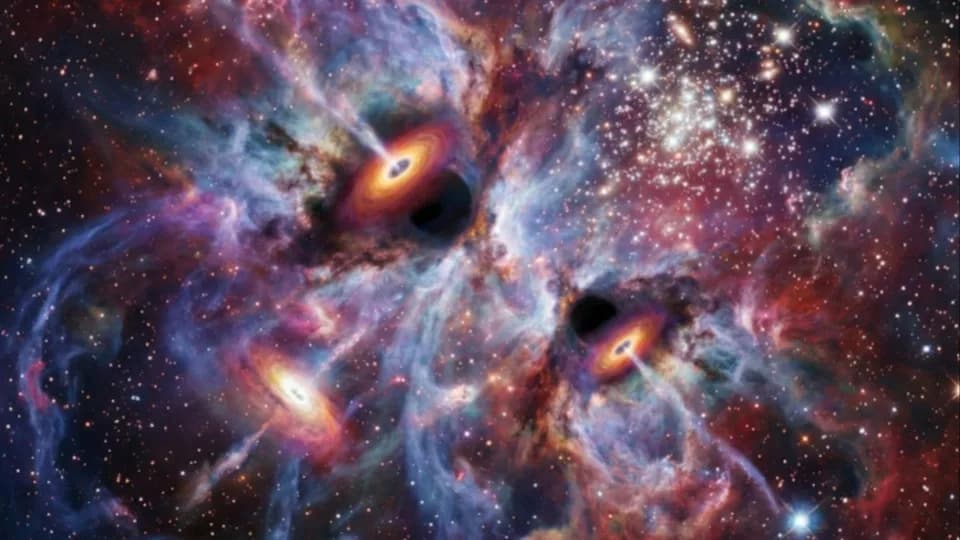
The interior of a neutron star | Credit: University of Alicante
What the Simulation Did
The research team used NASA’s Pleiades supercomputer at Ames Research Center to run more than 100 high-resolution simulations of two neutron stars (each ≈1.4 solar masses and roughly 12 miles / 20 km across) during the final 7.7 milliseconds before merger. The simulations tracked the magnetospheres and plasma dynamics as the stars completed their last orbits.
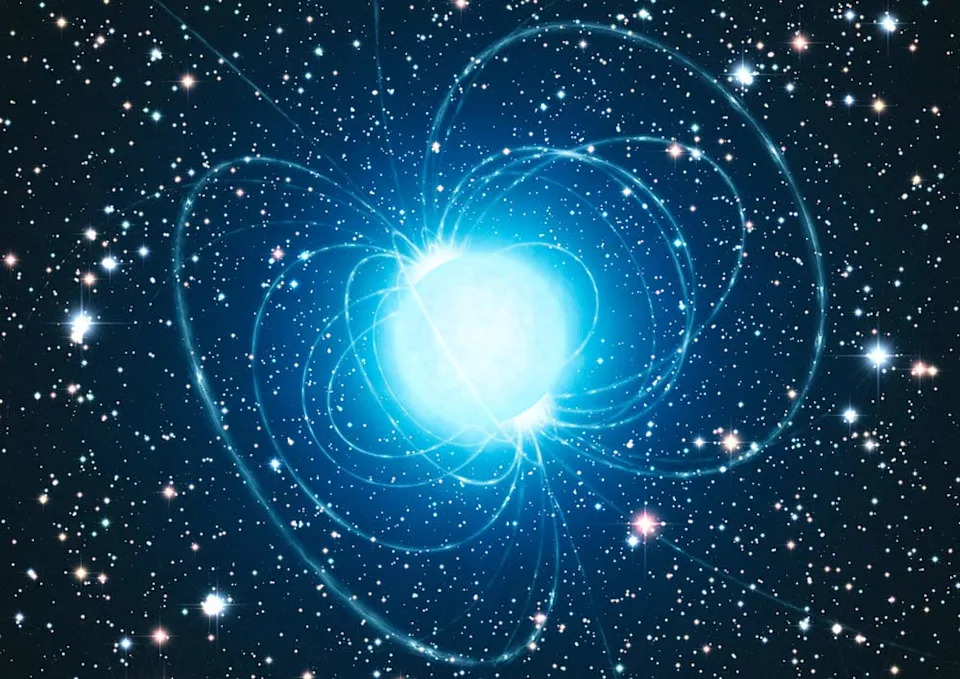
An illustration of a neutron star with an incredibly powerful magnetic field, also known as a magnetar | Credit: ESO/L. Calçada
Key Findings
Magnetospheres Rewire Continuously: As the stars orbit, their magnetospheres stretch into tails, connect, break and reconnect. Field lines repeatedly reconfigure, driving strong currents and accelerating particles in plasma that can approach relativistic speeds.
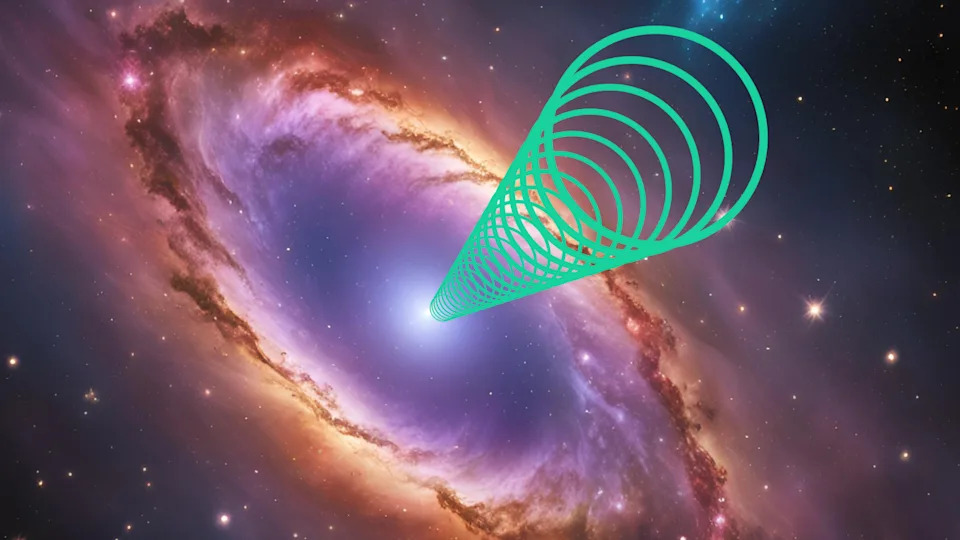
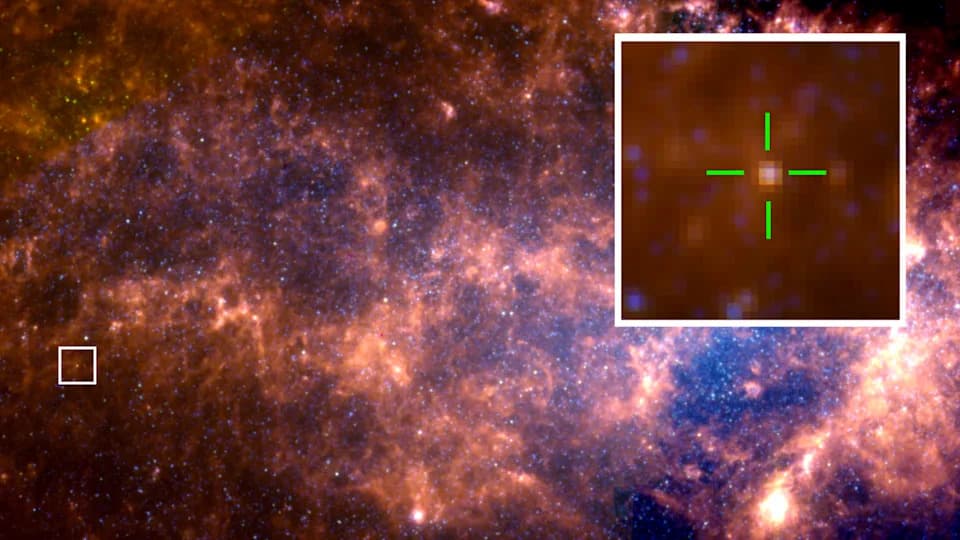
An illustration shows a gamma-ray burst erupting from the site of a neutron star merger. | Credit: Robert Lea (created with Canva)
Emission Is Highly Variable and Directional: The models show that electromagnetic emission is anisotropic and varies rapidly in brightness. An observer’s viewing angle and the relative magnetic orientations of the two stars strongly affect the observed signal.
Very-High-Energy Gamma Rays Are Trapped: The simulations indicate that the most energetic gamma rays produced near the merger are quickly converted into electron–positron pairs (through interactions with intense fields and radiation), preventing them from escaping. Lower-energy gamma rays and X-rays can escape and may be observable.
Surface Magnetic Stress And Possible Imprints On Waves: The team mapped how magnetic stresses build on stellar surfaces. Although further modeling is required, these magnetic interactions could leave detectable signatures in gravitational-wave signals measured by next-generation observatories.
Observational Implications
The results suggest two promising ways to study neutron-star mergers before they collide: wide-field, sensitive gamma-ray/X-ray telescopes could detect escaping lower-energy emission from the last orbits, and space-based gravitational-wave detectors could identify the inspiral well ahead of merger. The Laser Interferometer Space Antenna (LISA), planned for the mid-2030s, may help detect long-duration inspirals with greater sensitivity than current ground detectors such as LIGO, improving early warning and target selection for electromagnetic follow-up.
The team's findings were published on Nov. 20, 2025 in The Astrophysical Journal.
Help us improve.