The Associated Press photo essay exposes the invisible infrared beams that power facial-recognition systems and license-plate readers. AP photos reveal how these technologies are widely used in China—where camera networks are the largest in the world—and how U.S. firms and government programs have helped expand surveillance. The series combines technical explanation with first-hand accounts to show the balance between convenience and state control.
Seeing the Invisible — How AP Photographers Revealed Infrared Surveillance

Former Xinjiang government engineer Nureli Abliz, who saw firsthand how surveillance technology flagged thousands of people in China for detention, even when they had committed no crime, is illuminated by cellphone infrared facial recognition beams as he sits for a photo in Mannheim, Germany, where he is currently living in exile, July 23, 2025. (AP Photo/David Goldman)(ASSOCIATED PRESS)
Invisible to the naked eye, infrared light illuminates the unique contours of faces, bodies and license plates—powering many of today's facial-recognition systems and nighttime camera readers. In this photo essay, Associated Press photographers used modified cameras and a red infrared filter to make those beams visible, documenting how infrared is applied in public and private surveillance around the world.
Widespread Use and Everyday Encounters
Over the past decade, facial recognition moved from science fiction to everyday reality. China, now home to more security cameras than the rest of the world combined, deploys these systems at airports, train stations, busy streets and transport hubs. Chinese law requires people registering new SIM cards to appear before face-scanning cameras, and until recently many hotel guests were routinely asked to scan their faces at check-in.
Convenience, Safety—and Control
For many, these technologies bring convenience and a sense of safety. For others they are an intrusive tool of surveillance. Associated Press reporting found that much of the hardware and software powering China's networks was designed and supplied to a significant degree by U.S. companies—technology that, according to AP reporting, has at times helped enable human rights abuses and strengthened the capacity of the Chinese Communist Party to monitor dissent, ethnic minorities and even government officials.
Surveillance Beyond China
Similar systems have proliferated in the United States in recent years. AP reporting found that U.S. Border Patrol expanded a largely secretive program that used license-plate readers and other monitoring tools to track millions of drivers nationwide. Under the previous administration, billions of dollars were directed toward a broad range of surveillance systems, including networks of license-plate readers that have ensnared drivers simply for traveling near border areas.
How the Photos Were Made
AP photographers converted cameras to capture ultraviolet, visible and infrared light and fitted them with a red-tinted infrared filter that blocks certain visible wavelengths to better reveal infrared beams. Photographers on three continents captured images that show how invisible rays are used to follow people and vehicles, facilitate face recognition and extend digital control into everyday life.
Dozens of people who spoke with AP—from Tibetan activists and farmers to a former vice mayor—described being tracked by sprawling camera networks that restricted movement and triggered police attention.
Note: This photo essay is a documentary visual report curated by AP photo editors.
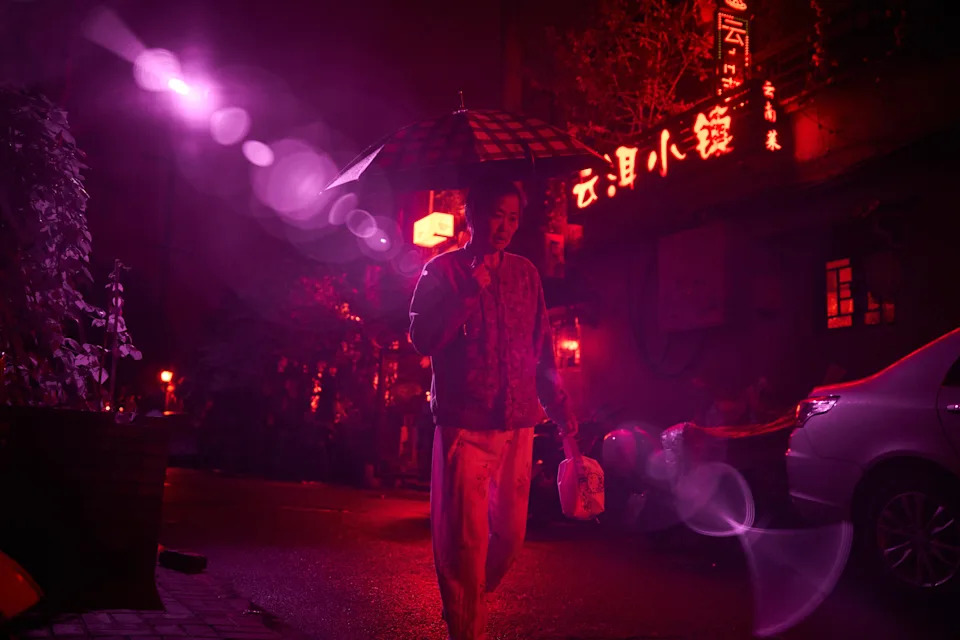
An infrared beam of light shines from a security camera watching over the Beigulou alleyway in Beijing as a pedestrian passes, Oct. 9, 2025. (AP Photo/Ng Han Guan)(ASSOCIATED PRESS)

Yang Guoliang, who has been under surveillance by Chinese officials after complaining about a land dispute to the central government in Beijing, is illuminated by cellphone infrared facial recognition beams as he smokes a cigarette inside his home in Changzhou in eastern China's Jiangsu Province, Sept. 7, 2025. (AP Photo/Ng Han Guan)(ASSOCIATED PRESS)
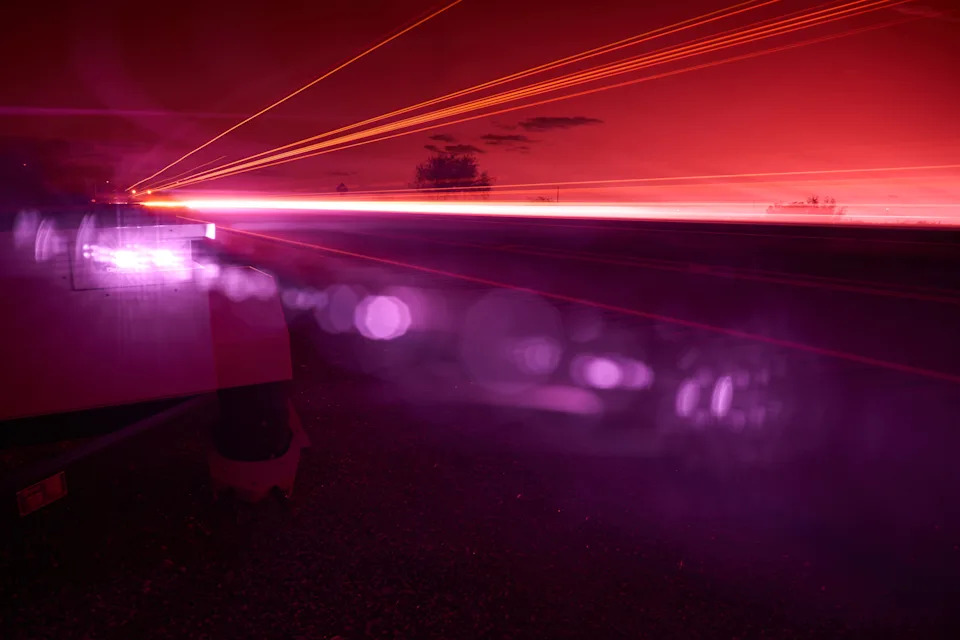
An infrared beam of light shines out of an automatic license plate reader recording vehicles passing along U.S. Highway 83, Oct. 13, 2025, in Laredo, Texas. (AP Photo/David Goldman)(ASSOCIATED PRESS)

Wensheng Wen, rear right, and his wife, Lou Guangyzing, along with their children Xin, 11, from right, Gehua, 9, Jinghua, 3, Rou, 6, and Younghua, 3, members of a Chinese church living in exile after fleeing from China, are illuminated by beams of pulsed laser light from a cellphone's LiDAR scanner as they sit for a photo, Oct. 12, 2025, in Midland, Texas. (AP Photo/David Goldman)(ASSOCIATED PRESS)
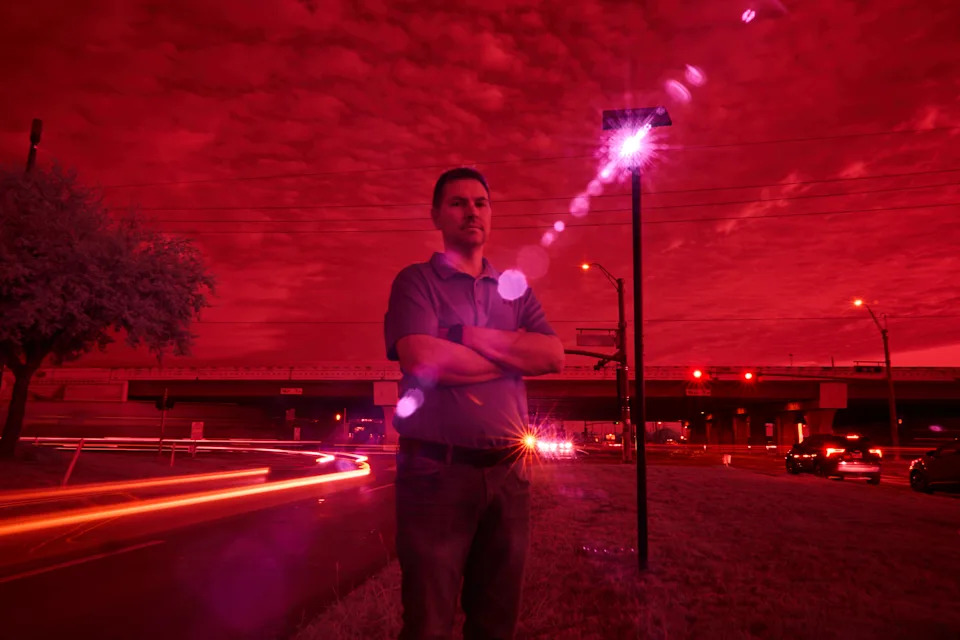
Alek Schott, who filed a lawsuit alleging violations of his constitutional rights when Texas sheriff's deputies stopped and searched his vehicle at the request of Border Patrol agents, is photographed, as an infrared beam of light from a Flock Safety automatic license plate reader records passing vehicles driving near his neighborhood, Oct. 16, 2025, in Houston. (AP Photo/David Goldman)(ASSOCIATED PRESS)

An image of the Dalai Lama and Namkyi, a Tibetan former political prisoner who was arrested and imprisoned at 15 for protesting Chinese rule, are illuminated by cellphone infrared facial recognition beams as Namkyi sits for a photo at the Office of Tibet, Oct. 7, 2025, in Washington. (AP Photo/David Goldman)(ASSOCIATED PRESS)
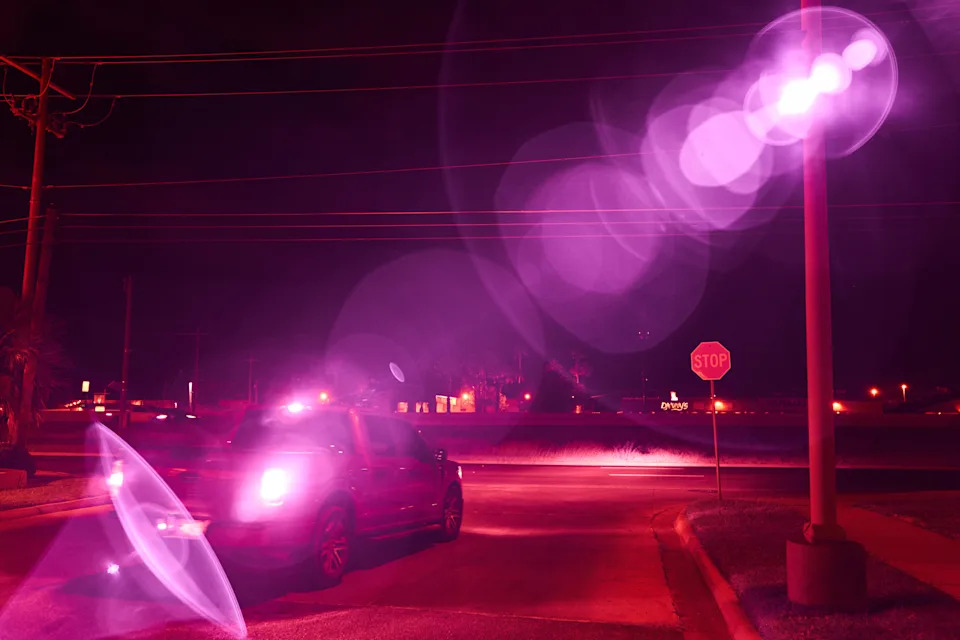
An infrared beam of light shines out of an automatic license plate reader as it records vehicles driving by, Oct. 13, 2025, in Laredo, Texas. (AP Photo/David Goldman)(ASSOCIATED PRESS)
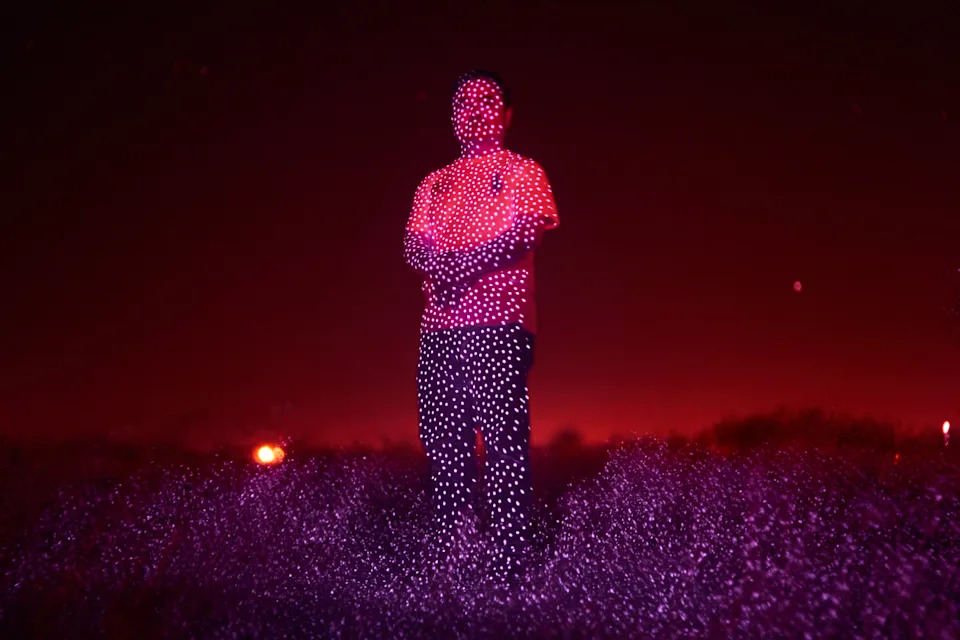
Retired Chinese official Li Chuanliang, who openly criticized the Chinese government after seeing first-hand how surveillance technology built up the government's power and is now being accused of corruption by Beijing, is illuminated by cellphone infrared facial recognition beams as he stands for a photo in the oil fields of Midland, Texas, where he's currently living in exile, Oct. 11, 2025. (AP Photo/David Goldman)(ASSOCIATED PRESS)

Infrared facial recognition beams are emitted from a cellphone held by a Uyghur man, who asked to remain anonymous for safety reasons, as he’s photographed in front of the U.S. Capitol, Oct. 16, 2025, in Washington, where he’s living in exile after escaping China. (AP Photo/David Goldman)(ASSOCIATED PRESS)

Guigiu Chen, who escaped China with her daughters after her husband, prominent rights lawyer Xie Yang, was detained, is illuminated by cellphone infrared facial recognition beams as she sits for a photo, Oct. 12, 2025, in Midland, Texas, where she's living in exile. (AP Photo/David Goldman)(ASSOCIATED PRESS)
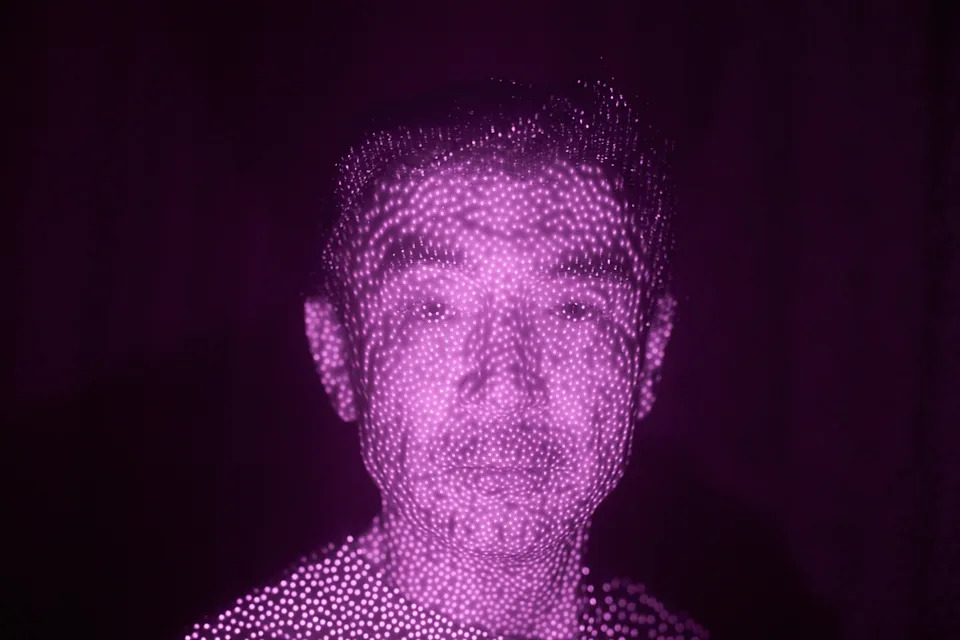
Former Xinjiang government engineer Nureli Abliz, who saw firsthand how surveillance technology flagged thousands of people in China for detention, even when they had committed no crime, is illuminated by cellphone infrared facial recognition beams as he sits for a photo in Mannheim, Germany, where he's currently living in exile, July 23, 2025. (AP Photo/David Goldman)(ASSOCIATED PRESS)
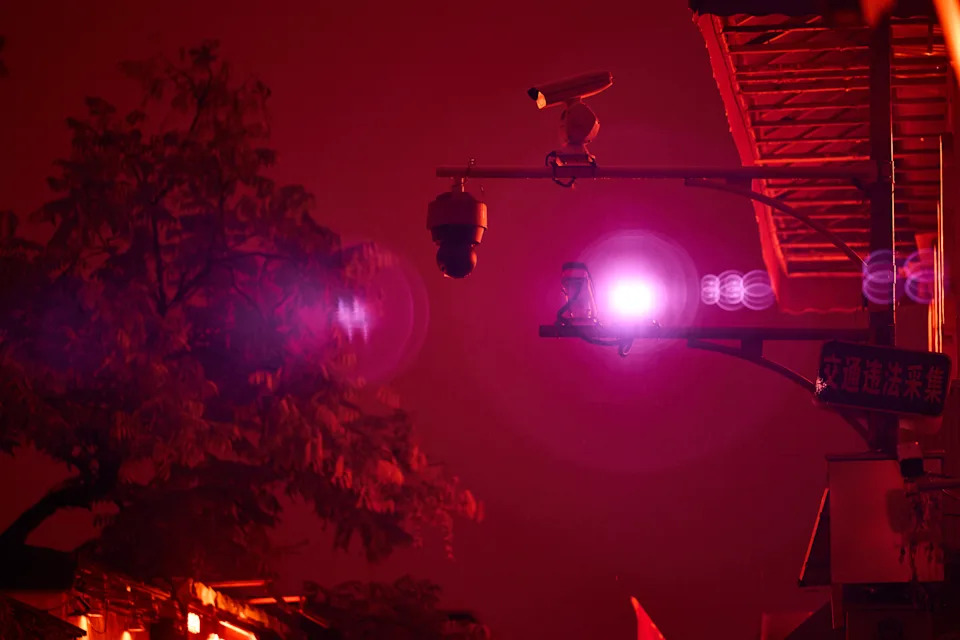
An infrared beam of light shines from a security camera watching over the Wudaoying alley in Beijing, Oct. 10, 2025. (AP Photo/Ng Han Guan)(ASSOCIATED PRESS)
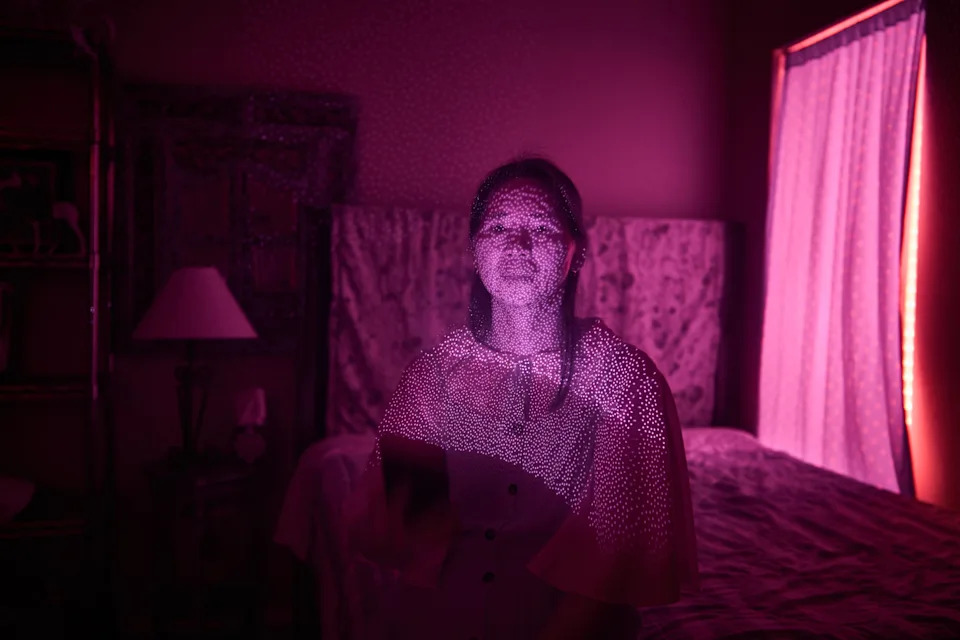
Dong e Li, a member of a Chinese church living in exile after fleeing from China, is illuminated by cellphone infrared facial recognition beams as she sits for a photo in her home, Oct. 13, 2025, in Midland, Texas. (AP Photo/David Goldman)(ASSOCIATED PRESS)
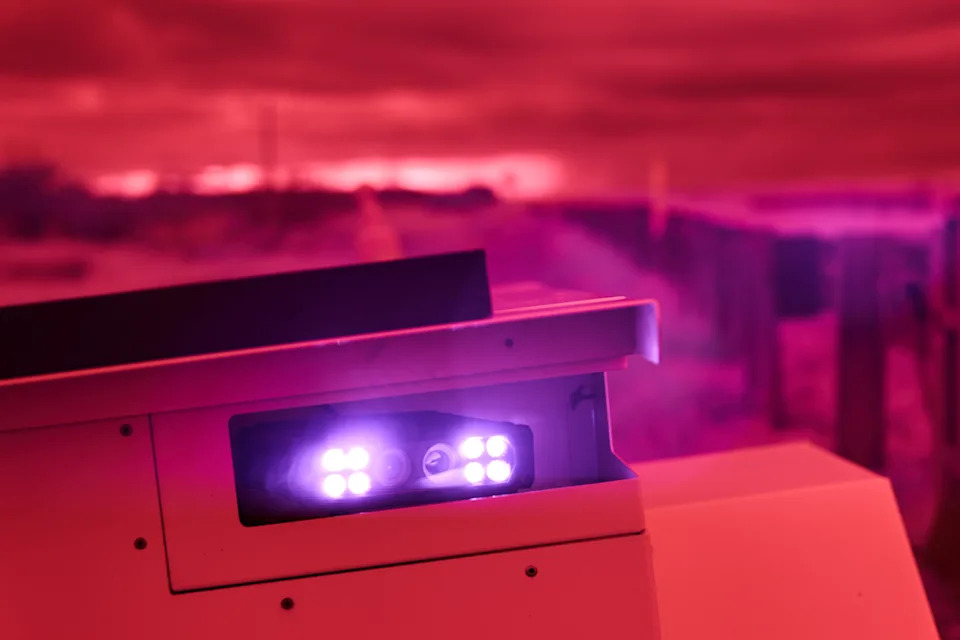
An infrared beam of light shines out of an automatic license plate reader recording vehicles passing along U.S. Highway 83, Oct. 13, 2025, in Laredo, Texas. (AP Photo/David Goldman)(ASSOCIATED PRESS)
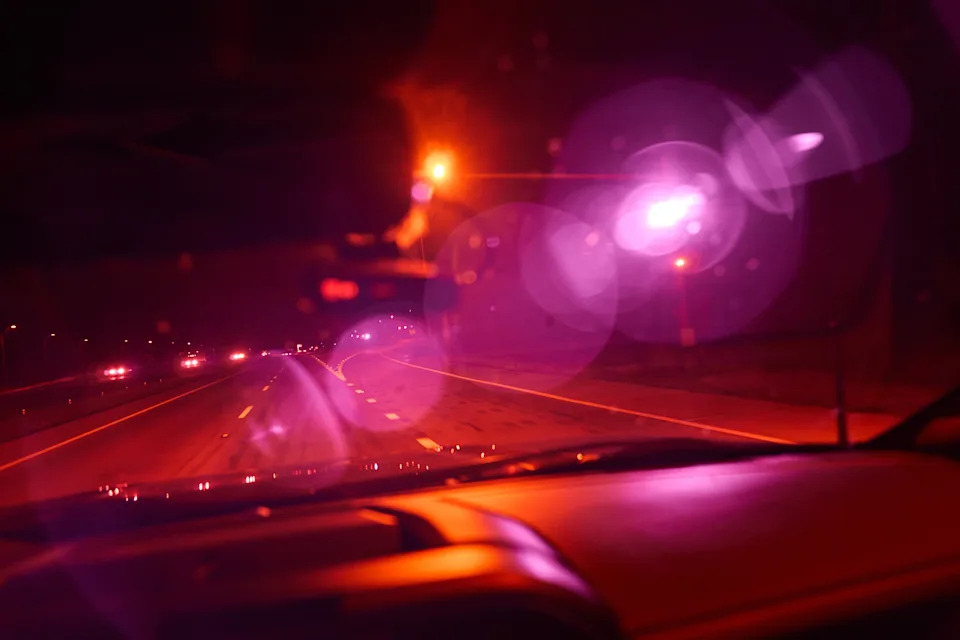
Alek Schott drives past the infrared beam of an automatic license plate reader recording vehicles along Interstate 10, a route he occasionally takes for work trips, near Seguin, Texas, Oct. 15, 2025. (AP Photo/David Goldman)(ASSOCIATED PRESS)
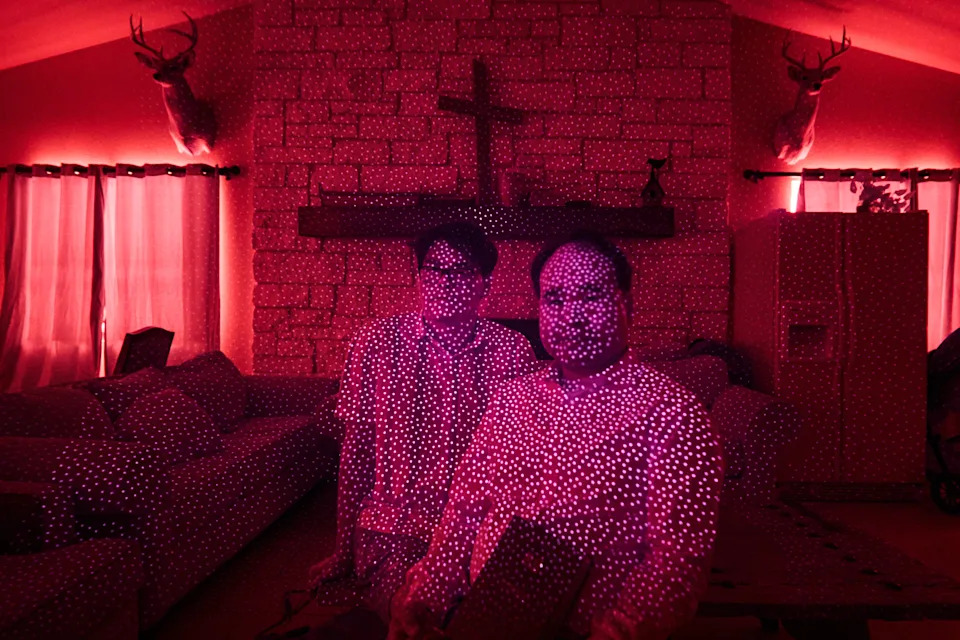
Pastor Pan Yongguang, right, and his son Paul, members of a Chinese church living in exile after fleeing from China, are illuminated by cellphone infrared facial recognition beams while sitting for a photo in the community room of the ranch compound where they're living in Midland, Texas, Oct. 11, 2025. (AP Photo/David Goldman)(ASSOCIATED PRESS)
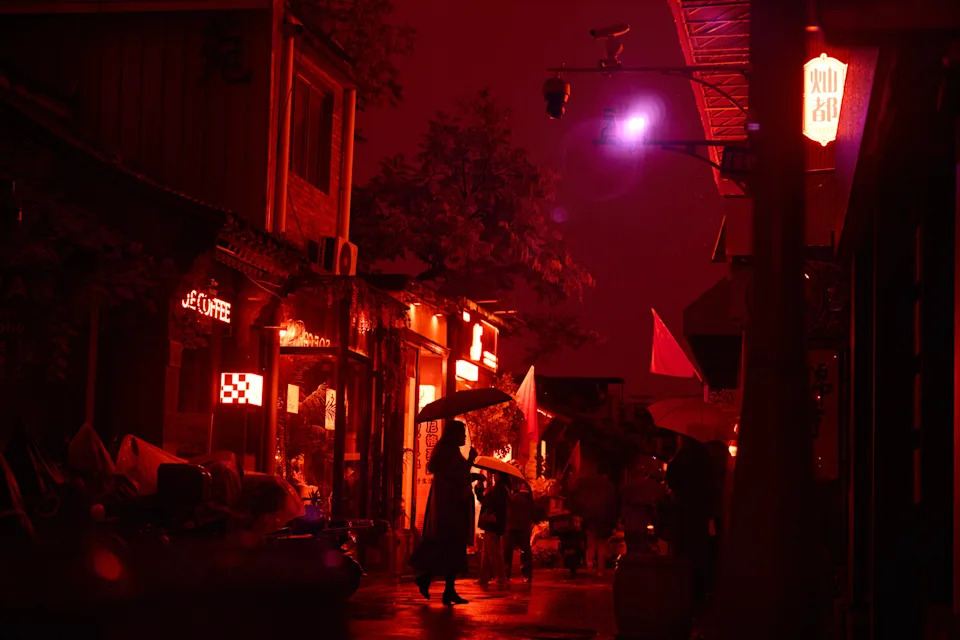
An infrared beam of light shines from a security camera watching over the Wudaoying alley in Beijing as pedestrians walk by, Oct. 10, 2025. (AP Photo/Ng Han Guan)(ASSOCIATED PRESS)
Help us improve.