Palantir CEO Alex Karp defended the company's surveillance technology and emphasized built-in safeguards to limit government overreach as Palantir reported stronger-than-expected quarterly results. Fourth-quarter revenue hit $1.41 billion, with U.S. government revenue up 66% to $570 million. The company projects 2026 revenue of $7.18–$7.20 billion, driven partly by new government contracts, but faces public scrutiny over an ICE contract. Palantir also forecast above-consensus first-quarter guidance and strong commercial growth for 2026.
Palantir CEO Defends Surveillance Tools as Government Contracts Fuel Major Revenue Surge Amid ICE Scrutiny

Palantir Technologies CEO Alex Karp attends the 56th annual World Economic Forum (WEF) meeting in Davos, Switzerland, January 20, 2026. REUTERS/Denis Balibouse
Feb 2 (Reuters) - Palantir Technologies chief executive Alex Karp defended the company's surveillance technology on Monday as the firm reported sharply higher sales, saying built-in controls limit government overreach. Karp made the remarks in a letter to shareholders that did not directly address recent U.S. immigration enforcement actions in Minnesota that have sparked broad protests.
The data analytics company said revenue from the U.S. government rose 66% in the fourth quarter from a year earlier to $570 million. Total revenue of $1.41 billion topped analysts' forecasts, and Palantir signalled it expects a substantial increase in sales in 2026, in part driven by government contracts.
Shares jumped about 6% in after-hours trading on the news, although they remain more than 15% lower so far this month amid investor concern about the firm's high valuation — a 12-month forward price-to-earnings ratio near 140.5.
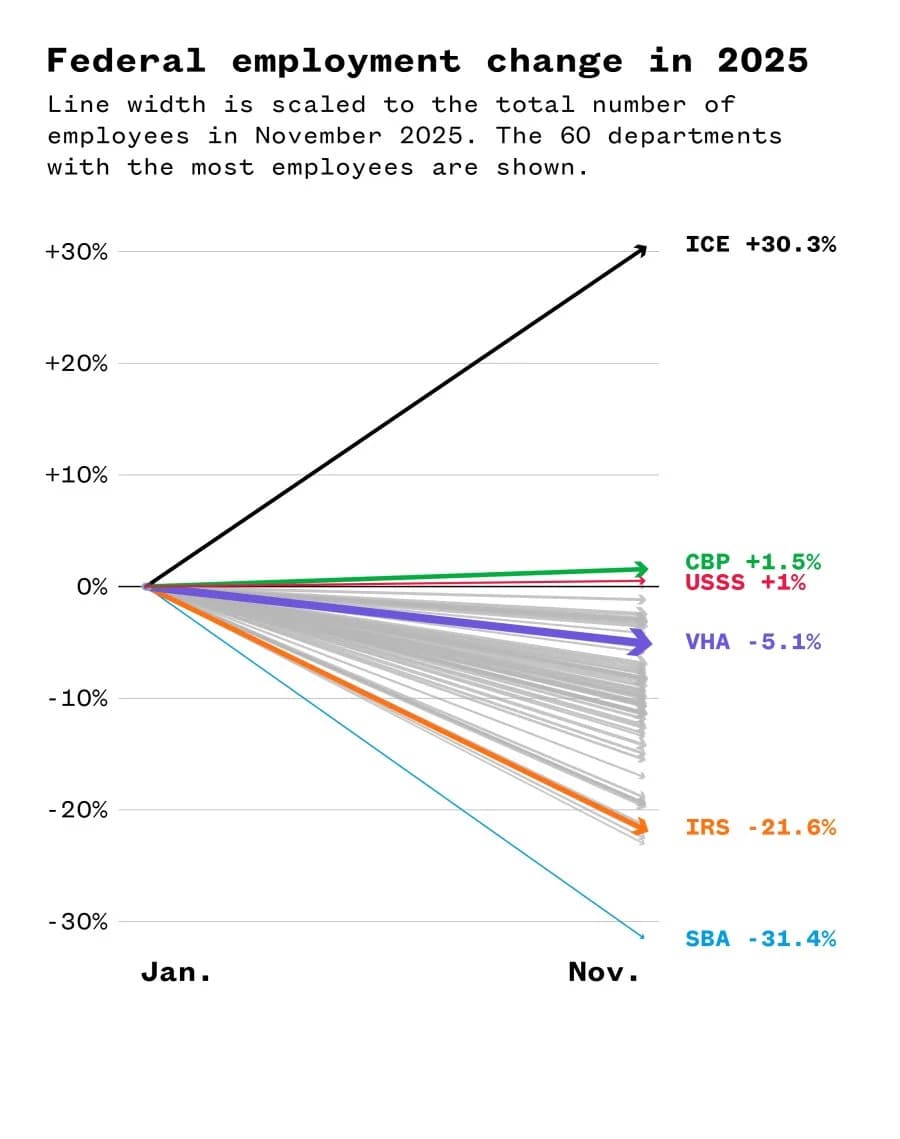
Palantir has attracted scrutiny for its work with U.S. Immigration and Customs Enforcement (ICE), particularly after public backlash over aggressive immigration enforcement following two fatal shootings in January. The company won a contract last year with ICE to develop systems used in immigration enforcement, drawing criticism from activists and some lawmakers.
Over the weekend, French tech firm CapGemini said it would sell a small U.S. unit that held an ICE contract after pressure from French lawmakers and critics — underscoring the reputational risks companies face when contracting with ICE.
Based in Denver, Palantir has also been marketing advanced, military-grade AI tools to corporate clients through its platform, helping customers integrate and develop AI capabilities. The stock has been one of the strongest-performing AI-related names, with shares up roughly 1,700% over the past three years.
"It should indeed be uncontroversial that the single most effective means of guarding against incursions into our private lives is to invest in the development of a technical platform that makes possible constraints on government action and investigation through granular permissioning capabilities," Karp wrote.
He added that Palantir's systems ensure the "state and its agents can see only what ought to be seen," and that the platform maintains functional audit logs to detect both external and internal misuse.
Big Revenue Jump Expected
The company — co-founded with early support from investor Peter Thiel and early government customers including the CIA — has grown revenue through a steady stream of government contracts. Palantir now projects 2026 revenue of $7.18 billion to $7.20 billion, which would be more than a 60% increase from 2025.
Thiel, an early backer of former President Donald Trump, supported Senator J.D. Vance during his 2022 U.S. Senate campaign and maintains close ties with some influential Washington figures, a background that has attracted political scrutiny to Palantir's government work.
In April, Palantir won a $30 million ICE contract to build an operating system intended to identify undocumented immigrants and track self-deportation activity. As of June 3, Reuters reported that award as the company's largest single ICE contract among 46 federal contract actions since 2011.
Palantir forecast first-quarter 2026 revenue between $1.53 billion and $1.54 billion, above the LSEG consensus of $1.32 billion. The company also projects U.S. commercial sales in 2026 to grow by at least 115% to more than $3.14 billion, accelerating from 109% growth in 2025.
(Reporting by Arsheeya Bajwa in Bengaluru; Editing by Pooja Desai)
Help us improve.